9/80 work schedule
Summary definition: A compressed work schedule where employees work 80 hours over nine days in a two-week pay period, earning one extra day off every other week.
What is a 9/80 work schedule?
A 9/80 schedule is a flexible work schedule in which employees work 80 hours over nine days instead of 10. Typically, this means working eight nine-hour days and a single eight-hour day across a two-week pay period, with one day off (often Friday) every other week.
Key takeaways
- A 9/80 schedule allows employees to work longer days in exchange for an extra day off while maintaining the cumulative work hours of a standard 40-hour workweek.
- This schedule aims to improve work-life balance, reduce commutes, and boost employee retention.
- However, the schedule requires special payroll setup and may not be suitable for all roles or industries.
9/80 work schedule examples
There are a few ways for an employer to set up a 9/80 work schedule, but the goal is the same: 80 hours of work across nine days in a two-week pay period, with one extra day off.
| Example | Schedule 9/80 setup | Details |
|---|---|---|
| Every other Friday off |
|
The eight-hour Friday occurs every other workweek, allowing employees to still work 80 total hours for the pay period while earning an extra day off every 10 business days. |
| Every other Monday off |
|
A similar setup, with the day off on a Monday instead of a Friday, resulting in a long weekend at the start of the workweek. |
| Alternating days off |
|
While trickier to manage, alternating the day off between Mondays and Fridays helps maintain coverage and continuity while still offering employees the benefits of a 9/80 compressed work schedule. |
9/80 work schedule advantages and disadvantages
Like any alternative work arrangement, a 9/80 work schedule has advantages and drawbacks. Understanding both can help employers decide if this compressed schedule is the right fit for their workforce.
Benefits of a 9/80 schedule
The advantages of a 9/80 work schedule largely center on increased flexibility and employee satisfaction, while still maintaining a standard full-time workload.
- Improved work-life balance: Having a recurring long weekend can make it easier for employees to manage personal commitments, recharge, and reduce burnout, which can lead to higher job satisfaction.
- Higher employee engagement and retention: With greater job satisfaction comes an increase in employee engagement and a possible dip in turnover.
- Maintains a 40-hour workweek: When structured correctly, a 9/80 schedule’s pay period still aligns with a standard 40-hour workweek, helping employers maintain payroll and overtime compliance.
Challenges of a 9/80 schedule
The challenges of a 9/80 work schedule typically involve longer daily hours and greater administrative complexity for employers.
- Longer workdays: Working nine-hour days can be tiring, especially for employees in physically demanding roles or jobs that require constant focus.
- Scheduling and coverage challenges: Staggering days off requires added precision when planning schedules.
- Payroll complexity: A 9/80 schedule also requires precise pay period setup to correctly track hours and avoid unintended overtime, especially for hourly employees.
- Not suitable for every role: Some positions, industries, or teams may not be able to support longer workdays or alternating schedules due to operational needs. For example, roles that require fixed daily coverage, shift-based staffing, or continuous customer support may struggle to accommodate extended hours or rotating days off.
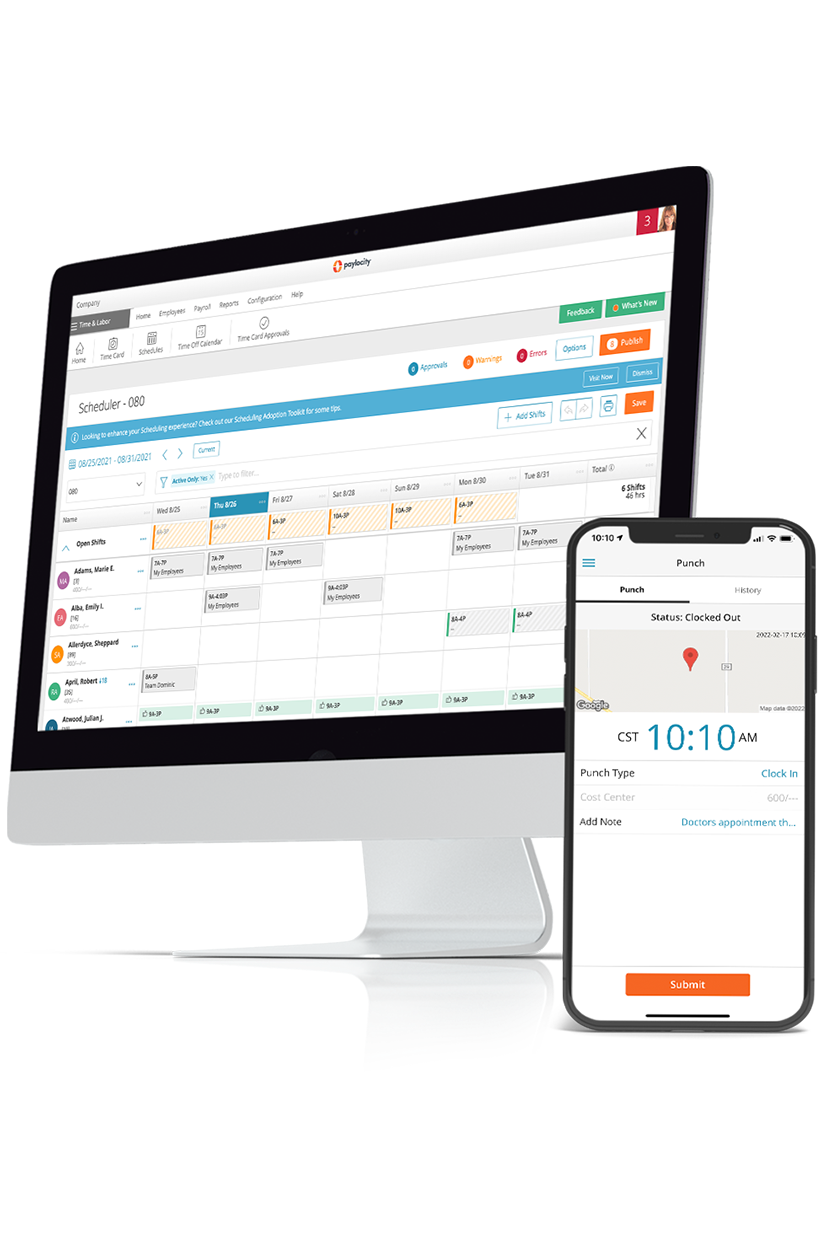
Maximize Productivity the Right Way
Get out of time-consuming processes while knowing your employees are set up for day-to-day success. The costs — and headaches — of manually scheduling, tracking, and managing your workforce's time adds up fast. Use the right tools to automate where it matters, while delivering a modern, user-friendly experience for employees and their managers.