Affinity bias
Summary definition: Unconsciously favoring people who share similar backgrounds, experiences, or characteristics when making hiring, promotion, and performance decisions.
What is affinity bias?
Affinity bias, also known as similarity bias or the “similar-to-me” effect, is an unconscious bias in which people gravitate toward individuals who are similar to them.
People naturally feel more comfortable around those who remind them of themselves. That comfort can translate into more positive evaluations, more frequent opportunities, and stronger advocacy during hiring and promotion decisions.
In the workplace, this often presents as decision-makers (e.g., hiring managers, executives, and team leads) favoring candidates or employees who share their educational background, hobbies, communication style, etc., without realizing they are doing so.
Key takeaways
- Affinity bias is the unconscious tendency to favor people who share similar backgrounds, characteristics, or experiences when making hiring, promotion, and performance review decisions.
- HR teams must implement structural safeguards, such as structured interviews, diverse hiring panels, and calibration sessions, to reduce potential bias impacts.
- Unchecked similarity bias narrows workforce diversity, limits organizational performance, and creates legal and reputational risk.
What is an example of affinity bias?
Even with an affinity bias definition in hand, the best way for HR teams to understand and identify it is to review examples of what it can look like:
| Where it occurs | Affinity bias example |
| Hiring process | A hiring manager rates a candidate from their alma mater more favorably on "cultural background" without being able to articulate why. |
| Promotions | A senior leader consistently advocates for team members who remind them of themselves earlier in their career (e.g., same communication style and same approach to problem-solving) while overlooking equally qualified candidates with different working styles. |
| Performance reviews | An employee who shares personal interests or a social connection with their manager receives higher marks on subjective criteria, such as "leadership potential" or "executive presence," while a similarly performing colleague doesn’t. |
| Mentorship / sponsorship | Senior leaders organically invest more time in employees who feel familiar, creating unequal access to career development opportunities (e.g., industry introductions, stretch assignments, and visibility) that accelerate advancement. |
What is the impact of affinity bias on organizations?
Psychologically, all human beings are capable of affinity bias, meaning organizations of all sizes and industries should be aware of its potential impacts.
Affinity bias drives hiring and promotion decisions toward people who share similar backgrounds, experiences, and characteristics, creating confirmation bias and teams that think too similarly. This lack of diverse perspectives, in turn, limits the range of ideas and approaches an organization can draw on.
Furthermore, similarity bias can create legal issues when protected characteristics correlate with the attributes that decision-makers favor or discount. This, in turn, can cross into discrimination under federal or state employment laws.
Finally, organizations that fail to address similarity bias in their talent processes may develop a reputation for it, which will interfere with their ability to attract and retain candidates from underrepresented groups. This, too, can attract legal scrutiny or pressure if patterns of inequity become visible, whether internally or externally.
How to avoid affinity bias in the workplace
To overcome affinity bias, organizations need structural interventions, not just awareness:
- Standardize job interviews: Build structured interview guides with consistent questions and scoring rubrics for every role. Standardization limits the room for subjective impressions.
- Build diverse hiring panels: Require that interview panels include evaluators with different backgrounds, functions, and perspectives.
- Implement blind resume screening: Remove names, universities, and other identifying information from resumes during initial screening.
- Run calibration sessions: Bring a diverse team of hiring managers and people leaders together to compare and discuss evaluations before offers or promotions are finalized.
- Audit promotion and performance data: Regularly track outcomes by demographic group across hiring, promotion, and performance review cycles.
- Adopt manager training: Require managers to complete bias awareness training that goes beyond general concepts and focuses specifically on where implicit biases tend to surface (e.g., interview scoring, promotion nominations, and mentorship decisions).
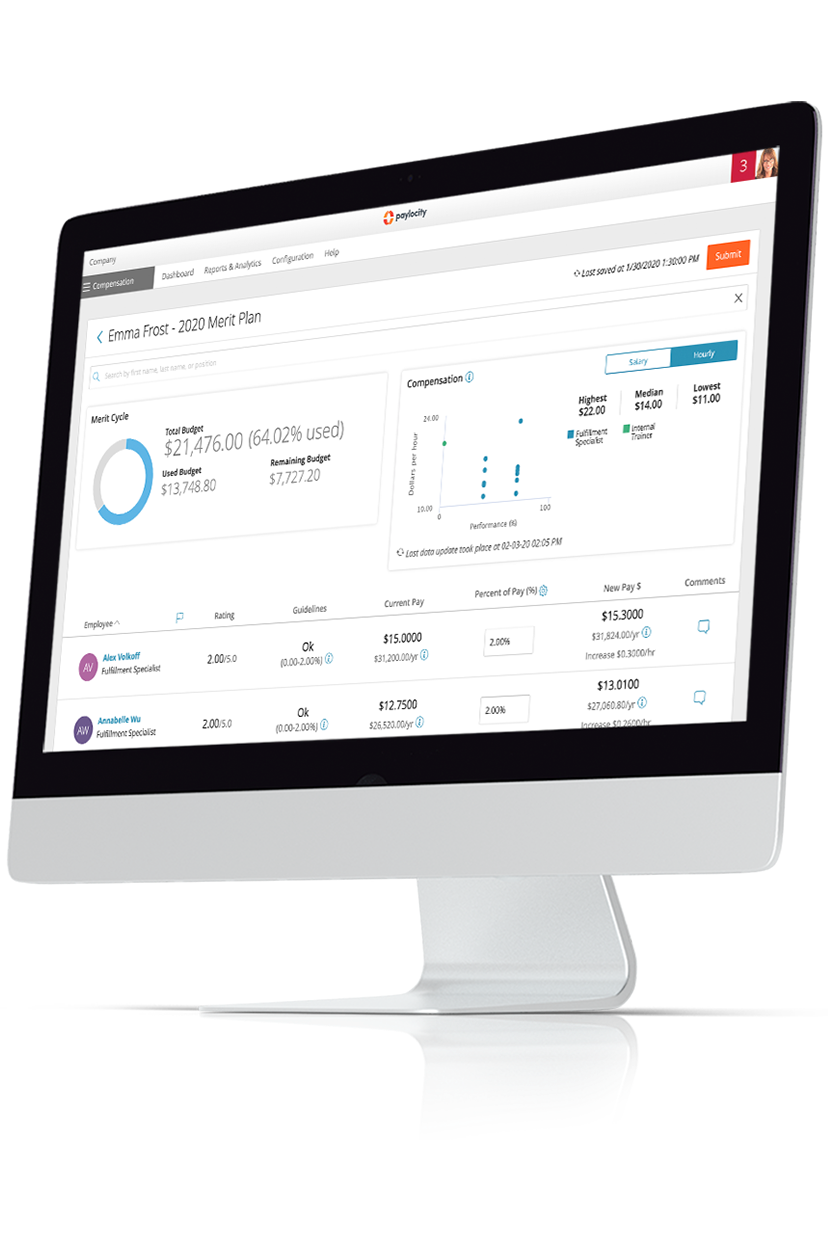
Guarantee Fair Pay, Bonuses, and More
In today's labor market, employees expect fair, competitive wages. Our Compensation Management tool can make it happen. Dig into compensation analytics and insights to inform salaries, merit increases, bonuses, and more. With continual data collection, feel confident you're always paying your employees accurately and fairly, while staying in alignment with your company's budget goals.