Career lattice
Summary definition: A flexible career path that helps employees build skills and experiences by growing into new roles vertically, horizontally, and diagonally.
What is a career lattice?
A career lattice is a talent management framework that emphasizes flexible internal mobility and career development. In other words, it allows and encourages vertical, horizontal, or diagonal progression through a company.
Unlike a traditional career ladder, where employees can only move upward, a lattice pathway uses multiple types of moves, which allows staff to explore different career options based on their personal ambitions, skills, and work-life needs.
- Upward moves: Traditional promotions within the same role or function that increase responsibility, authority, and compensation.
- Lateral moves: Shifts to a different role at the same level, allowing employees to learn new skills, gain broader experience, and expand their professional network.
- Diagonal moves: Moves that combine a lateral shift with added responsibility, helping employees grow into higher-impact roles in a new area.
- Downward/strategic moves: Stepping into a less senior role or different function to develop critical skills or pivot into a career path with long-term growth potential.
Key takeaways
- A lattice approach modernizes the upward trajectory of a traditional career ladder by allowing for vertical, horizontal, and diagonal progression.
- Unlike a career ladder, which focuses on climbing a single career path, a career lattice offers multiple routes for growth based on skills, interests, and personal goals.
- Key career lattice features include individualized training, career maps, and coaching, along with opportunities for cross-training.
Career ladder vs. career lattice

A career ladder represents a traditional, linear progression within a single career track, with promotions and advancements occurring vertically.
In contrast, a career lattice allows for lateral or diagonal progression and development across multiple roles and functions, offering employees greater flexibility for growth.
| Factor | Career ladder | Career lattice |
|---|---|---|
| Direction of growth | Rigidly vertical (i.e., the only way is up). | Multi-directional (i.e., employees can move horizontally, diagonally, vertically, or even downward). |
| Scope of roles | Employees progress within their original team or department. | Employees progress across different departments and functions. |
| Path to advancement | Advancement is earned via promotion after gaining a certain level of experience. | Advancement is earned through the collection of diverse skills and experiences. |
| Motivation | The primary motivations are leadership, seniority, and a high salary. | The primary motivation is continuous learning and development. |
| Measure of success | Success is based on how high you climb the ladder. | Success is based on personal fulfillment. |
Key features of a career lattice
A career lattice framework includes and supports five key features for fostering an adaptable workforce:
- Self-assessment: Self-assessment helps employees identify their strengths, weaknesses, and future career goals.
- Individualized career maps: A tailored career map can visualize a career lattice, helping employees see where they are and how they can get to where they want.
- Training and development: This might include a mixture of in-person or virtual seminars, workshops, and training courses.
- Mentorship and coaching: Mentors and coaches assigned to employees can offer guidance and support.
- Job rotation, shadowing, and cross-functional training: Insight into different company areas enables workers to discover potential new interests and enhance their skills to meet career goals.
Examples of a career lattice
The following examples demonstrate a corporate lattice in action, showcasing how individuals navigate diverse paths for career advancement and skill development:
- An experienced sales representative burns out due to their role. Instead of leaving the company, they decide to use their relationship management skills to make a lateral move to HR.
- A software developer makes a strategic internal move to a systems analyst to develop their skills before moving into an IT management or architect position.
- An entry-level marketing assistant moves into an entry-level social media position to enhance their social media knowledge. From there, they transition into an entry-level data analyst role to gain the analytical skills they need to progress into senior marketing positions
The diagram below further illustrates how an employee may shift laterally into a different field (ex. from HR Specialist to Learning & Development Coordinator) or vertically to higher levels of authority (ex. from HR Business Partner to Senior Business Partner) in different stages of their career.

Pros and cons of a career lattice
A career lattice encourages flexible, multi-directional movement within an organization. While it offers significant benefits for employees and the company, it also comes with challenges that require thoughtful navigation.
| Pros | Cons |
|---|---|
| Employees can move into roles that better match their goals and interests. | Career paths may feel unclear without proper guidance. |
| Offers more growth options than just promotions, which helps retain talent. | Progress can be harder to measure without traditional titles. |
| Attracts ambitious candidates who value learning and flexibility. | Employees may step into roles before they’re fully ready. |
| Builds cross-functional skills that make teams stronger and more adaptable. | Lateral moves may get less recognition than promotions. |
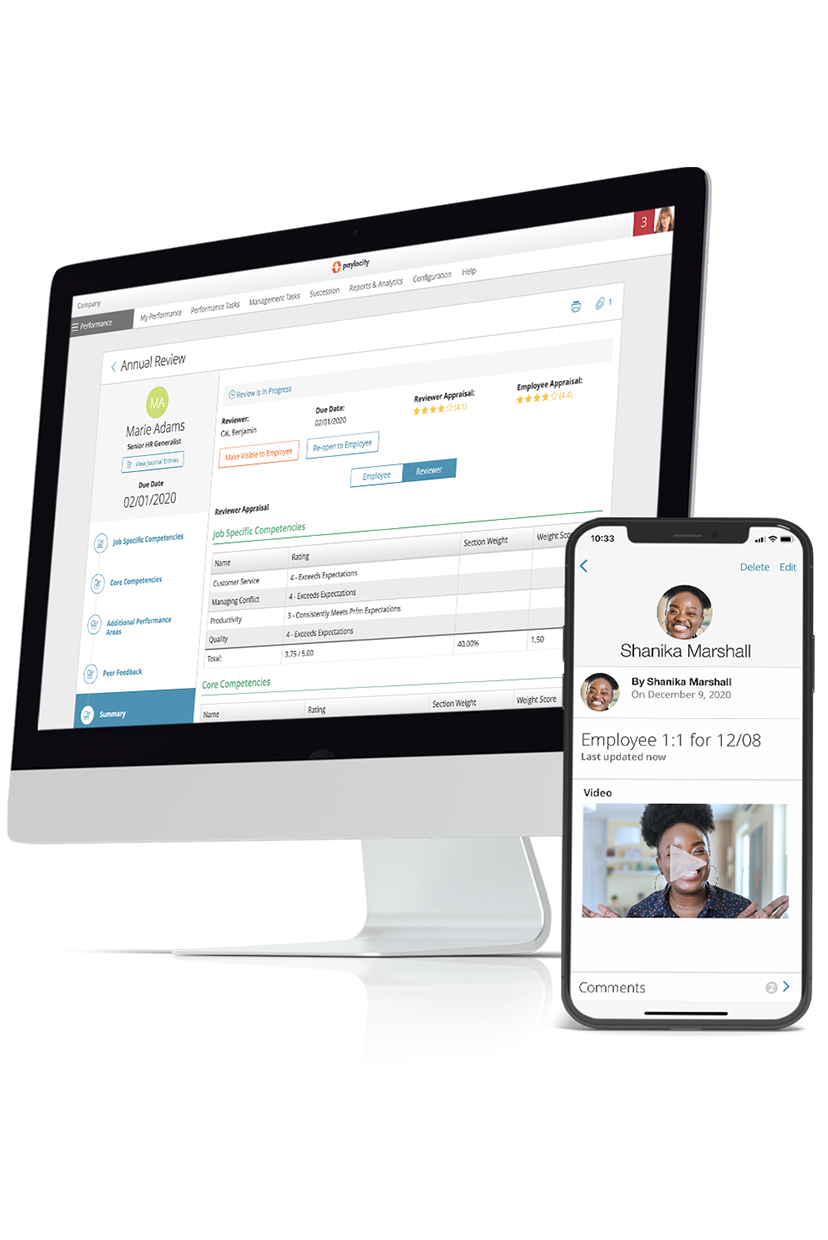
Level up employee performance
Help your employees reach their full potential with modern performance management tools. From goal setting to personalized reviews and ongoing feedback, our solutions enable transparent, two-way communication and encourage employees to take ownership of their growth. Employees expect continuous development and support — give it to them with Performance Management from Paylocity.