Compensatory time off (CTO)
Summary definition: Paid time off granted to employees in lieu of overtime pay for hours worked beyond their regular schedule.
What is comp time?
Compensatory time off, commonly referred to as comp time or CTO, is a practice where employees receive paid time off (PTO) instead of overtime pay for hours worked beyond their standard schedule. Rather than receiving a larger paycheck for the extra hours worked, employees bank the time and use it later.
Compensatory leave is most commonly associated with public-sector employers, where government organizations have long used it as an alternative to overtime compensation. While it’s still available as a private-sector practice, such use is significantly more restricted under federal law.
Key takeaways
- Compensatory time off is paid leave earned in exchange for overtime hours, allowing employees to bank time rather than receive additional pay.
- Under the FLSA, nonexempt state and local government employees can receive compensatory time in place of overtime pay at a rate of 1.5 hours for every overtime hour worked.
- Compensatory time off compliance requires a clear written policy, reliable tracking tools, and regular audits.
How do comp days work?
Nonexempt employees covered under the Fair Labor Standards Act (FLSA) accrue comp time at a rate of 1.5 hours for every hour of overtime worked, mirroring the time-and-a-half rate of traditional overtime pay.
How and when employees can use banked comp days varies depending on the employer's compensatory time off guidelines and any applicable collective bargaining agreements.
Some employers, for example, allow employees to use a comp day at their discretion, while others require advance approval or limit when it can be taken to avoid operational disruptions.
FLSA comp time rules
FLSA compensatory time rules set clear boundaries for public sector employers:
- Nonexempt state and local government employees can accrue up to either 240 hours of comp time or up to 480 hours if they work in certain public safety, emergency response, or seasonal roles.
- Employees must be permitted to use accrued compensatory leave within a reasonable timeframe.
- Upon termination, any unused compensatory time off must be paid out at the employee's final regular rate of pay.
Furthermore, the FLSA restricts private-sector employers from offering nonexempt employees comp time, meaning it cannot be substituted for their overtime pay, regardless of whether the employee agrees to the arrangement.
Comp time for exempt employees vs. nonexempt employees
How the FLSA and compensatory time apply to an employee depends largely on whether said worker is classified as exempt or nonexempt.
| Nonexempt employees | Exempt employees | |
| Overtime eligibility | Entitled to overtime pay for time worked over 40 hours in a workweek | Not entitled to overtime pay under the FLSA |
| Public sector comp time | Permitted in place of overtime pay, but must accrue at the 1.5x rate and within clearly defined limits | Employer discretion (e.g., informal comp time arrangements are common) |
| Private sector comp time | Generally not permitted as a substitute for overtime pay under federal law | Permitted (e.g., many employers offer informal comp time as a work-life balance benefit) |
| Formality | Must follow strict FLSA comp time rules and accrual requirements | Typically informal, with no formal overtime calculation required |
CTO vs. PTO: What's the difference?
While comp days and PTO both result in employees receiving paid leave, they are earned and used differently.
| Compensatory time off | Paid time off | |
| How it's earned | In exchange for overtime hours worked | Accrued as part of standard benefits, based on tenure or hours worked |
| Who it applies to | Primarily public sector nonexempt employees, but also informally for exempt employees | All eligible employees, as defined by employer policy |
| How it can be used | Subject to employer approval | Various reasons, including vacation, illness, and volunteering |
| Accrual rate | 1.5 hours per overtime hour worked | Varies by employer policy |
| FLSA-governed | Yes, strict rules apply, especially for nonexempt employees | No, governed by employer policy and state law |
| Payout upon termination | Required for public sector employees with accrued balances | Varies by state law and employer policy |
In practice, some organizations use both types of leave loosely or combine them into a single leave bank. However, from a compliance standpoint, the distinction matters, as misclassifying a comp day with standard PTO can create significant legal issues for employers.
Deciding between comp time vs. overtime pay
The choice between overtime pay vs. comp time often comes down to what works best for both the employer and the employee:
- Form of compensation: Overtime pay is paid in cash as part of the employee's paycheck, while comp days are “paid” in the form of future time off.
- Applicability: Overtime pay is the most common form of overtime compensation, particularly in the private sector, while compensatory time off is primarily used in the public sector, where the FLSA permits it as an alternative form of compensation.
- Immediate vs. deferred benefit: Overtime pay provides employees with an immediate financial reward in the same pay period the extra hours were worked, while compensatory time offers a deferred benefit in the form of banked time off.
- Flexibility: Unlike overtime wages, which must be paid without delay, compensatory time gives more flexibility for both employers and employees. Employers can manage payroll costs during high-demand periods, while employees have flexibility in when they use their banked leave.
- Budgetary impact: Overtime pay immediately increases payroll expenses in the period it’s earned, while compensatory time off defers the financial impact until it’s used or paid out.
How to manage compensatory time off
For HR and payroll teams, administering comp time accurately requires clear policies, reliable tracking, and ongoing compliance monitoring:
- Establish a written policy: Clearly define who is eligible for comp time, how it accrues, when it can be used, and what happens to unused balances.
- Use a comp time tracker: Manual tracking increases the risk of errors and disputes. Dedicated time and attendance software help guarantee accurate records across pay periods.
- Communicate clearly with employees: Ensure employees understand the difference between comp time and PTO, how their hours are tracked, and their rights under applicable law.
- Review compliance regularly: FLSA comp time rules, state laws, and collective bargaining agreements can all affect how compensatory leave is administered. Regular audits help catch issues before they become costly.
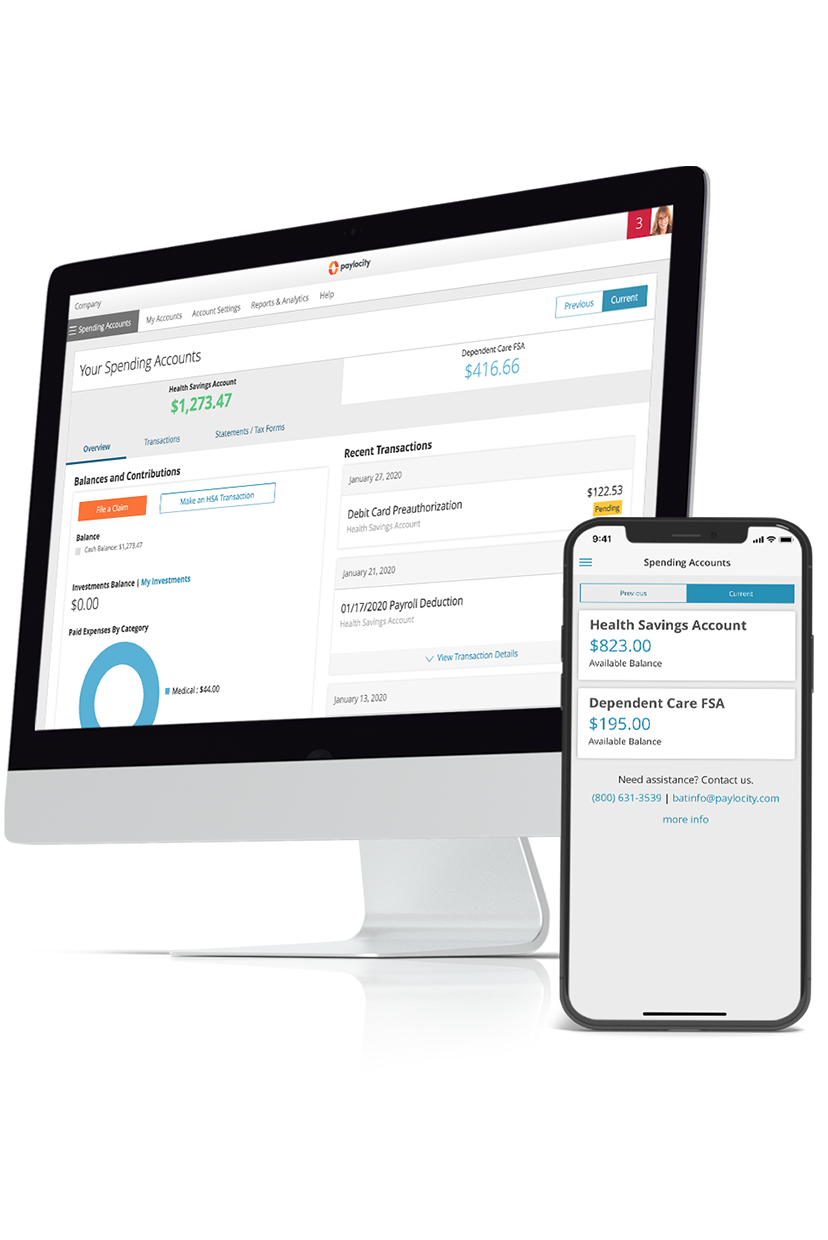
Flexible Benefits, Anytime, Anywhere
Simplify benefits management with an all-in-one platform that connects seamlessly to Payroll. Say goodbye to endless questions about balances and policies across multiple providers. With our Flexible Benefits solution, employees can manage their benefits from one place, while you save time, ensure compliance, and reduce costs. Maximizing third-party administrative offerings has never been easier — for you and your team.