Disregarded entity
Summary definition: A business that’s legally separate from its owner but treated as the same taxpayer as the owner for federal income taxes.
What is a disregarded entity?
A disregarded entity is a status indicating that a business and its owner are legally separate but treated as a single taxpayer for federal income tax purposes.
In practice, this means the Internal Revenue Service (IRS) doesn’t tax the business directly. Instead, all income, losses, deductions, and credits are reported on the owner’s federal tax return, as if the business and the owner were the same taxpayer.
Key takeaways
- A disregarded entity is a business status in which the IRS recognizes the business as legally separate from its owner but treats the two as a single taxpayer when assessing federal income taxes.
- A disregarded entity, therefore, doesn’t file a separate federal income tax return but reports all income and expenses on the owner’s tax returns.
- Only businesses with a single owner, most commonly single-member limited liability companies (LLCs), can be classified as disregarded entities.
What types of businesses can be disregarded entities?
To be considered a disregarded entity for tax purposes, a business must have a single owner and exist as a formal legal entity. For this reason, single-member LLCs are the most common example and are automatically treated as disregarded entities unless the owner files Form 8832 and elects to be treated as a different tax entity.
Partnerships and multi-member LLCs don’t qualify because they have more than one owner. Sole proprietorships are also excluded, as the business and its owner are legally considered a single entity by default.
Disregarded entity examples
Examples of businesses that may be treated as disregarded entities include:
- Single-member LLC: A company with one owner where business income is reported on the owner’s federal income tax return.
- Qualified joint venture: A business jointly owned by spouses in a community property state that elects special IRS treatment.
- Qualified subchapter S subsidiary (QSub): An S corporation fully owned by another S corporation that isn’t taxed separately.
- Qualified real estate investment trust (REIT) subsidiary: A subsidiary wholly owned by a REIT and ignored for federal income tax purposes.
In most cases, these organizations are automatically treated as disregarded entities. However, some, such as single-member LLCs, may choose to change their tax treatment by making an election with the IRS.
How do disregarded entities work in terms of taxes?
For federal income tax purposes, being a disregarded entity means not filing a separate tax return for the organization. If the owner is an individual (e.g., a single-member LLC disregarded entity), the business’s activity is typically reported on Schedule C and included with Form 1040.
When the owner is another business entity, the disregarded entity may still need to file separate forms and returns for employment taxes, excise taxes, and state or local tax requirements, even though its overall financial activity is reported on the owner’s tax return.
Disregarded entity pros and cons
One of the main advantages of a disregarded entity LLC, joint venture, REIT subsidiary, etc., is simplified tax reporting, as business income and expenses are reported directly on the owner’s federal income tax return. This reduces administrative burden and tax preparation costs.
For single-member LLCs specifically, owners can take advantage of this simplified reporting while their personal assets continue to receive limited liability protection from business debts and legal claims.
On the downside, a disregarded entity has no separate tax status, meaning the owner is personally responsible for all taxes on the company’s income. This can sometimes result in higher self-employment taxes compared to corporate tax structures.
Related glossary terms
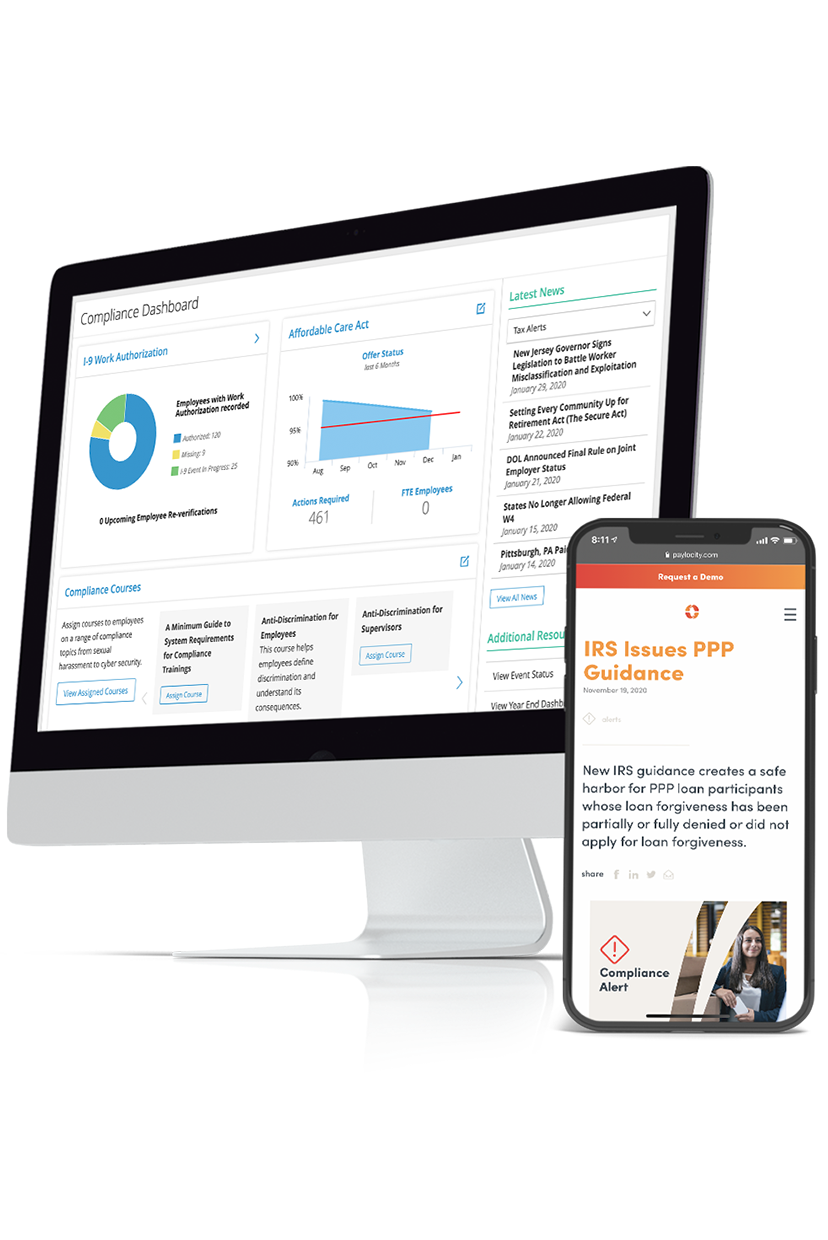
Keep Up With Compliance
Between constantly changing employment laws and updates to the Affordable Care Act (ACA), keeping your workplace compliant can be a time-consuming and costly challenge. Eliminate the stress and stay up to date with our Compliance Dashboard. View compliance alerts and get a bird’s eye view of what you need to do to avoid fines and penalties.