Federal income tax withholding (FITW)
Summary Definition: A recurring paycheck deduction employers submit to the IRS on an employee’s behalf to prepay the employee’s federal income taxes for the year.
What is federal withholding for income tax (FITW)?
Federal income tax withholding (FITW or FIT withholding) is the portion of an employee’s gross wages their employer deducts from each paycheck and forwards to the Internal Revenue Service (IRS) as prepayment for their annual income tax liability.
The amount withheld varies based on two factors: the employee’s earnings, and the details provided on their Form W-4, such as filing status, dependents, and other adjustments.
As a withholding tax (w/h tax), federal income tax is just one type of mandatory payroll deduction employers must identify on an employee’s pay stub. Other withheld taxes include Medicare, Social Security, and state or local income taxes.
Key takeaways
- Federal Income Tax Withholding (FITW) is a recurring paycheck deduction the IRS uses to incrementally prepay federal income taxes rather than requiring a lump sum payment at the end of the year.
- Each federal income tax withholding amount is based on the employee’s annual income level and the information they report on IRS Form W-4.
- An employee’s annual tax return determines if their federal income tax withholdings ultimately over- or underpaid their federal income taxes that year.
Importance of tax withholding
Established in 1943, the current FITW system allows the government to collect payments as taxpayers earn income instead of relying on annual lump sums. This guarantees that individuals pay their income taxes and helps them manage their overall tax obligations by avoiding a large, unexpected tax bill.
Federal income tax (FIT) funds various national programs, including law enforcement, veteran affairs, national defense, and infrastructure improvements.
Tax withholding vs. estimated taxes
Independent contractors (commonly known as 1099 employees) and self-employed workers don’t have an employer to deduct and submit income tax payments on their behalf. Instead, they must make quarterly estimated tax payments based on their tax returns from the prior year.
Collection of other payroll taxes (i.e., Medicare and Social Security) is also required quarterly, though the amounts due are calculated differently from federal income tax.
How does FITW work?
After employers withhold federal income tax, employees can review the FITW on paycheck stubs for both the current pay period and the whole year. At the end of the year, the federal W-2 Form summarizes an employee’s total wages and taxes withheld.
Taxpayers then use this information to file annual tax returns and determine whether they paid too much or too little.
What is IRS Form W-4?
The 2026 W-4 Form (a.k.a. Employee’s Withholding Certificate) is a tax document employees complete to help employers calculate estimated tax liabilities for the year, thus ensuring accurate withholdings. The reported information can include personal details, multiple jobs, spousal employment, and any applicable deductions or dependents.
Employees typically complete a W-4 when starting a new job or when a significant change in their financial situation occurs, such as marriage, childbirth, or a significant income adjustment. This ensures the withholding amount closely aligns with the employee’s actual tax obligation, minimizing the risk of overpaying taxes or facing a large tax balance at tax time.

How is FITW calculated on a paycheck?
Federal income tax withholding is calculated from the amount an employee earns and the details they provide on their federal W-4 form. Employers typically use the following process:
- Identify the employee’s filing status (e.g., single, married), claimed dependents, and any extra requested withholdings.
- Calculate the employee’s taxable wages by applying pre-tax deductions to the employee’s gross pay.
- Project the employee’s annual income by multiplying the taxable wages from the current pay period by the number of pay periods in the year.
- Reference the tables in IRS Publication 15-T to calculate the correct progressive tax amount for that annual income and subtract any tax credits for dependents.
- Divide the annual tax by the pay frequency and add any extra withholdings to determine the final deduction amount for the current paycheck.
How much federal income tax should be withheld?
The precise federal income tax withholding rate an employer uses varies by employee based on the employee's declared information and income. Employees can review each pay stub to see the exact FITW deduction for that paycheck or use the IRS’ tax withholding estimator to calculate federal income tax withholding proactively.
2026 federal income tax brackets
There are currently seven federal income tax brackets, which apply incrementally larger income tax rates (10%, 12%, 22%, 24%, 32%, 35%, and 37%) as an individual’s taxable income for the year increases. Each rate, however, only applies to the income that falls within the corresponding bracket’s wage thresholds.
For example, suppose Taxpayer A’s annual taxable income is $75,000, and the existing tax brackets are:
- 10%: $0 - $10,000
- 12%: $10,001 - $40,000
- 22%: $40,001 - $80,000
Instead of owing 22% of the entire $75,000 (i.e., $16,500), Taxpayer A would owe 10% on the first $10,000, 12% on the next $30,000, and 22% on the final $35,000 for a total tax liability of $12,300 ($1,000 + $3,600 + $7,700) or 16% of their taxable income (a.k.a. their effective tax rate).
Why was no federal income tax withheld from my paycheck?
It is possible to be income tax exempt and have no federal income tax withheld from a paycheck. If an individual owed no federal income tax the prior year and expects to owe none for the current year, they can indicate as such on their W-4 Form and prevent their employer from withholding federal income tax every pay period.
This doesn’t, however, automatically exempt the individual from other payroll taxes (e.g., Federal Insurance Contributions Act (FICA) taxes).
FITW FAQs
Below are some answers to common questions regarding federal income tax withholding.
How does FITW differ from state withholding?
FITW follows nationwide rules based on federal W-4 information, and withholdings are routed to the IRS to fund national programs. Meanwhile, state income tax withholding (SITW) follows a state’s specific tax laws and routes the withholdings to that state’s tax agency to fund local projects.
Why is my FITW tax so high?
FITW may be higher than normal for a number of reasons, such as entering a higher income tax bracket, adjustments in W-4 information (e.g., claiming fewer dependents), certain life events (e.g., marriage, divorce, or childbirth), or starting a second job.
How does FITW affect my tax refund?
Federal withholding is one factor that directly affects tax refunds, specifically how much more federal income tax was withheld than was necessary. In other words, if someone had far more FITW than they needed (as determined by their annual tax returns), the larger their tax refund can become. If someone only withheld a little too much FIT, their refund will probably be smaller.
What are federal income taxes that are withheld from your paycheck used for?
Federal income taxes withheld from your paycheck are used to fund public nationwide programs, such as national defense, Social Security, Medicare, education, infrastructure, law enforcement, and veterans' affairs.
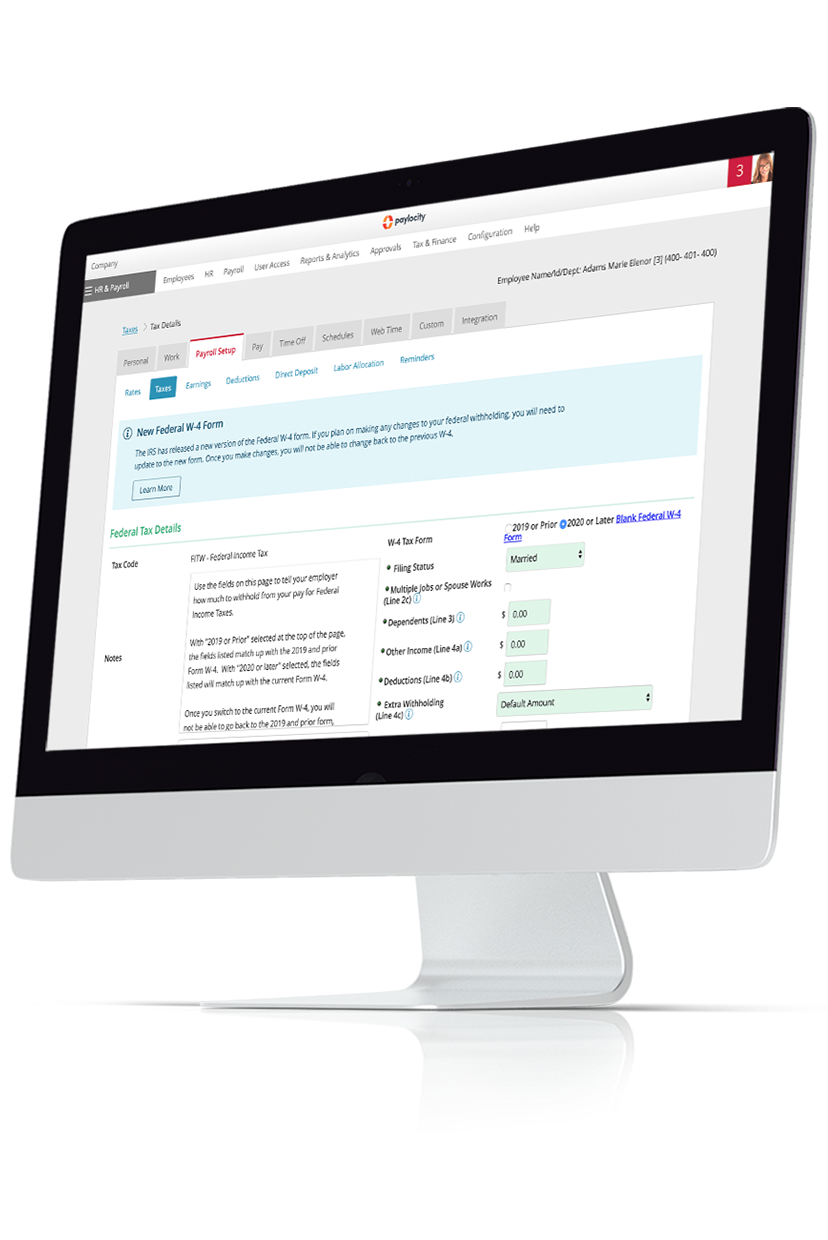
Get taxes done right, without the stress
We know there's a lot that goes into preparing and filing payroll tax forms. Save time and get support from our expert team. As a Registered Reporting Agent with the IRS, we can help prepare and file all the necessary forms you need to remain compliant - even in the face of changing legislation. Learn more here.