State income tax withholding (SITW)
Summary Definition: The amount of money deducted from an employee’s paycheck to cover their state income tax liability based on earnings, filing status, and applicable state tax rules.
What are state withholdings?
State income tax withholding (SITW) is a portion of an employee’s wages that’s deducted to cover the state income tax (SIT) obligations they’re required to pay. Calculating, deducting, and remitting this payroll tax every pay period allows workers to pay their taxes gradually throughout the year, reducing the risk of owing a large balance when filing annual tax returns.
To determine the correct state withholding amount, employers rely on several factors, including the employee’s taxable income, filing status, and any exemptions or allowances they claim.
Key takeaways
- State tax withholding is a mandatory paycheck deduction used to ensure employees meet their state income tax obligations, with calculations based on several factors (e.g., gross wages, filing status, state tax systems, claimed deductions, etc.).
- Withholding rules vary significantly between states, with some using flat tax rates, some applying graduated brackets, and nine states requiring no income tax withholding at all.
- Payroll professionals must navigate state withholding tax laws and understand any reciprocal agreements to ensure accurate, compliant payroll processing.
State withholding vs. federal withholding
Federal withholding refers to the portion of wages employers deduct and remit to cover the federal income tax (FIT) that an employee owes the federal government. Similar to state income tax, federal income tax withholding (FITW) is based on multiple factors, such as the employee’s filing status, income, and details provided on Form W-4. This deduction ensures taxpayers contribute toward various national programs, such as defense, healthcare, and infrastructure.
Although it serves a similar purpose, state tax withholding is based on laws unique to that individual jurisdiction. Moreover, the withheld amounts instead go toward state-level services, like education, transportation, and public safety.
Tax withholding vs. estimated taxes
State income tax withholding is usually automatically deducted from a worker’s paycheck by their employer.
Estimated taxes, on the other hand, are proactively paid by self-employed individuals, independent contractors, and others who don’t have a single employer to make automatic tax deductions on their behalf.
Instead, these taxpayers calculate their own personal income tax payments every quarter and remit them directly to the applicable federal and state agencies. The amount of taxes withheld is often guided by the prior calendar year's tax returns.
How does state tax withholding work?
State withholding is calculated based on several factors, but the two most significant ones are the state’s tax system and the information the employee provided on their state-based withholding form.
Some states (e.g., California, New Jersey, Kansas, Minnesota, etc.) use a graduated tax system, where tax rates increase as the taxpayer’s income level rises. These states typically establish multiple brackets, each with a specific income range and corresponding tax rate (e.g., an income range of $35,000-$60,000 is taxed at 5%; an income range of $100,000-$150,000 is taxed at 12%).
Conversely, other states (e.g., Illinois, Colorado, Iowa, North Carolina, etc.) opt to use a flat tax system, where every taxpayer pays the same rate regardless of their income level.
What are state withholding tax forms?
A tax withholding form is a document employees submit when starting a new job or after a major life change (e.g., childbirth, marriage, divorce, etc.).
These forms guide employers on how much income tax withholding to deduct from an employee’s paycheck, taking into account various personal factors, such as marital status, tax exemptions, and any deductions.
Which states have no state income tax?
The following nine states forgo income taxes altogether, though some (e.g., Washington) still impose taxes on alternative forms of earnings (e.g., capital gains, interest, dividends):
- Alaska
- Florida
- Nevada
- New Hampshire
- South Dakota
- Tennessee
- Texas
- Washington
- Wyoming
What is a reciprocal agreement?
One final important factor for calculating SITW is whether a state has a reciprocal agreement with another state. Reciprocal agreements are tax arrangements between two states for individuals who live in one state but work in the other. In such cases, employees typically have state tax withheld only for the state where they reside.
These agreements are especially common in regions with significant cross-border commuting, such as between New Jersey and Pennsylvania or Maryland and Virginia.
How to calculate state tax withholding
Depending on the state, accurately calculating state income tax withholding can be a complex task. Generally, however, the process involves a few key steps.
- Determine gross wages: Identify how much the employee earned before any other deductions or withholdings are applied.
- Identify filing status: Review the employee’s state tax withholding form to identify their declared filing status (e.g., single, married, head of household, etc.).
- Apply exemptions, deductions, and allowances: Based on the state withholding form, subtract any state-allowed personal exemptions, standard deductions, or withholding allowances to determine how much of the employee’s income is subject to state income tax (i.e., their taxable income).
- Determine the correct tax rate: Confirm if the state has an applicable reciprocal agreement based on the employee’s information. If so, employers can voluntarily make a courtesy withholding (i.e., deduct state tax withholding for both states), but it isn’t legally required.
- Apply the correct tax rate: With the correct state identified, apply either the state’s flat rate or the appropriate graduated rate based on the income bracket the employee’s taxable income falls within.
- Withhold and remit the amount: Withhold the calculated amount from the employee’s paycheck and remit it to the state’s designated agency. Record the state withholding on the employee’s pay stub for transparency, year-end reporting, required tax documents, etc.
How to calculate state income tax withholding in flat tax states
In a flat tax state, calculating the income tax withheld from a paycheck is much simpler due to the uniform rate used. For example, imagine Employee A earns $2,400 per pay period and is paid biweekly by their Illinois-based employer.
Since Employee A didn’t claim any exemptions, allowances, or deductions on their withholding form, their employer applies the state’s flat rate (4.95% in 2026) to the $2,400 in taxable income.
Flat SITW calculation
State withholding tax on paycheck = Flat rate × Taxable income
$118.80 = 4.95% × 2,400
Thus, Employee A will see $118.80 in state tax withheld from their paycheck, which their employer sends to the state government.
How to calculate state tax withholding in graduated tax states
Now, suppose Employee A (and their employer) are instead located in New Jersey, which uses a graduated system for state withholding taxes, meaning (as of 2026) rates range from 1.50% to 11.80%. On their withholding form, Employee A reported a filing status of “Single” and (again) did not claim any exemptions, deductions, or allowances.
According to the state’s withholding form, a taxpayer with a filing status of Single should use Rate A when consulting the corresponding withholding tables. On Rate A’s biweekly table, a taxable income of $2,400 falls within the fourth income bracket ($1,538 - $2,885), which assigns a rate of 6.10% on the amount over $1,538 (plus $31.00).
Graduated SITW calculation
State withholding tax on paycheck = (Tax bracket rate × Taxable income) + $31.00
SITW = (6.1% × ($2,400 – $1,538) ) + $31.00
$83.58 = (6.1% × $862) + $31.00
$83.58 = $52.58 + $31.00
Thus, Employee A will see $83.58 in state income tax withheld on their next paycheck.
Related glossary terms
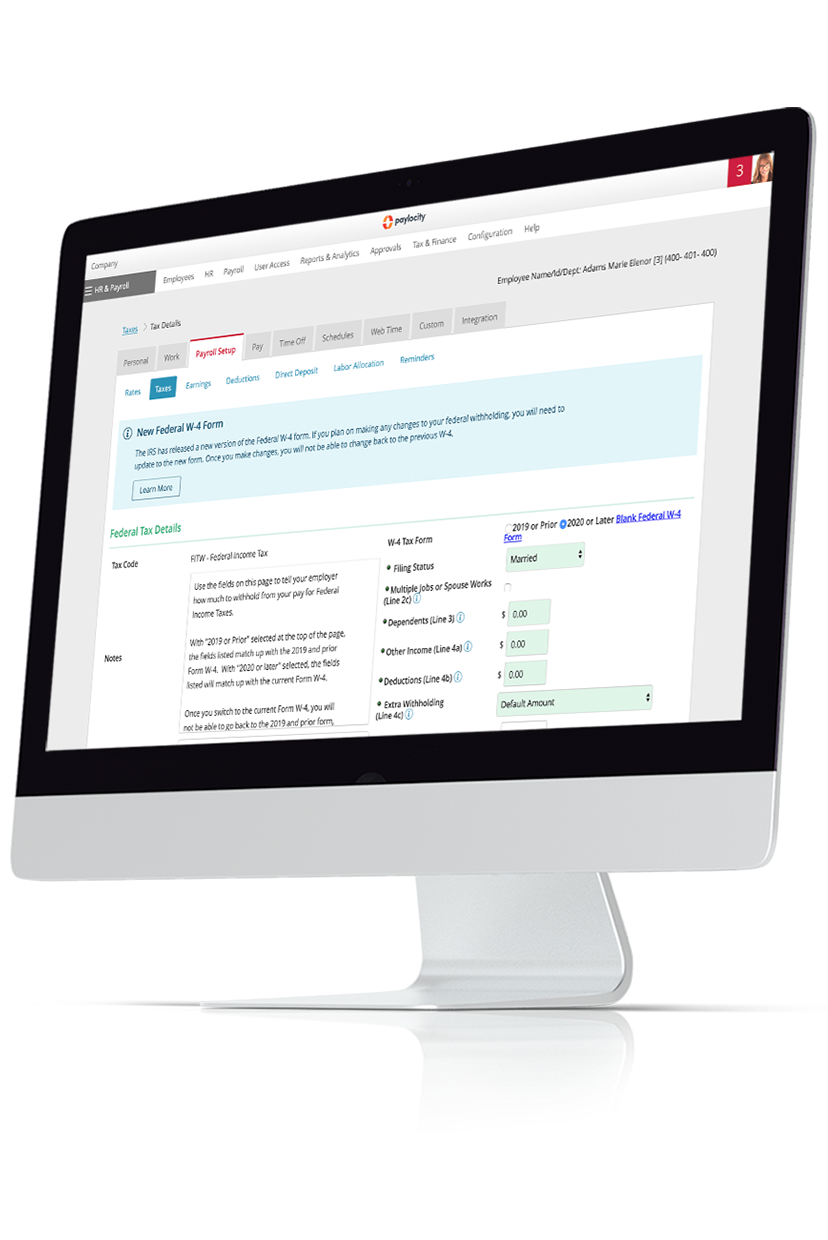
Get Taxes Done Right, Without the Stress
We know there's a lot that goes into preparing and filing payroll tax forms. Save time and get support from our expert team. As a Registered Reporting Agent with the IRS, we can help prepare and file all the necessary forms you need to remain compliant - even in the face of changing legislation. Learn more here.