
How to Demonstrate the ROI of an HRIS
Every investment has to prove its worth on the balance sheet. Marketing spend drives leads. Hiring salespeople closes more deals. However, proving the impact of a human resources information system (HRIS) and demonstrating its actual return on investment can be challenging.
From HR’s perspective, the benefits are clear: payroll runs faster with fewer errors, workflows run like clockwork, and the entire team spends less time addressing employee requests or manual data entry.
But for leaders, it’s not about that lived experience; it’s about measurable outcomes. In simple terms: What’s the actual dollar value that HRIS delivers to the business?
In this article, we’ll explain how to calculate ROI for HRIS and outline methods for evaluating the return your platform delivers.
Key Takeaways
- Calculating the ROI of any HR tech system involves balancing the short-term costs against the platform's long-term business value.
- Specifically, HR tech investment ROI stems from direct cost savings (e.g., unified systems, time saved, etc.) and indirect business outcomes, such as enhanced employee engagement and performance.
- Clearly calculating and sharing that ROI helps HR teams frame efficiency gains and people outcomes as business-driven metrics.
Defining ROI in HR Tech
Return on investment is typically defined in simple mathematical terms: money out versus money in. But when you’re measuring HRIS ROI, that formula doesn’t capture the full impact of your spend.
Like a stock or bond investment, the real payoff doesn’t come from your day-one costs, but from how your investment grows over time. This is why organizations need to consider both costs and added value when weighing up the success of an HR platform investment.
|
Factor |
Details |
Examples |
|
Cost |
The upfront expense of a new platform and the resources needed to maintain it. |
|
|
Value |
The outcomes achieved as a result of using the system. |
|
Further breaking down the value part of the equation into cost savings and strategic value can be crucial for demonstrating overall ROI.
Direct Cost Savings Explained
When exploring how to calculate ROI for HRIS, direct cost savings are often the clearest place to start, since most HR teams already track them. These include:
- Time saved: HR hours saved on manual administrative tasks
- Payroll efficiency: Fewer payment processing errors
- Compliance accuracy: Minimal compliance, recordkeeping, or audit errors and penalties
- Overtime costs: Lower spend on labor due to more accurate time tracking and scheduling
- Attendance tracking: Enhanced absenteeism and leave tracking
- System consolidation: Reduced spend on duplicate or overlapping software
- Onboarding efficiency: Faster time-to-ramp via streamlined onboarding processes
Showing Strategic, Long-Term Business Value
Proving the strategic value of an HRIS tool requires looking beyond direct savings and considering its indirect impacts as well. In other words, the long-term gains and HR metrics that broadly impact business outcomes, such as:
- Employee engagement: Engaged, motivated employees go the extra mile, leading to stronger performance results that protect revenue.
- Employee retention: Committed employees tend to stay longer, resulting in lower turnover and reduced recruitment costs.
- Enhanced productivity: Streamlined processes free employees from time-consuming tasks, increasing productivity without increasing workforce spending.
- Expedited decision-making: A centralized source of data enables better reporting and quicker decision-making, allowing the business to respond to risks and opportunities faster.
- Talent mobility: Improved workforce planning gives HR teams greater visibility into internal recruitment opportunities, thereby reducing time-to-fill needs.
Four Frameworks for Measuring HRIS ROI
For teams seeking to calculate ROI for HRIS, it’s important to remember that such calculations aren’t a one-size-fits-all exercise; they’re a means of framing business value based on both near- and long-term impacts. But, because different stakeholders have varying perspectives on what those impacts should be, you can calculate ROI in various ways.
1. Standard ROI
A standard way to calculate ROI for HRIS is to focus on the literal estimated return the company receives for every dollar spent.
To that end, the standard ROI formula divides an investment’s net benefits (i.e., the amount remaining after recovering total costs) by its total costs and multiplying that result by 100 to show the investment’s relative profit.
ROI = (Net Benefit ÷ Total Cost) × 100
OR
ROI = ( (Total Benefit – Total Cost) ÷ Total Cost) × 100
For example, if you purchase 200 software seats at $25 per seat per month, your annual subscription cost is $60,000 (25 × 200 × 12).
If you calculate that the system delivers $100,000 annually in cost savings and retention, your net benefit after recouping that cost is $40,000 ($100,000 - $60,000 = $40,000), which results in an overall ROI of 66.7%.
ROI = ( ($100,000 – $60,000) ÷ $60,000) × 100
66.7% = (40,000 ÷ 60,000) × 100
In other words, the investment both recoups its total costs and provides a 66.7% profit.
2. Payback Period
The payback period is another method for determining HRIS ROI. In this approach, you aim to demonstrate how long it takes for the investment to recoup its costs.
To determine this, the payback period formula divides the total cost of the investment by its annual net benefit.
Payback Period = Total Cost ÷ Annual Net Benefit
For example, suppose the HRIS’s implementation totals $50,000, which includes setup, configuration, training, data migration, and other related costs. After it launches, the improved efficiency and reduced turnover it creates result in an annual net profit of $25,000.
Using the payback period formula, the new system will pay for itself in two years ($50,000 ÷ $25,000).
3. Total Cost of Ownership
Another ROI method is total cost of ownership (TCO), which measures the long-term impact of a new system (i.e., initial purchase cost, ongoing operational costs, maintenance costs, etc.). This can be a helpful differentiator when considering two different vendors, because it answers the question: What will this system cost us over its lifespan?
TCO = Acquistion costs + Operating costs + Maintenance costs + Indirect costs + Lifecycle costs
For example, assume you’re planning to use a new system for the next five years before re-investigating HRIS options and vendors.
It comes with an initial setup and implementation cost of $50,000, a recurring subscription fee for 200 seats ($60,000 annually), and ongoing support in case of user error or system malfunctions ($10,000 annually).
TCO = $50,000 + ($60,000 × 5) + ($10,000 × 5)
$400,000 = $50,000 + $300,000 + $50,000
Under the TCO formula, the system’s final total cost will be $400,000.
4. Efficiency Savings
One clear way to demonstrate the business value of an HRIS is to show how it improves efficiency by reducing labor costs associated with completing tasks.
Calculating this requires multiplying the number of hours the new system saves by the average hourly rate of the employees performing the task.
Efficiency = Hours Saved x Average Hourly Rate
If a new HRIS, for example, reduces the onboarding time of a new employee from four hours to two, and you annually onboard 100 employees, that’s 200 labor hours saved every year.
With your talent team’s hourly rate averaging $50, the new HRIS is approximately $10,000 more efficient than the prior workflow (200 × $50).
Turning HR Investments into Business Impact
Proving an HRIS’s ROI isn’t just about validating today’s budget; it’s about showing how the right system reduces costs, minimizes risk, and supports long-term performance. That means looking beyond initial expenses to consider long-term savings and strategic gains that build over time.
When those impacts are clear and quantifiable, HRIS ROI becomes much easier to communicate in the business terms leaders expect.
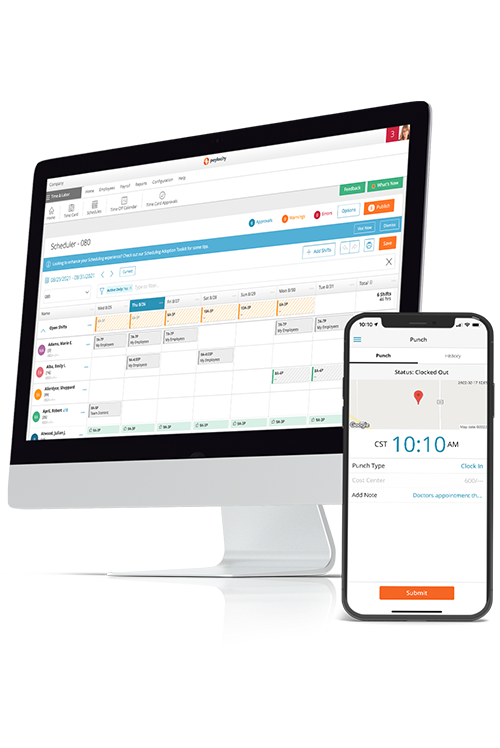
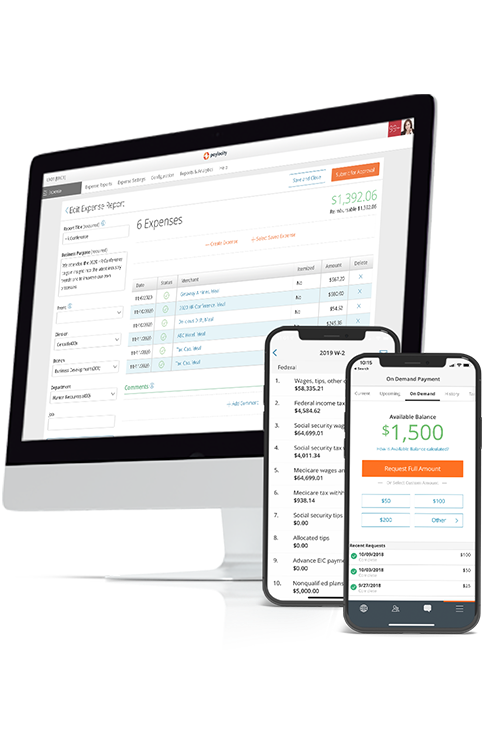
Paylocity helps HR teams capture, measure, and communicate those impacts across the organization in several ways:
- Streamlined workflows that drive efficiency and time savings
- Automated payroll and tax processes to reduce errors and risks
- Real-time dashboards and reports for faster decision making
Request a demo to see what those impacts could look like inside your organization.
Related

10 HR Metrics That Matter to Your C-Suite
