About the author
In 2018, Kelly first supported Paylocity’s Spending Accounts and Benefits products before transitioning to her current role, providing comprehensive compliance and regulatory support for Paylocity’s entire suite of HCM products.


Trying to keep up with overtime laws can be daunting, especially at the state level. Employers have to juggle a myriad of requirements, ranging from minimum wage rates to exemption statuses to industry-specific rules.
While the Fair Labor Standards Act (FLSA) provides a federal baseline, state overtime laws can vary, creating a complex web of regulations and requirements for employers to navigate.
To help make sense of it all, this guide walks through the key compliance nuances employers need to calculate and pay overtime wages confidently.
The FLSA’s federal overtime requirements state that all covered non-exempt employees (i.e., employees who are eligible for overtime pay) must receive no less than 1.5 times their regular rate of pay (a.k.a. “time-and-a-half”) for any hours worked beyond 40 in a fixed, seven-day workweek.
There are, however, some exemptions. Certain administrative, executive, and professional roles aren’t eligible for overtime pay if they meet specific criteria. Furthermore, overtime pay isn’t required for hours worked over a weekend or holiday, unless those hours exceed the employee’s 40-hour-per-week limit.
Other factors can include the amount of sales the employee achieves and the nature of the employer’s business.
Calculating overtime pay starts with determining the employee’s regular hourly rate, which serves as the foundation for the federal overtime law’s formula. For most non-exempt workers, overtime pay is calculated by multiplying their regular hourly rate by 1.5 and applying that rate to the overtime hours worked.
If, for example, an employee normally earns $25 per hour, their overtime rate under the FLSA would be $37.50 per hour ($25 × 1.5). By working an extra five hours in a given week, that employee’s weekly wages would increase from $1,000 ($25 × 40 hours) to $1,187.50 ($37.50 × 5 overtime hours = $187.50).
Overtime Pay = (Regular Rate of Pay × 1.5) × Number of Overtime Hours
Overtime Pay = ($25 × 1.5) × 5
$187.50 = $37.50 × 5
Outside of FLSA overtime rules, most states (and D.C.) also have their own regulations regarding overtime working hours. These state overtime laws, however, generally mirror the FLSA’s 40-hour workweek trigger and 1.5x overtime pay rate.
When state standards do differ, they’re usually distinguished by expanded eligibility requirements and the use of unique exceptions, such as industry-specific considerations and alternative workweek arrangements.
A few states, though, also calculate overtime working hours differently via a secondary overtime trigger based on hours per workday (a.k.a. “daily overtime”). Moreover, one state (California) uses a different overtime pay rate (2.0 instead of 1.5), sometimes called “double time.”
Regardless, employers generally must apply state-by-state overtime laws based on where the employee physically performs their work, not where the organization is based.
The below is offered as a quick reference, but employers should regularly review their state labor office’s official guidance and contact state officials for any questions.

|
State |
Overtime Trigger |
Additional Details |
|---|---|---|
|
40 hours per workweek OR 8 hours per workday |
Flexible voluntary work-hour plans are allowed for up to 10 hours per day or 40 hours per workweek. Hours worked must include hours spent on call or on standby for the employer's convenience. Rest periods of 20 minutes or more where an employee is relieved of duty are not included in hours worked. |
|
|
40 hours per workweek |
||
| California |
40 hours per workweek OR 12 hours per workday |
Overtime is required for the first eight hours on the seventh day of work in a workweek, regardless of hours worked in the previous days of the workweek. This must be calculated using double time. Alternative workweek schedules are allowed for working up to 10 hours a day or 40 hours a workweek. Double time is, again, required when working over 12 hours in a day or more than eight hours in a day that isn’t included in the alternative workweek agreement. Overtime doesn’t apply to makeup work time when an employee makes a written request to make up work time missed earlier in the same workweek due to personal reasons, unless the workday during which makeup work occurs is longer than 11 hours. Special considerations also apply to agricultural employees and domestic workers acting as personal attendants. |
| Colorado |
40 hours per workweek OR 12 hours per workday OR 12 consecutive hours |
Special considerations apply to hospital and nursing home employees, agricultural workers, and certain small employers, depending on whether the business is considered highly seasonal. |
|
40 hours per workweek |
Hours worked must include time an employee is required to be on-site, including on-call time when an employee is required to be at a location determined by the employer, regardless of whether work is performed. Collective bargaining agreements may establish alternative overtime arrangements under certain conditions. Special considerations apply for hospital employees, restaurant and hotel workers, and employees providing companionship services. |
|
|
40 hours per workweek |
||
| Hawaii |
40 hours per workweek |
Special considerations apply for certain agricultural employers. |
| Illinois |
40 hours per workweek |
|
|
40 hours per workweek |
Overtime pay is not required under collective bargaining agreements so long as certain requirements are met. For non-retail and non-service industry employers, overtime isn’t required if an employee earns at least 1.5 times the minimum wage and more than half their compensation (measured over a period of at least one month) consists of commissions. |
|
| Kansas |
46 hours per workweek |
|
|
40 hours per workweek |
Overtime is also required for hours worked during the seventh consecutive day in a workweek. | |
|
40 hours per workweek |
Generally, employers may not require more than 80 hours of mandatory overtime in any consecutive two-week period. However, certain exceptions apply for public health and safety incidents, seasonal employers, medical interns or residents, and when an employer shuts down an operation for annual maintenance. Other special considerations apply for nurses. |
|
|
40 hours per workweek |
Special considerations apply for agricultural employees and non-hospital workers who provide on-site care to sick, elderly, or disabled individuals. | |
| Massachusetts |
40 hours per workweek |
Special considerations apply to employees involved in planting, raising, and harvesting crops vs. other types of farm and agricultural work. |
|
40 hours per workweek |
||
| Minnesota | 48 hours per workweek | |
| Missouri | 40 hours per workweek | Special considerations apply for employees of amusement or recreation businesses. |
| Montana | 40 hours per workweek | Special considerations apply for hospitals and other businesses caring for the sick, elderly, or disabled when they form a collective bargaining agreement with employees, and seasonal amusement or recreation areas that employ student workers and provide them with lodging. |
| Nevada | 40 hours per workweek OR 8 hours per workday |
Any 24-hour period where the employee starts work is considered a workday. Daily overtime must be paid to employees earning less than 1.5 times the state minimum wage. There is an exemption for workers who agree to a four-day, 10-hour workweek. If work time is missed due to the employee’s circumstances, an employer may allow the employee to make up the missed work within the same workweek without triggering overtime pay. If, however, the employee misses work on the final shift of their planned four-day workweek, due to the employer’s discretion, the employer generally must pay daily overtime of two hours for the previous three days of the workweek. If the missed work is instead due to reasons within the employee’s control or for their benefit, no daily overtime is required for the previous three days. |
| New Hampshire | 40 hours per workweek | |
| New Jersey | 40 hours per workweek | |
| New Mexico | 40 hours per workweek | |
| New York | 40 hours per workweek |
Workers may voluntarily agree to work on a day of rest, so long as the hours worked are paid at the overtime rate. Special considerations apply for residential employees who live at their employer’s home and farm laborers. |
| North Carolina | 40 hours per workweek | |
| North Dakota | 40 hours per workweek | Special considerations apply for taxicab drivers and hospital or residential care employees. |
| Ohio | 40 hours per workweek | |
| Oregon | 40 hours per workweek | Special considerations apply for certain agricultural workers, mills, factories, or manufacturing workers, domestic service workers who live at their employer’s residence, and seafood processing employees. Similar overtime requirements also apply to canneries, driers, and packing plants, not including those related to seafood processing. |
| Pennsylvania | 40 hours per workweek | |
| Rhode Island | 40 hours per workweek | If an employee spends half of their worked hours on activities exempt from state overtime law and half on non-exempt activities, all hours worked must be totaled together to determine if overtime is owed, unless the hours for each activity type are stated separately. |
| Vermont | 40 hours per workweek | |
| Virginia | 40 hours per workweek | |
| Washington | 40 hours per workweek | |
| West Virginia | 40 hours per workweek | |
| Wisconsin | 40 hours per workweek | Special considerations apply for hospital employees. |
Overtime compliance can feel like a maze. And for employers with workers or locations across multiple states, that maze can become a labyrinth. But even the most intricate bureaucracy is manageable with the right guide.
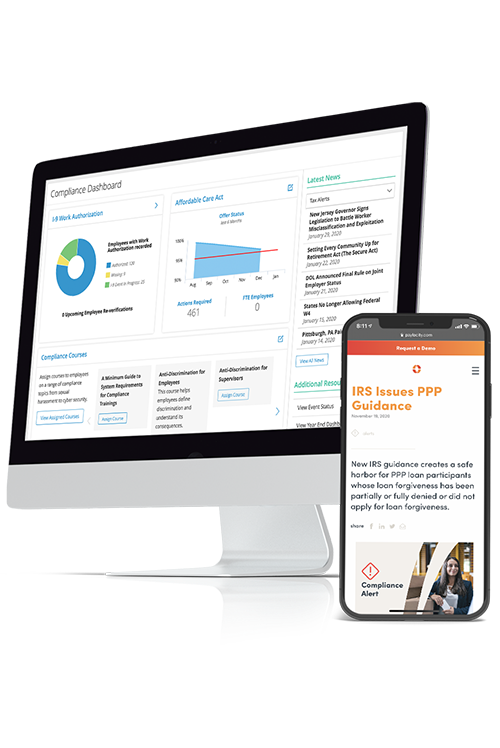
With Paylocity’s compliance dashboard, employers can streamline the complexities of overtime pay to stay ahead of legislative changes and focus on what matters most. From automated reports to integrated payroll and personnel data, Paylocity’s centralized platform keeps your business informed and up to date.
Request a demo today to see how Paylocity can give you peace of mind by taking the complex out of compliance.

In 2018, Kelly first supported Paylocity’s Spending Accounts and Benefits products before transitioning to her current role, providing comprehensive compliance and regulatory support for Paylocity’s entire suite of HCM products.