
Hire Smarter, Not Harder: Types of Pre-Employment Testing
Hiring the right employee isn’t just about resumes and interviews. Instead, today's most successful organizations use pre-employment assessments to eliminate hiring guesswork and bring in candidates who are truly the best fit for the job.
To explain why, the following article will break down what pre-employment testing really is, when to use it, the different types of tests available, and how to administer them correctly.
Key Takeaways
- Pre-employment assessments improve hiring accuracy by evaluating candidates' skills and aptitude via several research-backed methods.
- Different test types serve specific purposes, such as cognitive tests that predict role success, skills tests that measure capabilities, and personality tests that assess cultural fit.
- Effective implementation requires keeping assessments brief, using results alongside other factors, and ensuring legal compliance.
What is Pre-Employment Testing?
Pre-employment testing refers to a range of assessments administered during the hiring process to evaluate a candidate’s aptitude, personality, or overall suitability for a role.
Unlike background checks, pre-employment tests give employers an early read on whether candidates bring the knowledge, skills, and traits needed to succeed on the job.
“Past performance predicts future performance,” said industrial-organizational psychologist Dr. Fred Rafilson in a PCTY Talks podcast. “All of the screening that we can do up front is going to tell us if a person is fit for a particular role.”
The Benefits of Pre-Employment Assessments
Employers often use pre-employment assessments to complement, not replace, interviews and resume reviews. This helps organizations:
- Improve hiring accuracy: Dr. Rafilson suggests pairing pre-employment assessments with other screening methods to evaluate job-related characteristics that strongly predict job performance.
- Speed up screening: Pre-employment assessments help organizations quickly filter out unqualified applicants without spending hours reviewing resumes and conducting phone screens.
- Reduce turnover and boost team performance: Adding the right person to the team (i.e., someone with similar skills and values) can enhance employee retention and improve team dynamics and output.
Types Of Pre-Employment Tests
There are several types of pre-employment tests employers can use, depending on the job’s role and expectations.
Cognitive Ability Tests
Cognitive assessments evaluate a candidate’s ability to learn, reason, solve problems, and think critically.
“We know from decades of research that cognitive ability or the ability to learn what's necessary to perform the job is the single biggest predictor of job success,” Dr. Rafilson said. “The more cognitively complex the job, the more predictive cognitive ability tests are of success on the job.”
While the nature or format of these tests can vary, they often include numerical reasoning, verbal logic, pattern recognition, and abstract thinking.
Skills Tests
Another common pre-employment assessment is a skills test (a.k.a. an employment aptitude test), which assesses practical, hands-on capabilities directly tied to the role.
These tests can, for instance, assess hard and soft skills, such as:
|
Hard Skills |
Soft Skills |
|
|
Personality Tests
Unlike cognitive tests, employee personality assessments are a way to gauge a potential employee’s team or cultural fit, such as core personality traits or behavioral tendencies and preferences.
Some common personality tests include the Myers-Briggs Type Indicator, SHL Occupational Personality Questionnaire, and the HEXACO Personality Inventory.
Emotional Intelligence (EQ) Assessments
Emotional intelligence is a crucial skill for nearly every employee, particularly those working in cross-functional teams or leadership roles.
Emotional intelligence tests, therefore, measure an employee’s self-awareness, empathy, interpersonal skills, emotional regulation, and resilience under stress. They often take the form of open-ended survey questions, ranked or multiple-choice questions, or situational simulations.
Situational Judgment Tests (SJTs)
A situational judgment test creates a hypothetical workplace scenario and asks the candidate to choose or rank the most appropriate response, thereby assessing their decision-making, problem-solving, and interpersonal judgment.
These tests are especially useful for customer service, sales, supervisory, or operational roles.
Job Simulations
Like SJTs, a job simulation assesses a potential employee’s realistic job performance through practical exercises, including role playing, email replies, mock presentations, hypothetical project outlines, or software use.
When Might You Use An Employment Assessment Test?
There are a few instances when employers might use an employment assessment test, some of which aren’t before or during the interview.
- Before the interview (screening stage): Employers often use assessments, such as skill or cognitive ability tests, before the interview to immediately narrow down a large applicant pool. This can also minimize bias by allowing performance, rather than just background, to lead the decision-making.
- During or after the interview: Hiring managers sometimes ask potential employees to take an assessment to help validate what they heard in the interview and compare how candidates would actually handle the job.
- Post-offer (optional development planning): Employment assessments can also be helpful after an offer is made by guiding onboarding, coaching, and long-term development.
|
Interview Stage |
Goal | Best Test Type | Pre-Employment Testing Example |
|
Before
|
Eliminate unqualified candidates
|
Skills, cognitive, personality | When hiring for an entry-level customer service representative, a multitasking and empathy-based SJT can help screen 200 applications for unqualified candidates. |
| During or After | Compare finalists | Simulations, strategic case studies | A 24-hour, take-home exam asks two marketing manager candidates to create a hypothetical campaign plan demonstrating their strategic thinking and creativity. |
| Post-Offer | Tailor onboarding and development | Personality, EQ | After offering a PR associate role, the company uses a personality test to assess the new hire’s potential for leadership and career growth. |
Legal and Compliance Considerations
While pre-employment assessments can add rigor and fairness to your hiring process, they also come with legal and compliance responsibilities. Using them correctly and consistently helps avoid claims of discrimination or regulatory investigations.
- Avoid disparate impact: If your test disproportionately impacts a protected group and doesn’t meet a business necessity standard, you could face legal action under Title VII of the Civil Rights Act or similar state laws. To maintain compliance, regularly audit results and use validated tests.
- Follow Equal Employment Opportunity Commission (EEOC) Guidelines: The EEOC requires that tests be consistently administered to all applicants for the same role, regardless of race, color, national origin, sex, religion, age, or disability.
- Comply with the Americans with Disabilities Act (ADA): Make reasonable accommodations during testing (e.g., extended time for candidates with vision impairments) and ensure tests are accessible (e.g., screen-reader friendly) to candidates with disabilities.
Best Practices for Pre-Employment Testing
To ensure useful results, employers need to do more than pick the right pre-employment test. When administering an exam, hiring organizations should:
- Use assessments as one data point: Combine test results with interviews, references, and resume reviews to make well-rounded decisions.
- Track and analyze outcomes: Monitor how well assessment scores correlate with employee success and retention over time to improve your usage of them.
- Get candidate consent and protect the data: Be transparent about how you'll use assessment data and store it securely.
- Make tests hyper-targeted: Don’t screen for everything. Dr. Rafilson suggests ranking the top 14 or so things that are necessary for the job.
- Integrate test results: Use a human capital management (HCM) platform to ensure that assessments are integrated seamlessly into the recruitment process and individual candidate profiles.
Set Your Hiring Process Up for Success
When appropriately used, pre-employment assessments can bring structure, objectivity, and predictive power to your hiring process. From screening out unqualified candidates to comparing top-tier finalists, assessments help you make better, faster, and more confident decisions.
But to get the most out of these tools, you need an HCM solution that works seamlessly with them.
With Paylocity, you can integrate top third-party assessment providers directly into your recruiting workflows. That means:
- Assessment results flow directly into candidate profiles
- Recruiters and hiring managers stay in sync
- Hiring decisions are backed by hard data
Ready to modernize your approach to talent acquisition? Schedule a demo with Paylocity today.
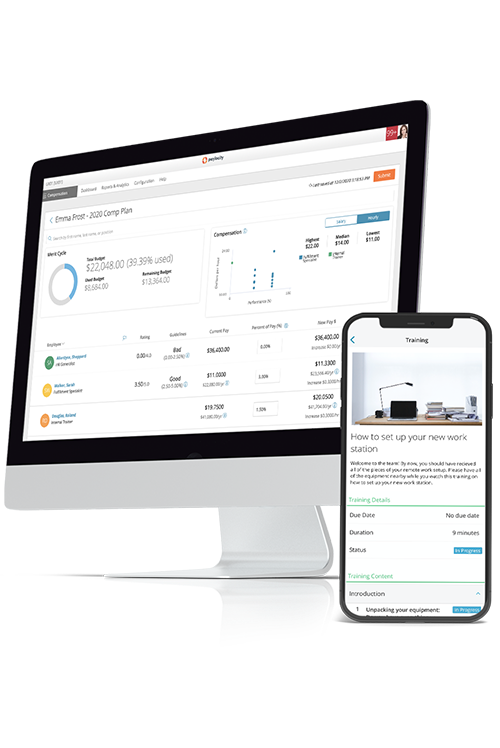
The Tools You Need to Attract and Retain
Attract, engage, and retain top talent with a comprehensive platform designed to support every stage of the employee journey. From recruiting and onboarding to development and retention, our tools offer a seamless experience that’s tailored to the needs of the modern workforce.

