What happens if you don’t file state taxes?
State tax deadlines and types vary, but, like federal payroll tax penalties, the most common ones are failing to deposit collected amounts or a late penalty for filing taxes after their due date.


Every business, from small startups to global enterprises, must handle payroll taxes when it hires its first employee. This includes withholding the correct amounts from employee wages, adding employer portions, remitting the amounts to the proper federal, state, and local agencies, and filing returns verifying compliance.
Yet, year after year, businesses of all sizes face costly penalties or fines due to payroll tax errors or oversights. Fortunately, these penalties aren’t just avoidable, but entirely preventable with the right tools, knowledge, and support.
Payroll tax penalties are financial consequences imposed on an employer, business, or organization when they fail to comply with various payroll tax laws or regulations. This can result from late deposits, inaccurate withholdings, or failure to file returns.
Regardless, the repercussions for these oversights can escalate quickly if left unresolved, especially if the Internal Revenue Service (IRS) or corresponding state agency determines the noncompliance was intentional. In such cases, the punishments can go beyond penalties or fines, including personal liability for the employer and even jail time for unpaid payroll taxes.
If an organization has payroll tax problems and fails to meet its tax obligations, the punishment isn’t an individual tax penalty but a combination of fines, interest, and potentially harsher actions the longer the issue goes unresolved.
For example, if a company misses or makes a federal payroll tax deposit late, the IRS typically sends a notice regarding the infraction, details on the nature of the penalty and applicable interest, and a deadline for resolving this situation. Interest on the unpaid amount then begins to accrue, compounding the financial burden and potentially snowballing into a significant liability.
The two most common federal payroll tax penalties are the IRS’s Failure to File and Failure to Deposit penalties, although there are others for when an organization fails to pay its own taxes (i.e., Failure to Pay) or deliberately doesn’t deposit the payroll tax withholdings it’s collected (i.e., Failure to Deposit).
The penalty for filing taxes late, or not at all, starts at 5% of the unpaid tax for each month (or part of a month) the return is late and ranges up to 25%. If the return is over 60 days late, the minimum penalty is either $510 (for 2026 tax returns) or 100% of the unpaid tax, whichever is less. Regardless, the IRS can also impose interest on this penalty type, though businesses may dispute or request that the penalty be forgiven if there’s reasonable cause for not meeting this tax obligation.
The penalty for not depositing employer payroll taxes on time, or at all, ranges from based on how late the deposit is:
If, however, it’s been over 10 calendar days since an employer received their first penalty notice letter (e.g., CP220) or they receive a notice for immediate payment (e.g., CP504J), the penalty can reach 15% of the unpaid deposit.
Like the Failure to File penalty, the IRS can impose interest on the unpaid deposit amount, and employers may dispute the penalty or request forgiveness.
In 2026, the IRS introduced a new process, Automatic Exemption from Penalty (AEP), that provides automatic penalty relief for employers with a history of timely filing and payment, reducing the need to request relief.
AEP is usually applied on a per-penalty basis, not a per-quarter basis. If multiple failure-to-deposit penalties occur within the same quarter, AEP generally applies only to the first qualifying penalty. Additional penalties may still require a separate abatement request.
AEP is expected to be fully implemented by January 1, 2027.
State tax deadlines and types vary, but, like federal payroll tax penalties, the most common ones are failing to deposit collected amounts or a late penalty for filing taxes after their due date.
|
State |
Employment taxes |
State unemployment insurance (SUI) taxes |
|---|---|---|
|
Alabama |
|
|
|
Alaska |
N/A |
|
|
Arizona |
|
|
|
Arkansas |
|
|
|
California |
|
|
|
Colorado |
|
|
|
Connecticut |
|
|
|
Delaware |
|
|
|
D.C. |
|
|
|
Florida |
N/A |
|
|
Georgia |
|
|
|
Hawaii |
|
|
|
Idaho |
|
|
|
Illinois |
|
|
|
Indiana |
|
|
|
Iowa |
|
|
|
Kansas |
|
|
|
Kentucky |
|
|
|
Louisiana |
|
|
|
Maine |
|
|
|
Maryland |
|
|
|
Massachusetts |
|
|
|
Michigan |
|
|
|
Minnesota |
|
|
|
Mississippi |
|
|
|
Missouri |
|
|
|
Montana |
|
|
|
Nebraska |
|
|
|
Nevada |
N/A |
|
|
New Hampshire |
N/A |
|
|
New Jersey |
|
|
|
New Mexico |
|
|
|
New York |
|
|
|
North Carolina |
|
|
|
North Dakota |
N/A |
|
|
Ohio |
|
|
|
Oklahoma |
|
|
|
Oregon |
|
|
|
Pennsylvania |
|
|
|
Rhode Island |
|
|
|
South Carolina |
|
|
|
South Dakota |
N/A |
|
|
Tennessee |
N/A |
|
|
Texas |
N/A |
|
|
Utah |
|
|
|
Vermont |
|
|
|
Virginia |
|
|
|
Washington |
N/A |
|
|
West Virginia |
|
|
|
Wisconsin |
|
|
|
Wyoming |
N/A |
|
Avoiding issues like a Form 941 late payment penalty or a failure to pay penalty starts with building strong, reliable compliance and reporting processes.
Employers must maintain meticulous records, understand how to calculate payroll taxes, and stay informed on legislative changes to payroll tax rates. Automating tax deposits and report filings helps ensure payments are never late, and storing collected amounts in a separate account helps prevent accidentally using them on other business expenses.
Finally, organizations are encouraged to run quarterly payroll audits to catch issues early and keep up on federal, state, and local tax deadlines and requirements.
Local, state, and federal agencies take tax enforcement seriously, as payroll taxes fund essential programs like Social Security, Medicare, and unemployment insurance. This makes a penalty for not filing taxes or depositing funds on time more than just a compliance concern, but a significant liability.
Fortunately, as an elite payroll services provider, Paylocity has the automation and compliance tools you need to efficiently navigate every tax season and pay period, including:
Request a demo today and discover how Paylocity can transform your payroll tax challenges into a seamless compliance process.
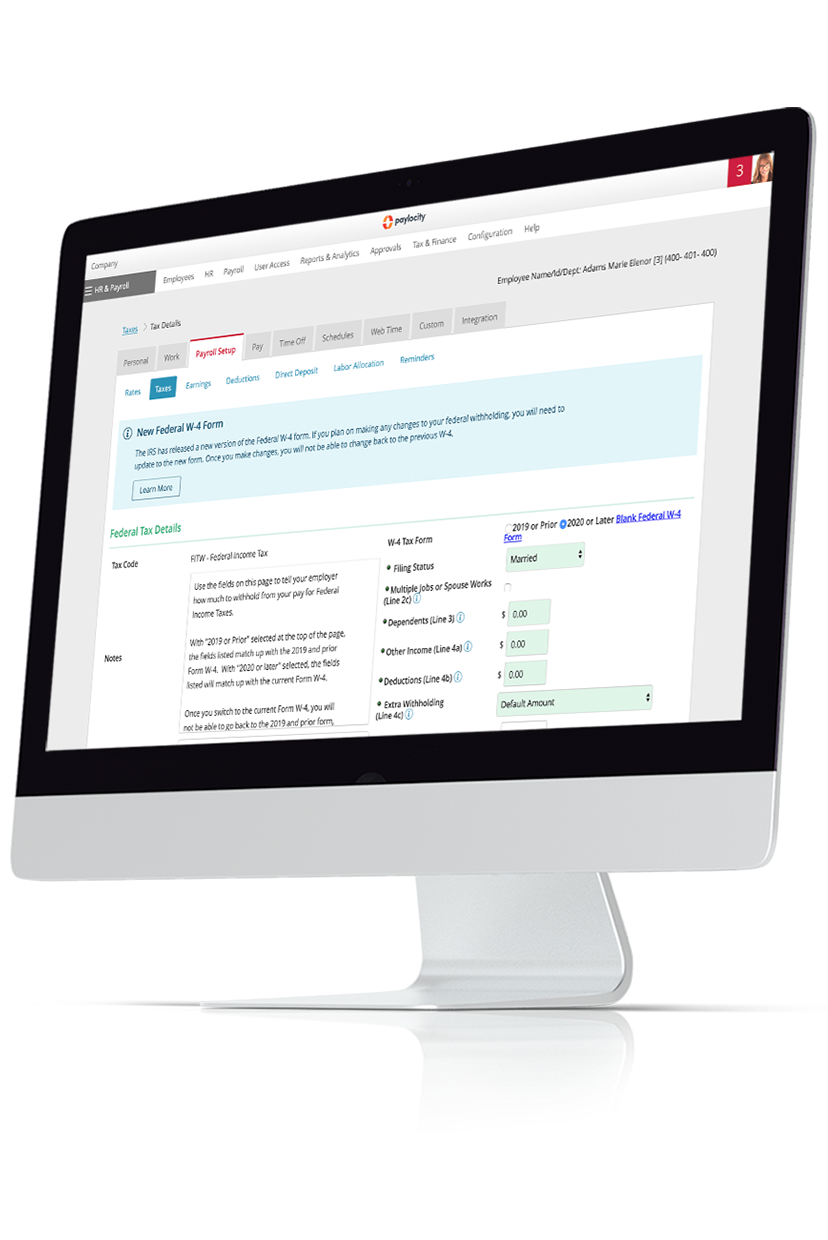
We know there's a lot that goes into preparing and filing payroll tax forms. Save time and get support from our expert team. As a Registered Reporting Agent with the IRS, we can help prepare and file all the necessary forms you need to remain compliant - even in the face of changing legislation. Learn more here.

