What is SUTA tax? State unemployment tax explained

The State Unemployment Tax Act (SUTA) funds benefits for workers who lose their jobs. Explore current rates and how to calculate and submit payments.

  • Reviewed by Paylocity's Compliance & Government Relations Team

What is SUTA?

The State Unemployment Tax Act (SUTA), or state unemployment insurance (SUI), is a state-based, employer-paid payroll tax that funds state programs and benefits for workers who lose their jobs through no fault of their own. Specifically, the tax provides temporary financial relief to those actively seeking new employment.

Also sometimes referred to as a reemployment tax, contribution tax, or unemployment benefit tax, this payroll tax is required in addition to federal unemployment taxes, which help fund similar, nationwide programs and benefits for unemployed citizens.

However, unlike federal taxes, each state can set its own SUTA tax, meaning that otherwise identical organizations may end up paying a different state unemployment tax rate based on where they’re located. Furthermore, an employer’s assigned SUTA tax rate can vary based on their number of past unemployment claims.

Therefore, HR and payroll teams need to understand the state unemployment tax requirements, rates, and calculations for their area.

Note: The below information was last updated March 16, 2026. It is not intended as legal or tax advice.

Key takeaways

  • State unemployment tax act (SUTA) taxes are state payroll taxes that fund state-based unemployment programs and benefits for individuals while they search for a new job.
  • Also referred to as state unemployment insurance (SUI), these payroll taxes are usually paid by employers and calculated using an assigned tax rate applied to a specified portion of an employee’s annual gross wages.
  • Rates vary by state and are based on the organization’s age, history of unemployment claims, and industry.

What are the differences between FUTA and SUTA?

While they both support unemployment benefits, SUTA and the Federal Unemployment Tax Act (FUTA) operate at different levels of government and set distinct rules for employers.

For example, the current FUTA tax rate is 6.0% of the first $7,000 from each employee’s annual wages. Therefore, an employer shouldn’t have to pay more than $420 annually per employee (6.00% x 7,000). Yet, most employers (except those in California) can qualify for a FUTA tax credit, reducing that rate to 0.6% (i.e., $42 annually per employee)

SUTA taxes, conversely, vary by state and rarely (if ever) offer credits for reducing an employer’s assigned rate.

What is SUI tax?

Because each state determines its own unemployment tax rate, the names or terms for it can similarly vary. Unfortunately, this can create confusion and cause some to think SUTA and SUI are different taxes.

In truth, SUTA taxes and state unemployment insurance are the same thing, with the same underlying purpose: providing temporary financial relief to someone while they actively search for a new job. Each state’s nuances and version of the tax can differ, but the names SUTA and SUI are interchangeable.

Take the Complex out of Compliance

Navigating HR compliance can feel like sailing through turbulent waters without a compass. Download our toolkit to stay on track and keep your organization covered.

How do SUI taxes work?

Despite those state-by-state variations, most SUI taxes share a few common traits, namely who pays them and what they’re based on.

Who pays state unemployment tax?

Like FUTA, employers almost always pay an organization’s SUTA tax, meaning there are usually no deductions or withholdings from employee wages. Only Alaska, New Jersey, and Pennsylvania require employee contributions.

Regardless, employers are liable for state unemployment taxes if they have one or more employees (rather than 1099 contractors) who work 20 or more weeks during a calendar year. The weeks do not need to be consecutive, and the paid wages must total at least $1,500.

Some states, however, allow exemptions for certain types of organizations (e.g., nonprofits and charities) and employee demographics (e.g., workers under the age of 21).

SUTA tax rate vs. wage base

Also like FUTA, SUI tax mainly relies on two components: an assigned rate and a prescribed wage base limit.

  • SUI tax rate: The percentage of tax the employer must pay based on their age and history of causing unemployment claims (a.k.a. their experience rating). Sometimes, the turnover volatility of the employer’s industry can also play a role.
  • Wage base: The maximum portion of an employee’s annual gross wages to which the SUTA rate is applied. This limit is usually the same for all liable employers in that state.

Depending on the state, organizations can be considered “new” for up to their first three years of business, during which data is gathered to calculate an appropriate experience rating. Experienced employers are then typically assigned an updated SUI rate every tax year.

How to calculate SUTA tax

With these components in mind, the formula for determining how much SUTA tax an employer owes per employee is straightforward.

SUTA Tax Formula


SUI Tax
= [SUI Rate] x [Gross Wages Up to Base Limit]

For example, if a new employer in Arizona pays their employee $45,000 annually, their 2026 SUI tax for said employee would be only $160 (2.00% x $8,000). An experienced employer, however, could owe anywhere from $2.40 (0.03% x $8,000) to $668.80 (8.36% x $8,000) in SUI taxes for that same employee.

If the organization is in Pennsylvania, not only do the potential rates (3.82% for new employers, 1.419% - 10.3734% for experienced employers) and wage base limit ($10,000) differ, but the state is one of three that also requires employees to make contributions (0.07% of their total annual gross wages).

Thus, not only does SUTA tax help fund unemployment programs, but it also incentivizes employers not to lay off or fire a high proportion of their employees by reducing tax amounts for companies with low turnover (i.e., a low experience rate).

2026 SUTA rates by state

Employers should note that SUTA tax is paid to the state where the employee performs their work, not the state where the organization is headquartered. If an employee works in multiple states, a four-factor assessment is used in the following order.

  • Localization of services: Where the majority of the work is performed.
  • Base of operations: Where the employee begins work, receives instructions, or performs key job-related tasks.
  • Place of direction or control: Where the employer’s main oversight or management of the employee occurs.
  • Residence: Where the employee lives.

Additionally, the rates listed below may change over time and can include a base tax rate, plus additional rates for state assessment fees or other programs (e.g., a workforce development fund). Refer to your state unemployment agency for more details and any questions.

Jurisdiction Wage base New employer rate Exp. employer rate
Alabama $8,000 2.70% 0.20% - 5.40%
Alaska* $54,200 1.50% 1.00% - 5.40%
Arizona $8,000 2.00% 0.03% - 8.36%
Arkansas $7,000 2.00% 0.20% - 10.10%
California $7,000 3.40% 1.50% - 6.20%
Colorado $30,600 3.05% 0.72% - 10.85%
Connecticut $27,000 1.90% 0.72% - 10.85%
Delaware $14,500 1.00% 0.30% - 5.60%
D.C. $9,000 2.70% 1.90% - 7.40%
Florida $7,000 2.70% 0.10% - 5.40%
Georgia $9,500 2.70% 0.04% - 8.10%
Hawaii $64,500 2.40% 0.00% - 5.60%
Idaho $58,300 0.208% - 5.40%
Illinois $14,250 3.65% 0.75% - 7.85%
Indiana $9,500 2.50% 0.50% - 7.40%
Iowa $20,400 1.00% 0.00% - 5.40%
Kansas $15,100 1.75% 0.00% - 6.95%
Kentucky $12,000 2.70% 0.30% - 0.90%
Louisiana $7,000 Varies by industry 0.09% - 6.20%
Maine $12,000 2.54% 0.31% - 6.60%
Maryland $8,500 2.60% 0.30% - 7.50%
Massachusetts $15,000 1.87% (construction)
3.76% (non-construction)
0.56% - 18.55%
Michigan $9,000 2.70% (non-construction)
5.00% (construction)
0.06% - 12.20%
Minnesota $44,000 Varies by industry 0.00% - 8.90%
Mississippi $14,000 1.00% (first year)
1.10% (second year)
1.20% (third year)
0.00% - 5.40%
Missouri $9,000 2.376% 0.00% - 6.00%
Montana $47,300 1.00% - 2.00% 0.00% - 6.12%
Nebraska $9,000 1.25% 0.00% - 5.40%
Nevada $43,700 3.00% 0.25% - 5.40%
New Hampshire $14,000 1.70% 0.10% - 7.50%
New Jersey* $44,800 2.80% 0.50% - 5.80%
New Mexico $34,800 1.00% - 1.19% 0.33% - 6.40%
New York $17,600 4.10% 2.10% - 9.90%
North Carolina $34,200 1.00% 0.06% - 5.76%
North Dakota $46,600 1.00% 1.10% - 9.67%
Ohio $9,000 2.85% 0.40% - 10.10%
Oklahoma $25,000 1.50% 0.20% - 5.80%
Oregon $56,700 2.40% 0.90% - 5.40%
Pennsylvania* $10,000 3.82% 1.419% - 10.3734%
Rhode Island $30,800 1.21% 0.90% - 9.40%
South Carolina $14,000 1.06% 0.06% - 5.46%
South Dakota $15,000 1.75% 0.00% - 9.83%
Tennessee $7,000 2.70% 0.01% - 10.00%
Texas $9,000 2.70% 0.32% - 6.32%
Utah $50,700 0.10% - 8.10%
Vermont $15,400 1.00% 0.40% - 5.40%
Virginia $8,000 2.50% 0.10% - 6.20%
Washington $78,200 Varies by industry 0.27% - 8.15%
West Virginia $9,500 2.73% 1.50% - 8.50%
Wisconsin $14,000 3.05%
3.25% (taxable payroll
of $500,000 or more)
0.00% - 12.00%
Wyoming $33,800 Varies by industry 0.14% - 10.00%

*Also requires an employee contribution rate of 0.50% (Alaska), 0.3825% (New Jersey), or 0.07% (Pennsylvania).
 

How do you pay SUI tax?

Complying with SUTA tax law involves three primary steps:

  1. SUI tax registration: Most state unemployment agencies have a registration site for new employers or organizations to enroll. Some still allow printed registration forms, but most have moved away from this option in recent years. After registering, employers usually receive an employer identification number (EIN) and their assigned SUI tax rate.
  2. Filing SUI payroll data: Similar to Form 940 for federal unemployment taxes, most states have a specific form for employers to report payroll information and calculate how much tax is owed. Again, many states prefer this to be done electronically, though printed forms are sometimes allowed.
  3. Monthly or quarterly SUTA payments: Payment frequencies can vary, though most employers submit tax payments to the state with their monthly or quarterly filings.

SUTA non-compliance penalties

Failing to comply with a state’s SUI tax requirements or missing a payment can result in various penalties, ranging from expensive fines to interest payments to a higher unemployment tax rate. Depending on the circumstances, states can also pursue legal action against the organization.
SUTA FAQs

What is a SUTA tax?

State Unemployment Tax Act taxes are state-based payroll taxes designed to fund unemployment programs and benefits for workers while they look for a new job.

Are SUTA and SUI the same tax?

Yes, because each state sets its own tax, you may hear it referred to differently, such as:

  • State unemployment tax acts (SUTA)
  • State unemployment insurance (SUI)
  • Contribution tax
  • Reemployment tax
  • Unemployment benefit tax
Do I have to pay both FUTA and SUTA taxes?

Yes, unless you qualify for an exemption. FUTA is a federal payroll tax, while SUTA is a state payroll tax.

How do I know if my organization is exempt?

Certain organizations, such as government employers and nonprofit religious, charitable, and educational institutions, are exempt. Review your state’s website for more information.

How do you pay SUI taxes for employees who work in multiple states?

If you have multiple locations or employees who work remotely in multiple states, you will need to file in each state where an employee receives or completes the majority of their work.

What if I pay too much SUTA tax?

Employers who overpay their SUI taxes will either receive a refund from the state or have the overage credited toward future unemployment tax payments.


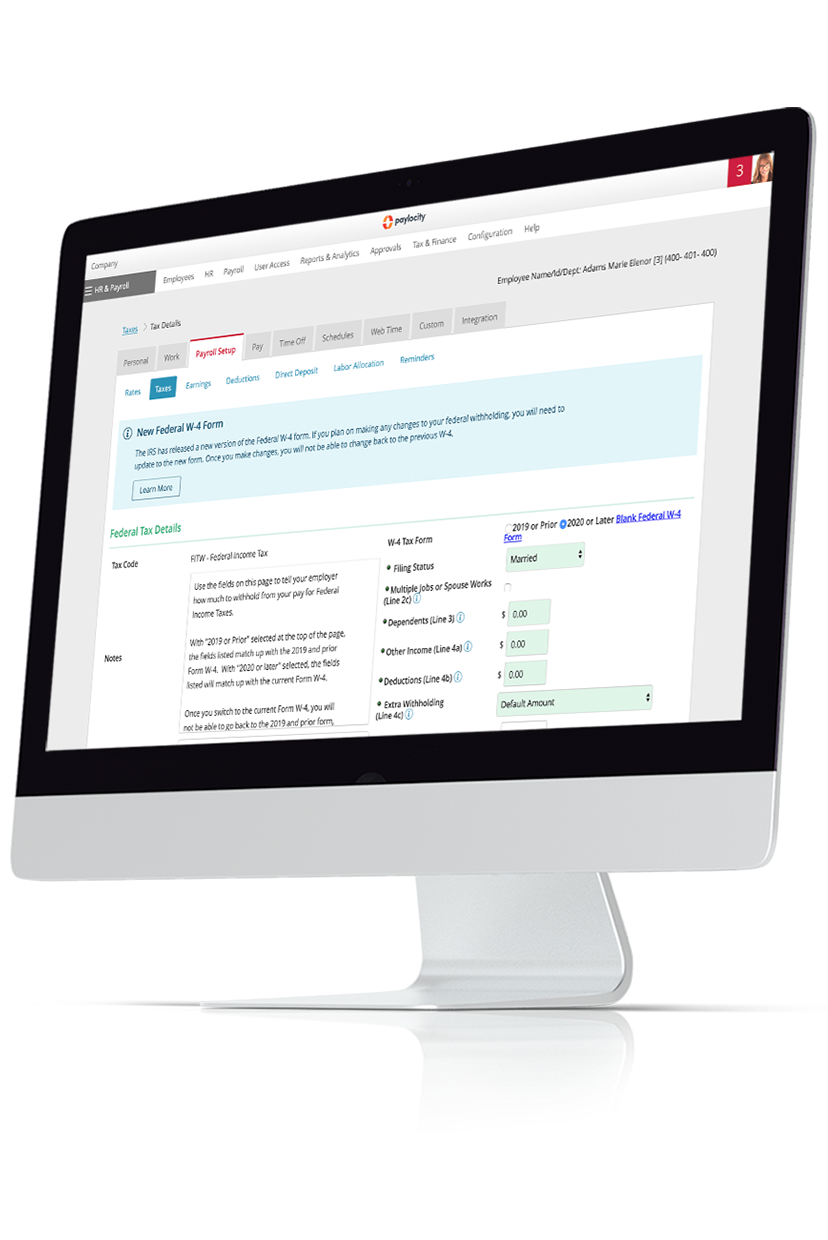
Simplify state unemployment taxes with Paylocity

Understanding and keeping up with state tax information is no small task. With widely varying state-by-state requirements, calculations, and penalties in play, it’s easy to feel overwhelmed.

Paylocity’s tax services are designed to simplify and streamline the entire process, so you can focus on running your business. From preparing and filing returns to reconciling funds and resolving tax notices, our tools provide the real-time insights needed to ensure tax compliance regardless of which state you’re in.

Why struggle with payroll taxes when you don’t have to?

Request a demo today to see how Paylocity can help make payroll taxes one less thing to worry about.

011002000110a-taxservices-fullwidth

Get Taxes Done Right, Without the Stress

We know there's a lot that goes into preparing and filing payroll tax forms. Save time and get support from our expert team. As a Registered Reporting Agent with the IRS, we can help prepare and file all the necessary forms you need to remain compliant - even in the face of changing legislation. Learn more here.

Payroll Tax Services