Asynchronous work
Summary definition: A work arrangement where employees complete tasks and communicate on their own schedules rather than in real time with co-workers.
What is asynchronous work?
Asynchronous work (a.k.a. async work) allows employees to contribute, respond, and advance projects on their own schedules, without requiring the simultaneous presence of their peers or managers.
Originally a computing term, an asynchronous process doesn’t require immediate responses to continue working.
In the workplace, team members don’t need to be in the same office, state, or even time zone to collaborate effectively. They can operate cohesively through asynchronous work, meaning a message sent at 9:00 a.m. in London doesn’t require an immediate response from a colleague in Chicago at 3:00 a.m.
Key takeaways
- Asynchronous work means that employees don't need to be available at the same time to collaborate.
- Asynchronous working improves focus, flexibility, and inclusivity for distributed teams, but requires strong communication norms to avoid slower decision-making, miscommunication, and employee isolation.
- To effectively work async, teams should over-document decisions, set clear response windows, and know which workflows instead require synchronous settings.
What is the difference between synchronous and asynchronous work?
The distinction between synchronous and asynchronous working comes down to timing and expectation.
| Aspect | Synchronous work | Asynchronous work |
| Availability | All parties online at the same time | Each party works on its own schedule |
| Communication | Real-time (e.g., virtual meetings, calls, instant messaging) | Time-shifted (e.g., email, recorded videos, task comments) |
| Responses | Immediate | Delayed |
| Best suited for | Complex decisions, sensitive conversations, creative brainstorming | Status updates, feedback, documentation, review cycles |
| Risk | Meeting fatigue, time zone exclusion | Slower decisions, context gaps if documentation is poor |
What are the benefits and challenges of working async?
Fortunately, payroll leakages are solvable and preventable, but require treating payroll cycles as more than just an administrative function.
Async work allows for deeper focus, greater autonomy, and more equitable participation across time zones. However, async working can also create challenges for team collaboration due to slower decision-making and potential communication gaps.
| Benefits | Challenges |
|---|---|
| Deeper focus: Employees protect larger blocks of uninterrupted time without the context-switching that constant real-time communication creates. | Slower decision-making: Decisions that could be resolved in minutes can stretch across hours or days in an asynchronous workplace. |
| Slower decision-making: Decisions that could be resolved in minutes can stretch across hours or days in an asynchronous workplace. | Communication gaps: Written messages are more easily misinterpreted than live conversations, and errors can compound before anyone catches them. |
| Documentation by default: Decisions captured in comments and shared documents are easier to reference than meeting memories that fade. | Isolation and disconnection: Without regular real-time interaction, team cohesion and relationship-building can suffer over time. |
| Greater autonomy and engagement: Employees who work asynchronously manage their own work hours more freely, supporting higher job satisfaction and lower turnover. | Always-on risk: Without clear response norms, employees may feel pressured to remain continuously available, undermining the intended flexibility of working asynchronously. |
Asynchronous work best practices
For asynchronous work to succeed, teams and employees need to prioritize clarity, consistent documentation, and deliberate communication design:
- Set clear response norms: Teams should agree on expected response windows (e.g., within 24 hours for non-urgent items) so employees can plan for asynchronous job responsibilities.
- Over-document decisions: Because async teams can't rely on "just ask me," they must document their reasoning and decisions in writing. Project management tools, shared documents, and recorded meetings serve this function.
- Distinguish async from urgent: Not every workflow belongs in an async model. Good async discipline, therefore, requires knowing which is which and being able to accommodate different workflow needs. For example, time-sensitive situations, performance conversations, and onboarding moments benefit from synchronous communication.
- Invest in tooling: The asynchronous workplace depends on tools that enable structured handoffs, including project trackers, video messaging platforms, collaborative documents, and shared calendars that communicate availability without requiring real-time meetings.
Maximize productivity the right way
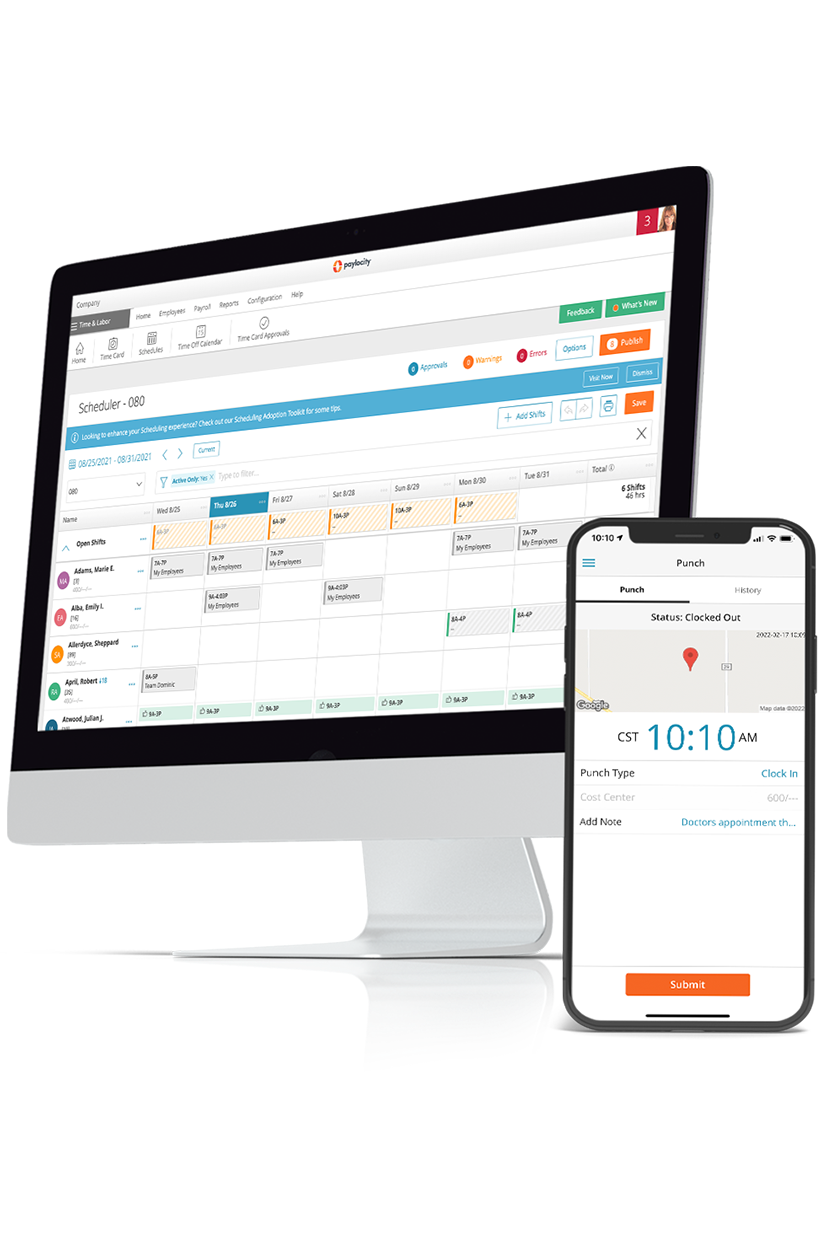
Get out of time-consuming processes while knowing your employees are set up for day-to-day success. The costs — and headaches — of manually scheduling, tracking, and managing your workforce's time adds up fast. Use the right tools to automate where it matters, while delivering a modern, user-friendly experience for employees and their managers.