Contingent worker
Summary definition: A non-permanent worker engaged on a temporary, project-based, or as-needed basis.
What are contingent workers?
A contingent worker is someone who works for an organization on a non-permanent basis, typically for a defined period of time, a specific project, or in response to fluctuating market demand. As such, they’re not classified as a traditional full-time employee.
The contingent employee status can include a range of work arrangements, though always on a conditional basis rather than an ongoing or open-ended one.
Key takeaways
- Contingent workers are non-permanent workers engaged on a temporary, project-based, or as-needed basis, making them distinct from full-time employees in classification, pay structure, and benefits eligibility.
- A contingent workforce can include independent contractors, freelancers, temporary workers, and gig workers, each with distinct compliance and labor management implications.
- Organizations with strong contingent labor management practices are better positioned to scale flexibly, access specialized skills, and reduce compliance risks.
Contingent worker vs. traditional employee
Aside from the length of their working relationships, full-time employees and contingent workers differ across several key dimensions:
- Control and independence: Employees typically follow internal schedules, policies, and direction from management, while contingent employees operate with greater autonomy and are generally responsible for when and how they complete their work.
- Benefits and protections: Unlike contingent workers, employees are usually eligible for benefits, such as health insurance and paid time off (PTO), as well as legal protections tied to their employment status.
- Payroll and taxes: Employees have taxes withheld by their employer as part of the payroll process. By being paid as a vendor or contractor, there are no similar systems in place for a contingent worker, meaning they’re responsible for managing their own tax withholdings.
- Commitment and flexibility: Hiring a full-time employee represents a longer-term organizational commitment. Conversely, a contingent employee offers greater flexibility and fewer obligations when the engagement ends.
Types of contingent workers
Contingent work can take many forms, each with nuances that affect general compliance, tax treatment, and more.
| Type | Contingent worker exception | Contingent worker examples |
| Independent contractors | Self-employed individuals engaged for specific projects or deliverables, typically responsible for their own taxes and benefits. |
|
| Statement of work contractors | Contractors engaged under a formal scope of work for a defined project outcome, often at a higher skill level. |
|
| Freelancers | Similar to independent contractors, but often working with multiple clients simultaneously across short-term or ongoing engagements. |
|
| Temporary workers | Workers placed through staffing agencies for short-term assignments, often to cover seasonal demand or workforce gaps. |
|
| Gig workers | Workers who take on short-term, on-demand tasks, often through digital platforms. |
|
What is contingent workforce management?
Contingent workforce management refers to the strategies, processes, and tools organizations use to source, engage, track, and pay their contingent labor effectively and compliantly, including:
- Contingent worker classification: Ensuring each contingent worker is correctly classified under applicable federal and state laws.
- Employee onboarding and offboarding: Creating structured processes for bringing contingent employees into projects or systems, and removing access when engagements end.
- Contingent workforce payroll: Managing accurate, timely payments, whether through direct deposit, third-party platforms, or staffing agency billing.
- Contingent work performance: Tracking the output and engagement of contingent staff across teams and projects to ensure quality and accountability.
- Contingent workforce solutions: Leveraging workforce management platforms that can handle the distinct needs of a blended workforce (i.e., both traditional employees and contingent employees) within a single system.
Contingent labor benefits
Leveraging contingent employment alongside full-time employees offers several advantages. Used strategically, a blended workforce can improve agility, control costs, and give organizations access to capabilities they couldn't otherwise sustain:
- Workforce flexibility: Contingent workforce staffing allows organizations to easily scale or reduce headcount in response to market demand, seasonal peaks, or shifting business priorities, without the long-term commitment of permanent hires.
- Access to specialized skills: Contingent labor often brings expertise in a specific subject or skill that may not be needed full-time. Therefore, hiring contingent workers for specific projects gives organizations access to high-level talent without permanently adding them to the payroll.
- Cost management: Because a contingent employee typically isn’t eligible for benefits, their total cost of engagement can be lower than that of an equivalent full-time hire, particularly for short-term or project-based needs.
- Faster hiring: Contingent hiring via staffing agencies or freelance platforms can move significantly faster than traditional recruitment, making it well-suited for urgent or time-sensitive needs.
- Reduced long-term risk: When business conditions are uncertain, using contingent staff rather than permanent employees reduces the organizational and financial risk associated with layoffs or restructuring down the line.
- Fresh perspective: A contingent worker with a history spanning multiple clients and industries often brings outside viewpoints and diverse experience that can challenge internal assumptions and drive innovation.
Hire Smarter
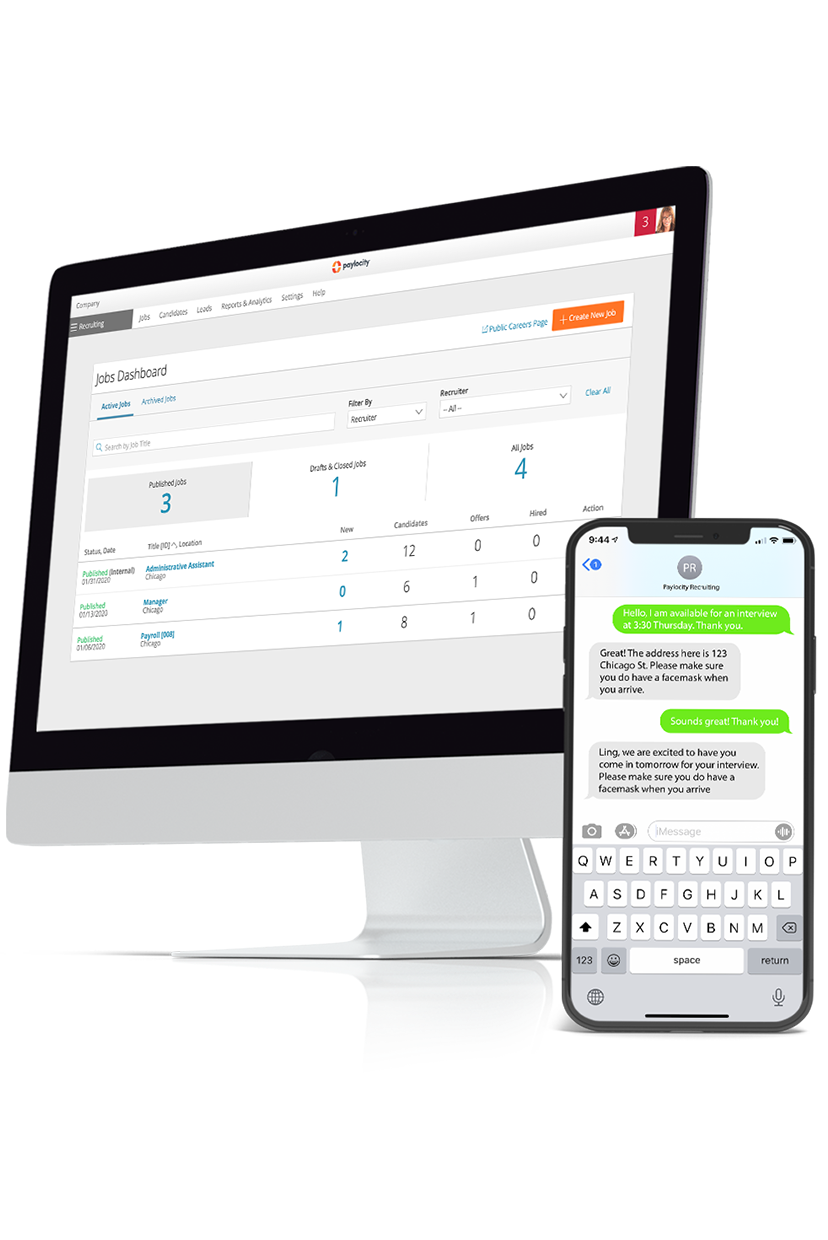
Finding the right talent for your team can be challenging in today’s market. But with the right tools, it doesn’t have to be a strain on your internal resources as well. Our recruiting platform streamlines the process, bringing you an intuitive way to search for and engage with top candidates. With communication methods like texting and video, and data that helps you track progress, attracting and winning has never been easier.