Discretionary business expense
Summary definition: A non-essential business cost that can be reduced or eliminated without disrupting core operations.
What is a discretionary business expense?
A discretionary expense, also called discretionary expenditure or discretionary cost, is a non-essential business transaction that can be reduced or eliminated without halting core operations.
Unlike fixed obligations, discretionary spending is chosen and incurred because it supports growth, productivity, or employee experience rather than fulfilling business needs.
Key takeaways
- Discretionary expenditures are non-essential business costs the organization chooses to incur (i.e., can be reduced or eliminated without disrupting core operations), typically to support growth, productivity, or employee experience.
- Unlike mandatory expenditures (e.g., payroll, rent, or taxes), a discretionary business expense varies in size and scope, though the boundary between the two categories can differ between businesses.
- Effective discretionary expense management requires category-level budgets, approval workflows, and periodic audits to ensure every expense is intentional and tied to a measurable business objective.
What is the difference between mandatory and discretionary spending?
Mandatory expenditures are fixed costs that the business can’t defer without functional or legal consequences. Discretionary expenses, conversely, vary and are optional by nature. In other words, a discretionary business expense is valuable but not required.
However, essential spending for one business may be discretionary for another. A sales team, for example, that relies on in-person client meetings may treat travel as essential costs, while a fully remote organization classifies the same expenses as optional.
| Discretionary expenses | Mandatory spending | |
|---|---|---|
| Nature | Optional | Required |
| Flexibility | Can be reduced, deferred, or eliminated | Fixed with little or no flexibility |
| Examples | Marketing campaigns, training programs, business travel, employee perks | Payroll, rent, utilities, taxes, loan repayments |
| Budget response to downturn | First category to be cut or capped | Remains largely unchanged regardless of revenue |
How to manage discretionary business expenses
Despite its non-essential nature, the goal typically isn’t to eliminate discretionary business expenses entirely. Instead, the conversation usually centers on how to invest in purchases that drive the most long-term value.
To that end, organizations should ensure every discretionary expenditure is intentional, tracked, and evaluated against the return it generates for the business:
- Set category-level budgets: Assign spending limits and categories to all discretionary spending rather than managing a single pool of discretionary funds.
- Tie spending to objectives: Require discretionary purchases above a defined threshold to be linked to a specific business goal, such as employee retention, revenue growth, or productivity. Consider eliminating those not connected to a measurable outcome or benefit.
- Build approval workflows: Introduce pre-approval requirements for discretionary purchases above a set dollar amount. This surfaces high or unexpected costs before they hit the books, creating a record for expense reports and audits.
- Review spending periodically: Audit discretionary spending quarterly to identify patterns, flag overspending, and assess ROI by category. Regular reviews also surface subscriptions or recurring discretionary costs that have outlived their original purpose.
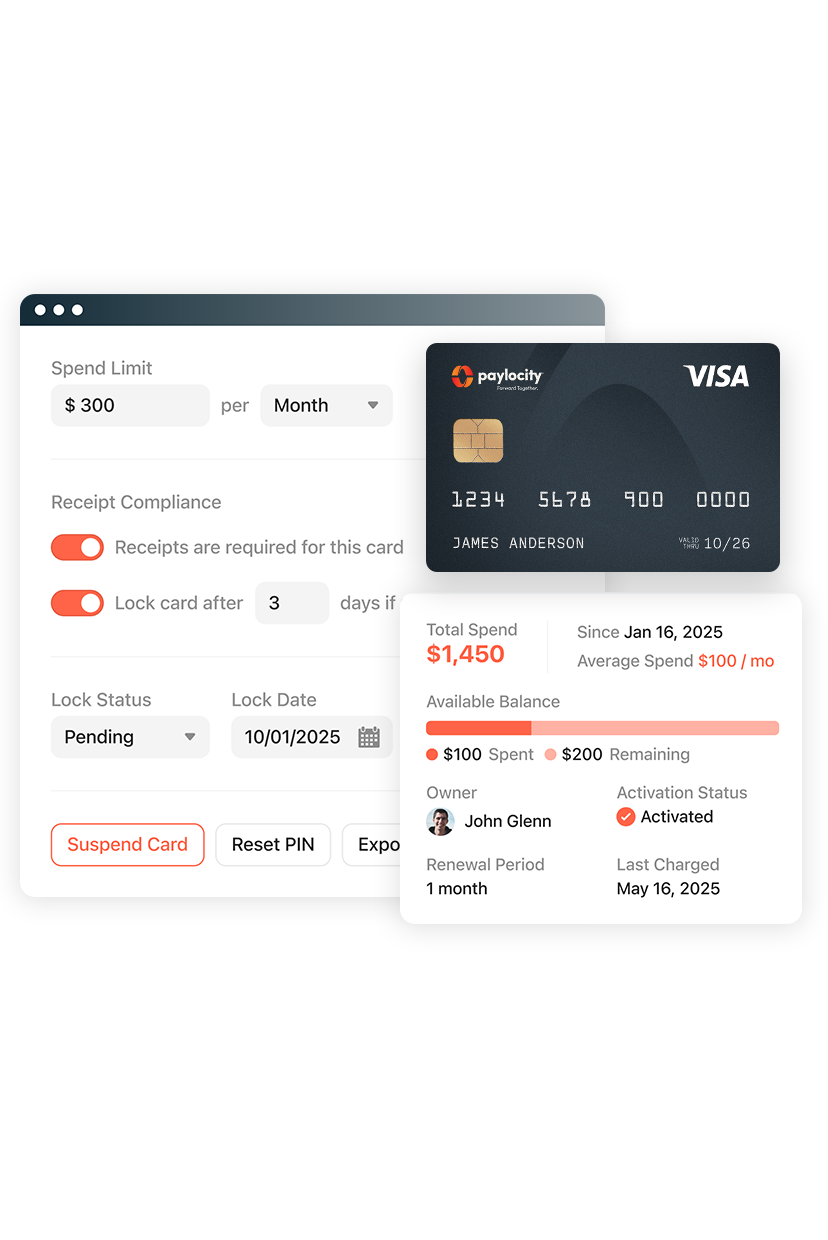
- Use spend management software: Invest in platforms that integrate expense tracking, approval routing, and real-time reporting to provide finance teams with continuous visibility into discretionary expenses across business operations, replacing manual reconciliation with automated controls that flag exceptions as they occur.
Discretionary expense examples
Discretionary expenditures span a wide range of spending categories, but some common types of discretionary expenses include:
| Category | Discretionary spending examples | Why it qualifies as discretionary |
| Marketing | Paid advertising, content production, trade show attendance, PR consulting | The business can still deliver its product or service without active marketing. |
| Benefits/perks | Gym memberships, team-building events, wellness programs, office snacks | Benefits beyond base compensation; valuable for retention but not operationally required |
| Travel and entertainment (T&E) | Client dinners, industry conferences, non-essential site visits | Can often be replaced by video conferencing without disrupting core operations |
| Research and development (R&D) | Product experimentation, innovation projects, pilot programs | Supports future growth but is not required to sustain current operations |
| Non-essential subscriptions | Project management tools, design platforms, social media schedulers | Enhances efficiency but does not directly underpin the core product or service |