Job rotation
Summary definition: A workforce management practice in which employees systematically move through different roles or departments over a defined period.
What is job rotation?
Job rotation is a proactive system that moves employees between roles, teams, or departments at regular intervals to support career path development and skill growth.
Unlike promotions or lateral transfers (which are permanent), rotational work is temporary. The employee always returns to their home function or advances into a new work environment, carrying with them skills and perspective built across multiple areas of the business.
Furthermore, unlike cross-training or secondment, organizations usually take a programmatic approach to job rotation, meaning they intentionally design the staff rotation to specify which roles employees move through, how long they spend in each, what they're expected to learn, and how their performance is evaluated.
Key takeaways
- Job rotation is a structured workforce management practice in which employees move through different roles, teams, or departments at planned intervals to build skills and organizational knowledge.
- Rotational jobs strengthen employee engagement, build operational resilience, and support talent identification, but can suppress short-term productivity and require careful coordination to avoid shallow skill development.
- An effective job rotation plan sets minimum durations, pairs rotational workers with mentors, defines clear learning objectives, and builds evaluation checkpoints at each stage.
What are the types of job rotation?
A short-term staff rotation program, lasting a few weeks to a few months, often exposes employees to the organization at large without disrupting operations.
Long-term rotational jobs, conversely, span one to two years and are more common in formal graduate programs or leadership pipelines. Common rotation types include:
| Type | Description | Typical use |
| Functional rotation | Employees rotate jobs within their own department. | Build depth across specializations in payroll, HR, finance, and related areas |
| Cross-functional rotation | Employee moves between teams (e.g., HR to operations to finance) | Develop generalist leaders or high-potential employees |
| Geographic rotation | Employees rotate work across different locations or regions | Provide international experience for talent growth |
| Leadership rotation | Senior staff rotation through different leadership roles | Prepare succession plans and develop executive skill sets |
What are the challenges and benefits of job rotation?
Rotational work builds skills and resilience across the organization, but can interfere with short-term production or performance goals, and sometimes introduces additional managerial needs.
| Benefits | Challenges |
| Skill development: Rotational workers gain firsthand experience across functions, building broader capabilities than a single role provides. | Productivity: Each new placement requires onboarding time, during which rotational worker output is typically lower than that of experienced team members. |
| Operational resilience: Distributing knowledge across employees reduces dependence on any single person for critical processes. | Shallow expertise: Overly brief rotations can leave employees with broad exposure but insufficient depth in any one area. |
| Employee engagement: By rotating jobs and taking on varied challenges, employees avoid stagnating in a single role or set of tasks, thus reducing the company’s risk of attrition. | Team disruption: Smaller teams with limited capacity may struggle to absorb a rotational worker without placing additional strain on existing staff. |
| Talent identification: Managers across departments gain firsthand exposure to rotational workers, enabling more informed decisions about placement and promotion. | Program overhead: A structured work rotation program requires ongoing coordination and management (e.g., defining learning objectives, managing schedules, and evaluating performance). |
How do you design an effective job rotation program?
A successful work rotation program requires structure at every stage, including:
- Minimum duration periods: Rotations should be long enough for genuine learning to occur while maintaining the overall program’s timetables.
- Proactive mentorship: Assign each rotational worker an experienced colleague in each function to accelerate onboarding and provide context that formal training can't replicate.
- Defined objectives: Each job rotation plan stage should have clear, measurable goals so employees and managers know what success looks like before the rotation begins.
- Evaluation checkpoints: Regular check-ins throughout the employee rotation program track progress, surface issues early, and inform decisions about future placement.
Maximize productivity the right way
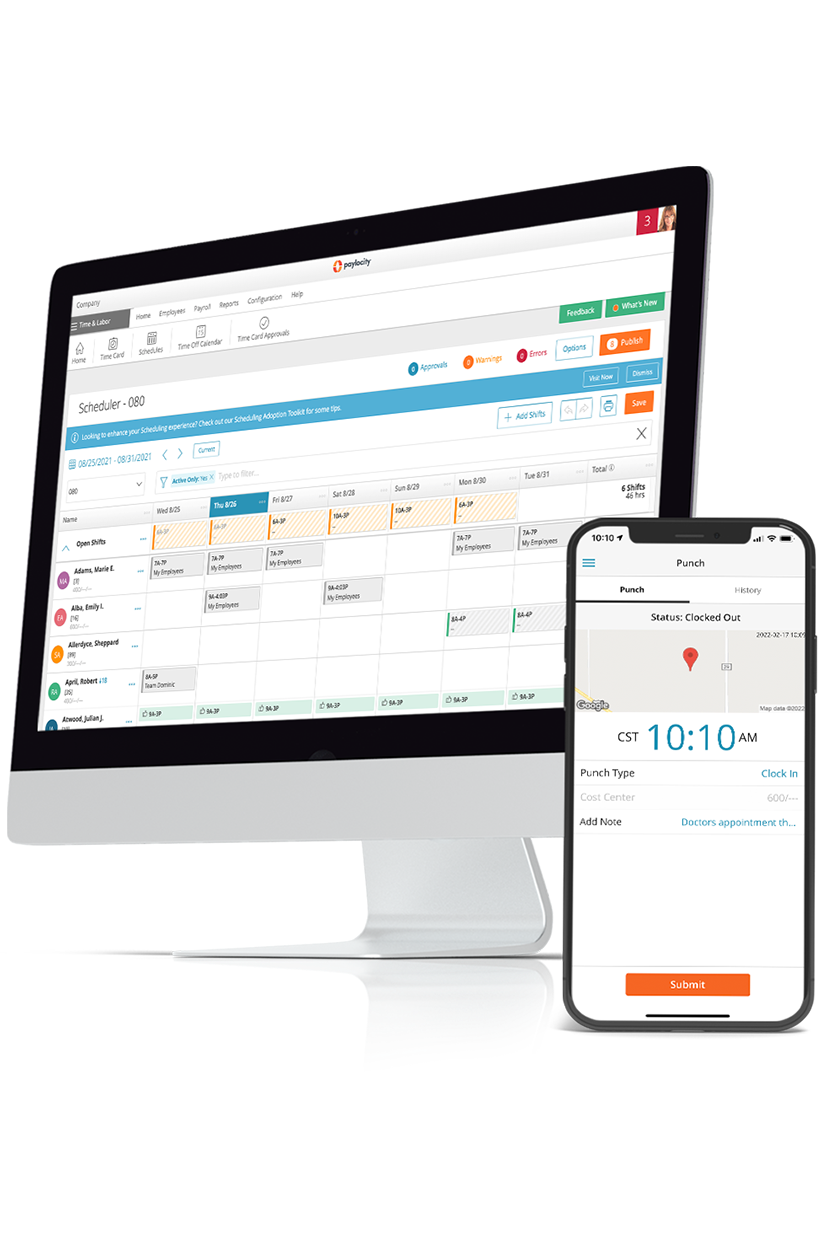
Get out of time-consuming processes while knowing your employees are set up for day-to-day success. The costs — and headaches — of manually scheduling, tracking, and managing your workforce's time adds up fast. Use the right tools to automate where it matters, while delivering a modern, user-friendly experience for employees and their managers.