Rolling forecast
Summary definition: A financial planning approach that maintains a fixed forward-looking timeline by replacing each closing period with a new future one.
What is a rolling forecast?
A rolling forecast is a financial planning and analysis method that maintains a fixed forward-looking time frame (typically 12, 18, or 24 months) by continuously replacing the most recently closed period with a new future period at the other end of the forecast window.
Unlike a static plan that locks projections at the start of a fiscal year and counts down toward a specific end date, a rolling forecast never expires. In other words, the view is always the same distance ahead, updated to reflect current business conditions, actual results, and revised assumptions.
Key takeaways
- A rolling forecast maintains a fixed forward-facing timeline by replacing each closed period with a new future one.
- Rolling forecasts improve decision-making by replacing stale assumptions with current data, surfacing risks earlier, reducing budget gaming, and enabling more agile resource allocation.
- Effective rolling forecasts rely on disciplined, streamlined processes that prioritize key inputs and keep updates focused enough to inform decisions without becoming a burden.
How rolling forecasts work
A rolling forecast uses a consistent drop-and-add cycle, wherein two things happen each time a monthly or quarterly period closes:
- Actual results replace the forecast assumptions for the period that just ended
- A new future period is added at the front end of the time horizon
Thus, the forecast window remains constant, and the only changes are the contents, based on actual data rather than previous best estimates.
Rolling forecast example
Consider a retail company running a monthly updated 12-month rolling forecast. In January 2026, the forecast is used to plan inventory purchases, headcount, and marketing spend from February 2026 through January 2027.
On February 1, 2026, the previous estimates for January 2026 are replaced with the month’s actual performance data, and the model’s timeline shifts to cover March 2026 through February 2027.
Moreover, the projections and estimates for that new timeline are updated based on January 2026’s actual performance data. Where the model previously estimated January 2026 revenue at $500,000, it now reflects the $480,000 actually earned, and the assumptions feeding the remaining months through February 2027 are adjusted accordingly.
Each month, the window shifts again, estimates are updated with the most recent data, and leadership works with refreshed projections that reflect the business’s true performance rather than how it was expected to perform six to 12 months ago.
Common rolling forecast budgeting timelines
The appropriate time horizon for a business to use depends on its planning cycle, industry, and the decisions the forecast supports.
| Horizon | Update cadence | Typical use case |
| 12-month rolling forecast | Monthly or quarterly | Aligns with annual planning cycles while maintaining year-round forward visibility. |
| 18-month rolling forecast | Monthly | Businesses with longer sales cycles or capital planning needs that extend beyond the fiscal year. |
| Quarterly rolling forecast | Quarterly | High-velocity environments where near-term precision matters more than long-range visibility. |
Rolling forecast vs. strategic budgets
The fundamental difference between rolling forecast budgeting and annual strategic budgeting is the flexibility they offer.
An annual budget is a fixed plan set at the start of a fiscal or calendar year that always focuses on the time remaining in that year. Conversely, rolling forecasts continually update to maintain the same future window regardless of where the business currently is in the calendar.
| Rolling forecast | Annual budget | |
| Time horizon | Fixed forward window (e.g., always 12 months ahead) | Fixed end date (e.g., December 31) |
| Update frequency | Monthly or quarterly | Annually |
| Data basis | Historical and most recent performance data; estimates updated each time a period ends | Historical data; estimates made at a single point in time |
| Best use | Ongoing strategic planning, decision-making, and resource allocation | Setting annual targets, governance, board-level accountability |
| Primary risk | Resource-intensive; can become a bottleneck without the right tools or rolling forecast software | Becomes stale quickly; can incentivize budget gaming and year-end overspending |
Despite their differences, many financial institutions use both methods simultaneously. Annual budgets are used to set long-term goals and governance benchmarks, while rolling forecasts continuously update to reflect actual performance and short- to medium-term targets.
Benefits of rolling forecasts
The biggest advantage of a rolling forecast is that its data remains relevant and actionable throughout the year. This, in turn, changes how finance teams and business leaders interact with their business plans.
- Decision-making accuracy: Because a rolling forecast continually updates, leadership never risks making decisions based on stale predictions. Each update replaces old projections with verified data, reducing the gap between the plan and reality.
- Earlier risk/opportunity visibility: Trend analysis and variance reviews built into each update surface emerging issues (e.g., revenue shortfalls or accelerating costs) earlier than an annual review would, giving financial planning and analysis teams time to respond rather than react.
- Reduced budget gaming: Static annual budgets create incentives for managers to manipulate forecasts or overspend up to year-end allocations to protect future budgets. Rolling forecasts decouple planning from fixed targets, replacing such incentives with accountability to current business conditions.
Rolling forecast best practices
Rolling forecast failures usually happen when the process becomes too burdensome. Adopting certain best practices can help avoid such issues entirely:
- Forecast business drivers: Focus the rolling forecast on the key business drivers affecting financial outcomes (e.g., headcount, revenue per unit, churn, and utilization) rather than tracking individual line items. This keeps the model responsive and reduces the time required to complete each update cycle.
- Choose the right timeline: Match the forecast horizon to the business's planning cycle and decision-making needs. A quarterly-updated 12-month forecast, for example, works best for most purposes, while an 18-month one is better suited for longer sales cycles.
- Keep data updates sequestered: Structure the update cycle so the first two days of a new period are dedicated to refreshing performance data and business drivers. Reserve the days thereafter for leadership discussions and decision-making.
- Avoid forecasting bias: Don’t tie forecast accuracy to individual performance reviews. When managers are evaluated based on forecast accuracy, their targets may lean toward what’s safer rather than what the business actually expects.
Make data work for you
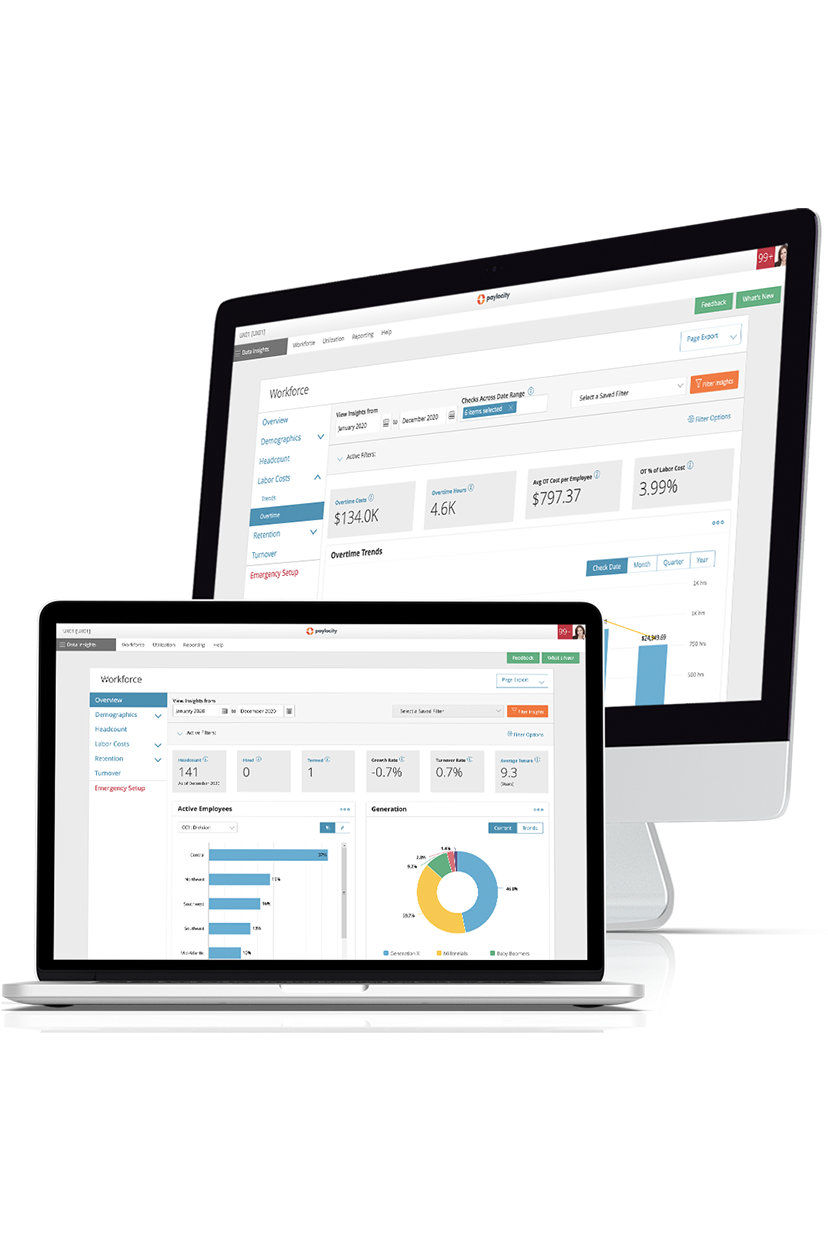
Are you still relying on instincts or assumptions to help you make decisions? Your workforce is changing fast. It’s time for a better approach. With a real-time, easy-to-understand analytics dashboard, you can see what’s really going on in your company and make smart moves based on data. Share insights and results quickly with tailored reporting, and get to know your employees better to improve your overall experience.