Unregretted attrition
Summary definition: The departure of an employee whose exit has a neutral or positive impact on the organization.
What is unregretted attrition?
Unregretted attrition (a.k.a. non-regretted or involuntary attrition) refers to the exit of an employee whose loss is neutral or beneficial to the company. Such departures are often linked to performance issues or unavoidable factors, such as retirement.
This type of attrition is commonly viewed as a natural part of the employee lifecycle and can even yield positive results, such as creating space for better talent who can better support the organization's goals. As such, unregretted attrition is sometimes a deliberate occurrence engineered by an organization as part of a larger staffing initiative (e.g., rightsizing or job leveling).
Key takeaways
- Unregretted attrition is an employee's departure with little to no effect or positive benefits for the company.
- Benefits of non-regretted attrition include streamlining an organization’s workforce, avoiding costs caused by ineffective workers, and refreshing the company’s talent base with new, innovative perspectives.
- Employers can manage an organization’s attrition rate with open, transparent communication and data insights that track workplace sentiment, employee engagement, and performance metrics.
Regretted vs. unregretted attrition
Unlike unregretted attrition, regretted attrition (a.k.a. voluntary attrition) is the unwanted loss of a highly valued employee whose departure hurts the organization. Moreover, regrettable attrition often stems from broader, avoidable issues, such as dwindling employee engagement, below-market compensation, or poor communication between workers and management.
While unregretted attrition is generally regarded as a natural, possibly beneficial occurrence, multiple instances of regretted attrition indicate deeper issues. For example, if an organization has three cases of regretted attrition in a single month, the department or company may have managerial or communication issues to address.
| Regretted attrition | Unregretted attrition | |
| Impact | Loss of high performers, critical skills, or institutional knowledge can hurt team performance and productivity. | Minimal or positive impact — may improve team performance or open opportunities to hire stronger talent. |
| Reaction | Companies investigate causes, adjust retention strategies, and may try counteroffers or exit interviews to prevent similar losses. | Typically, little concern — leaders may treat it as a natural or beneficial part of workforce turnover. |
| Goal | Reduce it as much as possible through better retention, engagement, compensation, and career development. | Maintain or allow it at a reasonable level to refresh talent and address underperformance. |
What is the difference between attrition and turnover?
Non-regretted attrition and employee turnover are related terms, but they focus on workplace vacancies in different ways.
Employee turnover broadly encompasses any worker’s exit and replacement, including layoffs, unwanted resignations, or terminations for cause. A company’s turnover rate, therefore, focuses on how frequently it cycles through employees over a given time to judge overall stability.
Unregretted attrition is a specific type of turnover that occurs when a worker’s exit has no consequences for the company, or when the company requires them to leave.
Why does non-regretted attrition matter?
Unlike instances of regrettable attrition, unregretted attrition can have positive implications that organizations should strategically manage.
- Streamlined workforce: The exit of underperforming or disengaged employees can allow the remaining employees to work faster and more effectively. Team members may find they’re more easily able to align, collaborate, and problem-solve, boosting their efficiency and productivity.
- Cost savings: Employees who require micromanaging or are unlikely to excel can drain resources from other teams and management. By removing or allowing this type of employee to leave, companies can redirect resource investment toward workers with growth potential and a commitment to organizational values.
- Talent refresh: With the vacancies created by unregretted attrition, organizations can bring in new hires with updated skills, innovative ideas, and perspectives that drive progress. Moreover, organizations can realign their teams in response to evolving industry trends and demands.
What causes attrition?
Several factors can fuel an organization’s attrition rate, ranging from leadership issues to a lack of recognition. Non-regretted attrition, however, can also occur by design when a company deliberately downsizes or implements a reduction-in-force (RIF).
When unintentional, common causes for attrition include:
- Limited career advancement: Employees seeking professional growth and advancement opportunities may leave when organizations lack clear development pathways.
- Poor work/life balance: Work environments that demand excessive hours or neglect personal well-being often prompt employees to seek new roles with better work-life integration.
- Inadequate compensation: Employees who feel their compensation doesn’t match their contributions or market standards are likelier to leave for a job that recognizes their worth and rewards their efforts.
Unregretted attrition signals
Organizations can identify likely or desirable departures by focusing on certain signals, such as:
- Poor performance metrics
- Negative employee feedback
- Lack of interest in career development
- Disruptive interactions with peers or management
Indicators like these can highlight employees who aren’t invested in the organization's long-term future or lack motivation to advance their careers.
How to measure non-regrettable attrition
To calculate an organization’s attrition rate, first choose the time period to examine. Then, use the following formula based on the average number of employees and unregrettable attrition departures occurring during that time.
Non-regretted attrition calculation
Non-regretted attrition rate = (non-regretted departing employees ÷ average number of employees) x 100
Note: To find the average number of employees, add the company’s total headcount at the start of the time period to the total headcount at the end of that period, then divide the sum by two.
For example, if Company A had 100 employees at the start of the calendar year and 88 at the end of the year, it had an average of 94 employees. Of the 12 who left, eight were due to non-regrettable attrition, so their unregretted attrition rate that year was 8.51% (8 ÷ 94).
Best practices to manage unregretted attrition
Managing unregretted attrition sets clear expectations and addresses performance gaps early. The goal is to maintain a strong, high-performing team while giving employees fair opportunities to improve. This is much easier to execute with a centralized human capital management (HCM) platform that keeps performance, feedback, and employee data in one place.
- Set clear performance standards: Define measurable goals, responsibilities, and success metrics for every role, so employees understand exactly what strong performance looks like.
- Use workforce analytics to identify low performers: Track metrics (e.g., productivity, goal completion, and engagement) to spot performance issues early, rather than relying on subjective feedback.
- Run consistent performance reviews: Hold regular check-ins and formal reviews to discuss progress, address challenges, and document performance trends over time.
- Tie rewards to high performance: Link bonuses, promotions, and recognition to measurable results to reinforce strong performance and set clear expectations for the team.
- Use structured performance improvement plans (PIPs): When performance issues persist, create a clear improvement plan with specific goals and support so employees have a defined path to improve.
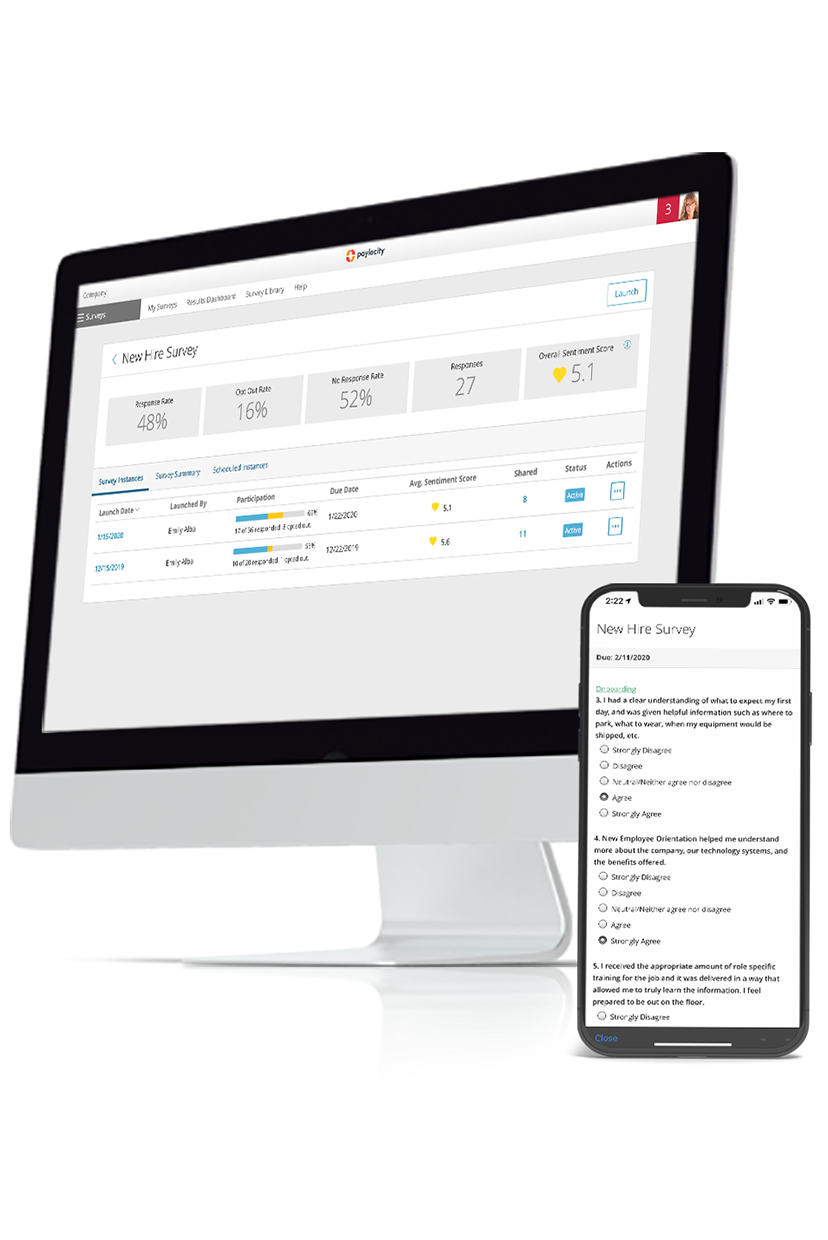
Capture Your Employees' Voices
Your employees want to be a part of creating your company's culture. Make sure they're heard through engaging surveys. Using our questionnaire tool, you can gather invaluable feedback from your entire workforce — remote, hybrid, in-office, contractors, and more. Get the insights you need to make improvements, anticipate any problems, drive strategic decisions, and keep your employees engaged.