Job leveling
Summary definition: A system for defining job roles and responsibilities within an organization and setting clear pathways for career development.
What is job leveling?
Job leveling (a.k.a. job level classification) is the creation of a structured system for defining an organization's job roles and categorizing them by duties, compensation, and potential career pathways.
Each job is assigned a specific level or grade that denotes its status (e.g., entry-level to senior positions), and employees can see the skills and responsibilities they have or need to advance to the next stage in their careers.
This process is typically carried out by HR managers and applied across both external and internal recruitment.
Key takeaways
- Job leveling categorizes roles within an organization according to required skills, responsibilities, and compensation.
- A job level framework helps employees understand expectations and how to progress in their careers.
- Job leveling guidelines ensure consistency in job titles and compensation across an organization.
Why does a job leveling framework matter?
Career leveling tells employees and candidates exactly what's expected and shows clear pathways for progression. Workers can see where they fit within the organization and understand the meaning of specific job titles.
Furthermore, employee leveling supports people strategy for both retention and hiring by promoting compensation parity and role consistency across departments. This, in turn, can help companies meet Diversity, Equity, and Inclusion (DEI) requirements.
Clear job levels also allow HR managers to spot skills gaps, identify high-potential employees, and save time during recruiting through ready-made descriptions and pay scales. These same job leveling guidelines reduce title proliferation and pay disputes that often arise when roles are loosely defined.

How do you create a job leveling matrix?
A job leveling chart is a visual guide to organizational structure and role requirements. Formatted as a table, each column represents a different job level, and each row lists corresponding competencies. The intersecting cells describe the duties and skills required at that level.
This job matrix format concisely shows employees the skills and experience they must acquire to advance. As such, HR managers usually work with senior leaders to build the job leveling guide, aligning it with business objectives. The process begins with a job analysis for each role and generally follows these steps:
- Evaluate and define the key competencies and duties for each role.
- Apply salary leveling to assign corresponding pay grades.
- Document the criteria for career progression.
- Build a flexible structure with alternative tracks for managerial or technical roles, supporting parallel career leveling paths.
- Assign ascending numbers or letters to levels and titles to illustrate hierarchy.
It’s important to note that there’s no universal or standard level of jobs. A small company, for instance, may use only three or four per role, while larger organizations may add sublevels for more complex roles.
Regardless, using consistent leveling guidelines throughout the job level guide keeps the resulting structure objective and defensible.
Job level matrix benefits
A well-built job level matrix delivers several advantages across the employee lifecycle.
- Clarity and consistency: A shared job level system creates a unified language for roles, pay, and progression across departments.
- Career progression: Employees see the competencies needed to advance, which supports engagement and retention.
- Compensation parity: When pay aligns with assigned levels, work leveling rewards employees fairly for comparable responsibilities.
- Talent acquisition: Transparent criteria and a job leveling chart speed up hiring and strengthen the employer brand.
- Compliance support: Objective criteria reduce pay-equity risk and support DEI goals.
Like any framework, however, a job matrix requires periodic review. As markets shift and the organization grows, HR teams should audit the structure to ensure it continues to reflect current roles and business needs.
Job leveling examples
Although approaches vary widely between organizations, the following example illustrates how the job leveling structure a small company might use.
| Level | Job title(s) | Description |
|---|---|---|
| 1 | Intern, Trainee | Entry-level positions focusing on learning and performing basic tasks under close supervision. |
| 2 | Junior Analyst, Assistant | Early-career positions with basic responsibilities in a specific department. |
| 3 | Analyst, Senior Assistant | Mid-level roles with increased responsibility and specialization in certain areas. |
| 4 | Senior Analyst, Manager | Mid-level roles with increased responsibility and specialization in certain areas. |
| 5 | Specialist, Lead Manager | Advanced technical roles or leadership positions overseeing larger teams or projects. |
| 6 | Senior Manager, Director | Senior positions with significant strategic responsibility for a department or function. |
| 7 | Senior Director, Vice President | Higher-level leadership roles with broader organizational impact, may oversee multiple departments. |
| 8 | Senior Vice President | Executive roles involved in strategic decision-making, often part of the executive team. |
| 9 | Executive Vice President | Senior executive roles with substantial responsibility for company operations and strategy. |
| 10 | Chief Officer (e.g., CFO, CTO), President | Top executive positions responsible for the overall direction and strategy of the company. |
| 11 | Chief Executive Officer (CEO) | The highest-ranking executive in a company, responsible for major corporate decisions. |
The next example demonstrates how a compact matrix maps a necessary skill level in jobs of varying seniority.
| Level responsibilities | Associate | Junior manager | Senior manager |
|---|---|---|---|
| Communication | Strong communication with customers, collaborates well with peers, and shares feedback with junior manager(s). | Sets expectations, explains tasks clearly, steps in to assist with tricky customers, and shares feedback with senior managers. | Reports to the C-suite, cascades information to junior managers, and produces the company newsletter. |
| Time management | Manages own time and knows how to prioritize tasks. | Manages their own time, oversees their team’s time management, and identifies team members struggling with deadlines. | Oversees junior managers and checks overall performance on time-tracking tools. |
| Leadership | Responsible for their own individual tasks. | Capable of leading a team, mentoring others, resolving minor disputes, and escalating major concerns to a senior manager. | Oversees all teams, conducts performance reviews, and chairs town hall meetings. |
| Strategy and planning | Can effectively plan and manage their own schedule. | Sets budget for their own team, works with senior managers on strategic planning, and ensures knowledge transfer when employees leave the business. | Sets departmental budgets, analyzes relevant data, and works with the C-suite to produce strategies. |
Note that these job level framework examples are just starting points. The right number of levels, titles, and competencies depends on an organization's size, structure, and management roles.
Although for most companies, a clear job leveling matrix that defines each level and career path in plain language is enough to guide fair, consistent decisions about pay, promotion, and development.
More time, less labor = a better experience
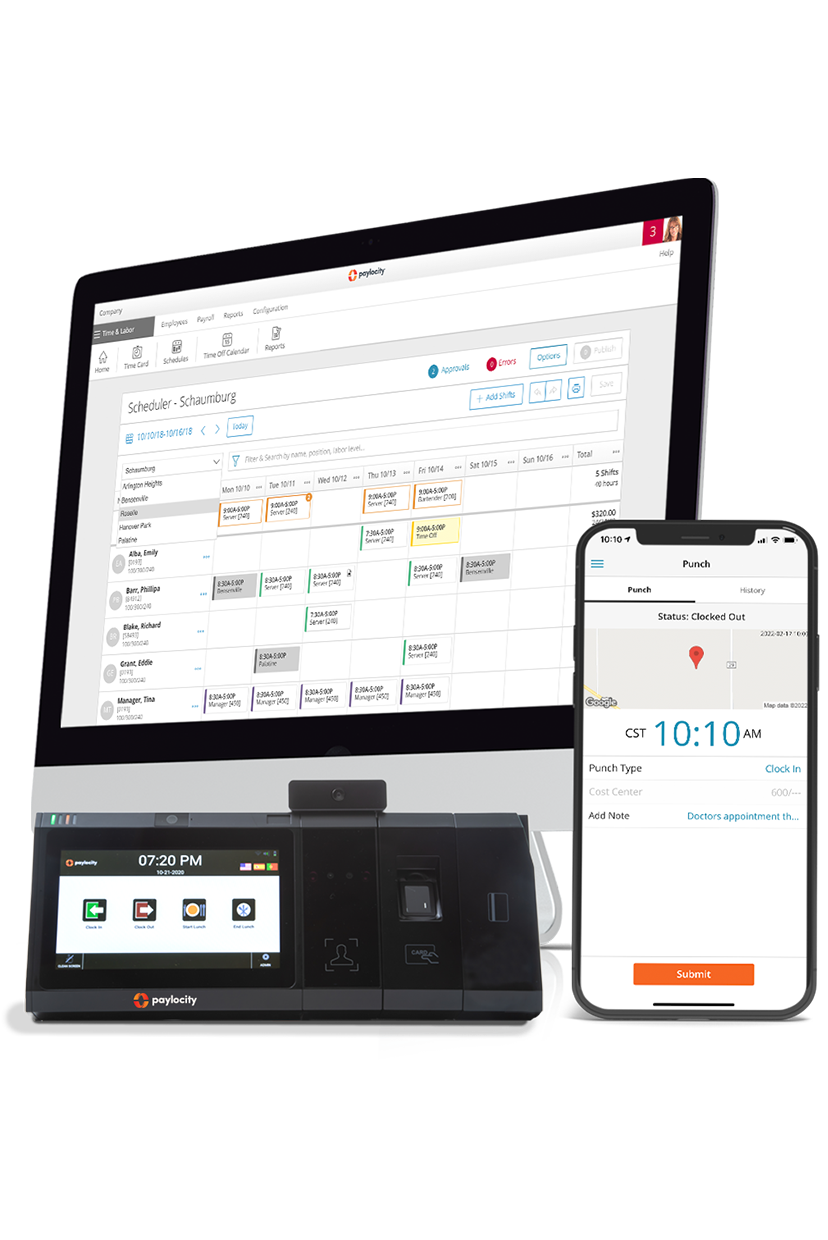
Say goodbye to manual tasks and hello to efficiency. Empower your employees with intuitive tools to manage their time—view balances, request time off, and get real-time notifications, all from one platform. Supervisors can access 100+ reports, track attendance, and approve requests in seconds. With instant insights at your fingertips, optimizing time and attendance has never been easier.