
5 HR Challenges in the Manufacturing Industry Leaders Can’t Ignore

During my time leading the Paylocity Advocate Program, I’ve spoken with hundreds of customers about their experiences as HR and payroll leaders. And whenever I talk with someone in manufacturing, the same themes tend to surface.
I often get the sense that many manufacturers have long viewed HR as a cost center. The core business — sales, supply chain, production, and distribution — often dominates C-level conversations, which means HR doesn’t always get a seat at the table when major strategic decisions are made.
But that mindset no longer fits the reality manufacturers face today. The industry has never moved faster. Robotics, automation, and smart factory tech help companies stay competitive, but many manufacturers still run HR on outdated systems. The result is a set of challenges that directly affect the business: harder hiring, slower onboarding, disconnected teams, and payroll headaches.
Manufacturing companies simply can’t afford those kinds of inefficiencies in today’s environment. Skilled manufacturing workers are hard to find, younger candidates increasingly expect a digital-first experience, and existing employees want flexibility, recognition, and tools that actually work. At the same time, compliance requirements keep shifting, and leadership expects HR to demonstrate impact with clear data.
Without the right processes and systems in place, manufacturers fight an uphill battle. Here are five of the biggest HR challenges I hear about most often — and how leading teams are addressing them.
Pain point #1: Inefficient and fragmented HR systems
Most manufacturers don't set out to build a messy tech stack. Instead, you add a payroll tool here, a time-tracking system there ... next thing you know, your team is juggling dozens of logins and copying data by hand.
That fragmentation carries a steep cost. Correct Craft once relied on five separate systems, which meant manual data processing and frequent errors.
“I would have to run three different reports and Frankenstein them together, because our platforms just didn’t talk to each other. That left a lot of room for error, and when you’re operating at the level we are, those types of errors are not acceptable.”
Becky Hahn, HRIS Analyst, Correct CraftThe solution: Consolidate into one platform
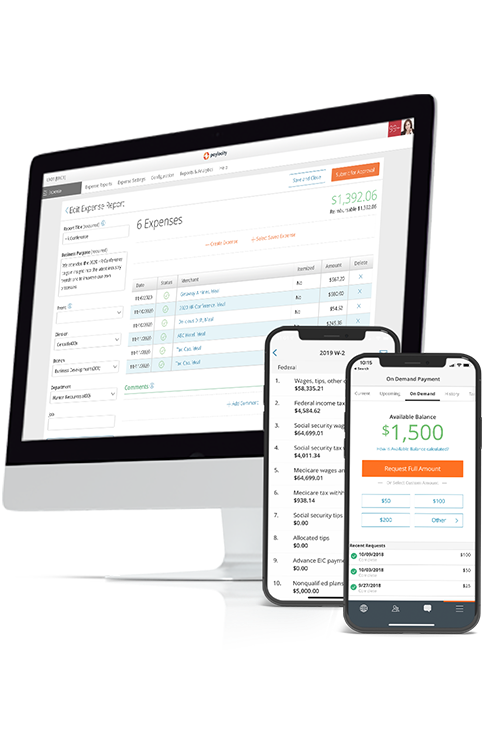
When you bring payroll, time tracking, benefits, and HR into a single integrated platform, the error-prone busywork is minimized. Data flows automatically from one module to the next, so your team enters information once and trusts it everywhere.
With one source of truth for every person record, your HR team spends less time fixing data and more time on the kind of work that moves the business forward. For a senior leader, the shift can mark the difference between HR as a cost center and HR as a growth driver.
That’s exactly what happened once Correct Craft moved to Paylocity. “Having the data at our fingertips is huge. It allows HR to add value as a strategic business partner,” says Noel Putze, Human Resources Director at Correct Craft.
Pain point #2: Time-consuming onboarding and recruiting
If your hiring process drags or your onboarding feels like a paperwork marathon, top candidates may look elsewhere. First impressions matter. A slow start tells new hires a lot about how your organization operates and how much you value their time. Inefficient onboarding can also raise administrative costs, delay time to productivity, pull managers and HR into repetitive manual tasks, and leave critical roles open longer than they need to be.
In a manufacturing environment, those delays can have a ripple effect across scheduling, shift coverage, safety, and, ultimately, output.
The solution: Automate recruiting and pre-boarding
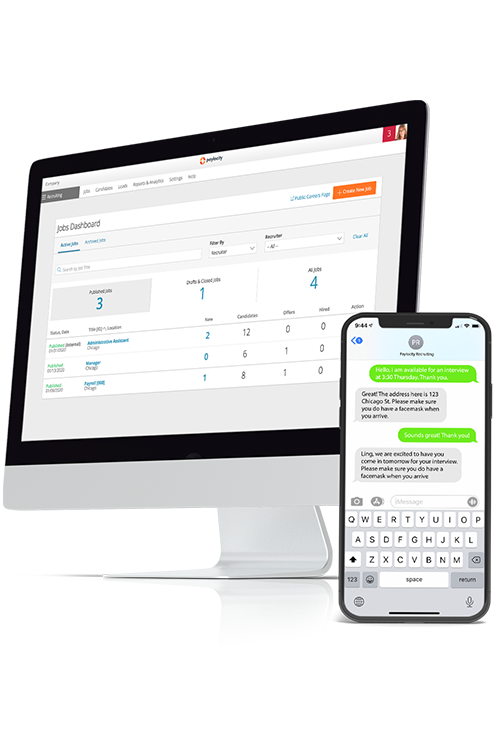
The right technology can remove friction at every stage of the hiring journey, helping manufacturers move candidates through the process faster while creating a smoother experience from application to day one.
Here’s what that looks like in practice:
- Mobile applications let candidates apply in minutes from their phones.
- Screener questions surface the right applicants faster.
- Digital pre-boarding lets new hires complete forms, sign documents, and set up direct deposit before day one.
When the paperwork is done in advance, orientation focuses on training and connection, not filling out forms. New hires start excited and prepared, and your team reclaims hours of administrative time on every single hire.
Paylocity helped Wagstaff automate hiring, from writing job descriptions to making offers, which saves them more than time. Automatic reminders also alert HR and managers if an applicant hasn’t been reviewed within 48 hours. “Those touchpoints save us potential candidates,” says Wade Larsen, Chief Human Resources Officer at Wagstaff.
Wagstaff also automates onboarding with integrated video, allowing new hires to complete tasks and training before day one. As Wade puts it: “Nobody likes spending their first day with HR. Having no wet signatures and no paperwork on day one is a big win.”
Pain point #3: Lack of employee engagement and communication
I’ve also heard a lot about the challenges HR faces when a big part of your workforce doesn’t sit at a desk. Instead, they're on the line, in the warehouse, or out in the field. Reaching them with the right information, at the right moment, is tough. When communication breaks down, so does engagement. In turn, disengaged teams hurt morale, retention, and productivity.
The solution: Put information in everyone's pocket
A mobile-first approach changes the game for deskless teams, putting real-time communication and 24/7 access to HR tools right in employees' hands. That means workers can check their schedule, view a paystub, request time off, or read a company announcement without tracking down a manager.
You can also listen at scale. Paylocity’s Employee Voice goes beyond the annual survey, using built-in insights to help you spot engagement trends and act on them before small issues lead to turnover. When people feel heard and informed, they stay. Community gives disconnected teams a social-style hub to share news, celebrate milestones, and encourage the kind of recognition that builds a more connected culture.
“Community is our go-to means of communication with the entire staff. It’s a tremendous asset that keeps everyone up to date with what’s going on in the company. People also use it to share awards and recognition and celebrate milestones. They use it constantly and genuinely love that ability to acknowledge one another.”
Christine Adair, Senior Director of HR, Scrub DaddyPain point #4: Payroll errors and compliance risks
Payroll is often where employee trust is built or broken. A missed paycheck or tax error can quickly undermine confidence. For manufacturers operating across shifts, locations, and states, payroll becomes even more challenging. Legacy systems and manual processes increase the risk of errors, compliance issues, and costly audits.
AGS is a good example. With an international workforce, the gaming machine manufacturer faced added complexity around payroll compliance and reporting. Accuracy and reputation were both on the line.
“We have to ensure accurate pay and tax deductions for many different employee groups, from assemblers in Oklahoma and software engineers in Atlanta to business support teams in Mexico and Australia,” says Kim Nasuta, Senior VP of Human Resources at AGS.
The solution: Automate payroll with built-in compliance
Automated payroll cuts manual work, improves accuracy, and streamlines reporting and year-end tasks. For multi-state, multi-location manufacturers like AGS, that reliability is essential. It protects employees, lowers risk, and frees HR and payroll teams to focus on what matters most.
Integration matters too. When time and labor data flows straight into payroll, you eliminate the manual handoffs where errors creep in. Accurate payroll stops being a monthly scramble and becomes the standard.
For AGS, that shift has paid off. “We have a U.S. HR team meeting every week, and a global HR session every other week. The feedback on Paylocity has been very positive. Our global teams are excited to work in one, central platform, and our HR Manager in Oklahoma loves the new system,” says Kim.
Pain point #5: Limited data insights for strategic decision-making
It’s something we see a lot: Leadership expects HR to demonstrate business impact. But it’s hard to prove ROI — or plan an effective talent strategy — when your employee data lives in spreadsheets and disconnected systems.
Consolidating HR and payroll data in one system gives you deeper insights with big-picture clarity. Without that view, you might overlook a problem that’s quietly driving employees out the door, or fail to hire and develop the workforce you’ll need to keep your business thriving down the road.
The solution: Turn workforce data into strategy
Strong analytics give you the executive-ready insights you need to lead. Paylocity’s Workforce Analytics surfaces important trends, so you can monitor turnover, spot risks early, and plan staffing for what’s next.
With a few clicks, you can answer questions like:
- Where is turnover climbing, and why?
- How is our workforce demographic shifting over the next decade?
- Which engagement efforts are actually working?
That visibility lets you walk into a board meeting with real numbers. You shift HR from reactive to strategic, and you give leadership the proof points that justify your investments. This is how HR earns a permanent seat at the table.
“Paylocity helped us understand our employee data so much better. Before, if we wanted to dive into our data — to understand turnover by department, for example — it would have taken 30 or 40 minutes to pull a report. Now we get that insight instantly.”
Ryan Zimmerman, VP of Human Resources, POLYWOODBring your HR tech stack into the future of manufacturing
Talking with manufacturing leaders, I’ve noticed a pattern: The companies moving fastest treat HR innovation as a business priority. Like most in the industry, they’ve already modernized the factory floor. What sets them apart is making that same commitment to digitizing their HR processes.
When manufacturers reduce system fragmentation, speed up hiring, improve communication, streamline payroll, and unlock better workforce visibility, they not only increase efficiencies. They build a more resilient, more agile organization.
And in my experience, leading manufacturers recognize that technology enables people — but it’s people who power long-term success.
Ready to see what's possible? Explore how Paylocity helps manufacturers like yours simplify HR and build a future-ready workforce.
About the Author
Related

Built for Better Business: HCM for Manufacturing
