IRS Introduces Automatic Exemption from Penalty (AEP)
September 16, 2026

At A Glance
- The Internal Revenue Service (IRS) introduced a new process, Automatic Exemption from Penalty (AEP), that provides penalty relief for individual taxpayers or employers with a history of timely filing and payment, reducing the need to request relief.
- AEP began rolling out in summer 2026 and is expected to be fully implemented by January 1, 2027.
- For employers, AEP primarily affects employment tax failure-to-deposit (FTD) penalties.
- Taxpayers who receive AEP will receive IRS Letter CP195B, which states that an AEP has been applied, and no penalties were assessed for the applicable tax period.
Automatic Exemption from Penalty (AEP) Overview
What is AEP?
The IRS designed AEP to replace the First Time Abate (FTA) administrative relief process. Previously, employers needed to request relief by submitting IRS Form 843, Claim for Refund and Request for Abatement, or by contacting the IRS. AEP automatically applies penalty relief to eligible taxpayers with a history of timely filing and payment, eliminating the need to submit a formal request.
In July 2026, the IRS began automatically applying AEP to eligible 2025 employment tax filings.
AEP is usually applied on a per-penalty basis, not a per-quarter basis. If multiple failure-to-deposit (FTD) penalties occur within the same quarter, AEP generally applies only to the first qualifying penalty. Additional penalties may still require a separate abatement request.
AEP Eligibility Requirements
Individual taxpayers and employers may qualify for penalty relief if they have a history of filing returns and paying taxes on time during the previous three years, or the previous 12 quarters for quarterly filers. When taxpayers qualify, the IRS doesn’t assess penalties for:
- Failure to file
- Failure to pay
- Failure to deposit
Next Steps
We recommend employers:
- Continue filing returns and making payments on time.
- Review all IRS notices carefully, even if automatic relief is expected.
- Remain aware that some situations, such as IRS processing errors, invalid penalties, or incorrectly applied AEP, may still require follow-up with the IRS.
- Retain at least three years of documentation showing timely compliance in case the IRS requires verification.
- Contact their Paylocity Account Manager or tax advisor if they receive a penalty and believe AEP should apply.
While the IRS has announced this operational change, formal procedural guidance is still pending. Paylocity will continue to monitor developments and will provide updates as additional guidance becomes available. For more information on AEP, refer to the IRS website.
Thank you for choosing Paylocity as your valued service partner. This information is provided as a courtesy, may change, and is not intended as legal or tax guidance. Employers with questions or concerns outside the scope of a Payroll Service Provider are encouraged to seek the advice of a qualified CPA, Tax Attorney, or Advisor.
About the Author

Keep up with compliance
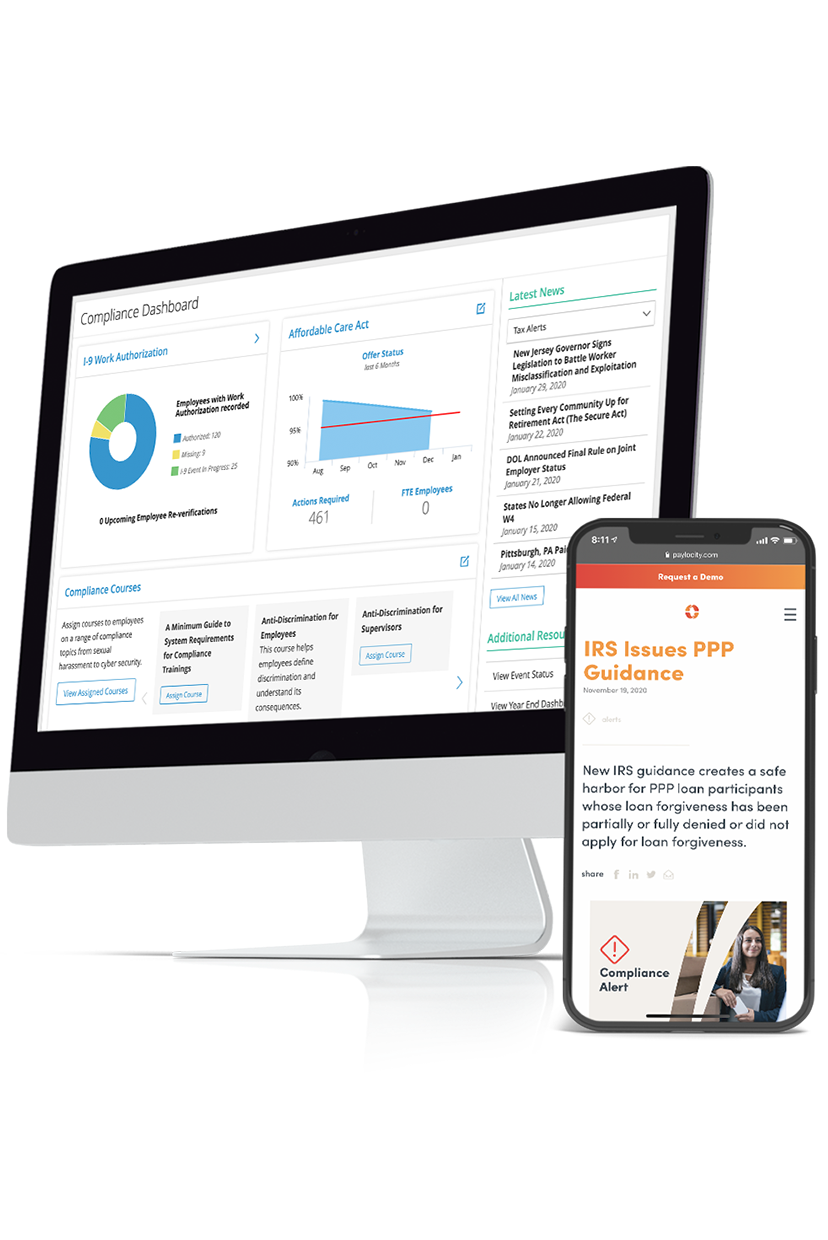
Between constantly changing employment laws and updates to the Affordable Care Act (ACA), keeping your workplace compliant can be a time-consuming and costly challenge. Eliminate the stress and stay up to date with our Compliance Dashboard. View compliance alerts and get a bird’s eye view of what you need to do to avoid fines and penalties.
related