Virginia Enacts State Paid Family & Medical Leave Program
April 29, 2026

At a glance
- Virginia recently established a statewide Paid Family and Medical Leave (PFML) program.
- Employer and employee payroll contributions will fund the program, with collections beginnning April 1, 2028.
- Employees may take up to 12 weeks of paid family and medical leave in a 12 month period, with benefits becoming available December 1, 2028.
What is Virginia’s paid family and medical leave law?
On April 22, 2026, Governor Abigail Spanberger signed SB2/HB1207 into law, establishing a statewide PFML program that will be administered by the Virginia Employment Commission (VEC).
The program will provide wage replacement benefits that allow eligible workers to take paid time off (PTO) for qualifying family, medical, military, and safety-related reasons.
Mandatory payroll contributions will fund the program, which includes job protection and benefit continuation rights where applicable.
Virginia PFML eligibility
Most employers with at least one employee working in Virginia must participate in the PFML program, regardless of their size.
Employees are generally eligible for PFML benefits if they have legal authorization to work in the U.S. and meet Virginia’s monetary eligibility threshold under unemployment insurance rules.
State and federal government employees, however, are excluded from the program. Self-employed individuals and independent contractors aren’t automatically covered but may elect to participate by enrolling in the program and paying required premiums.
Employer and employee PFML contributions
Starting April 1, 2028, employers and employees will split plan contributions evenly, with employers remitting premiums to the state every quarter. While employers may deduct up to 50% of the required contributions from employee wages, they may also choose to pay more than their required share (including the employee’s entire portion) if they wish.
Employers with 10 or fewer employees will be exempt from employer contributions but must still remit employee payroll contributions to the state.
Virginia PFML benefits
Coverage and acceptable use
Beginning December 1, 2028, eligible employees will receive up to 12 weeks of paid leave in a rolling application year, and be allowed to take leave intermittently for any of the reasons covered under the law:
- Leave for the employee’s own serious health condition
- Other leave, including:
- Bonding leave (e.g., birth, adoption, or foster placement)
- Caring for a family member with a serious health condition
- Qualifying military exigency
- Safe leave related to domestic violence, sexual assault, or stalking
Furthermore, Virginia defines “family member” broadly and includes (among others) the following types of relatives:
- Spouse or domestic partner
- Child (including adult, adopted, foster, step, or in loco parentis)
- Parent or legal guardian
- Sibling
- Grandparent or grandchild
- Any individual with whom the employee has a relationship that creates an expectation of care
Employees who have been with their current employer for at least 120 days before the beginning of their leave are entitled to return to the same position held before the leave, or to a comparable position with equivalent pay, benefits, and working conditions.
Payment of leave benefits
PFML benefits will be equal to 80% of the employee’s average weekly wage and capped at 100% of the statewide average weekly wage, adjusted annually.
Employers will not be responsible for paying PFML benefits, but may be required to supply employment or wage information to support benefit claims.
Moreover, the VEC may prorate benefit amounts if the employee takes leave intermittently or continues working reduced hours.
Benefit application process
To receive benefits, eligible employees must file an application with the VEC and provide documentation supporting the qualifying leave reason.
Private plans
Employers may satisfy their PFML obligations by offering an approved private plan instead of participating in the state program.
To qualify, the private plan must provide benefits and job protections that meet or exceed those offered by the state, and the VEC must approve the plan. Approved private plans may be either self-insured or fully insured through an insurance carrier.
Employers with an approved private plan aren’t required to pay state PFML premiums, but they must comply with all oversight and employee notice requirements for the private plan.
Notice and recordkeeping requirements
Employees should provide advanced notice of PFML leave when the need is known, or as soon as practicable if the leave is unexpected.
Employers must post VEC-issued PFML notices , maintain payroll, contribution, and earnings records, and clearly reflect PFML deductions on employee earnings statements.
Next Steps
Employers don’t need to take any immediate actions as the Commonwealth will continue to finalize implementation details and regulations in the coming months. Paylocity is actively monitoring the Virginia PFML program and will provide updates on agency guidance and system support as the program’s effective date approaches.
Thank you for choosing Paylocity as your valued service partner. This information is provided as a courtesy, may change, and is not intended as legal or tax guidance. Employers with questions or concerns outside the scope of a Payroll Service Provider are encouraged to seek the advice of a qualified CPA, Tax Attorney, or Advisor.
About the Author

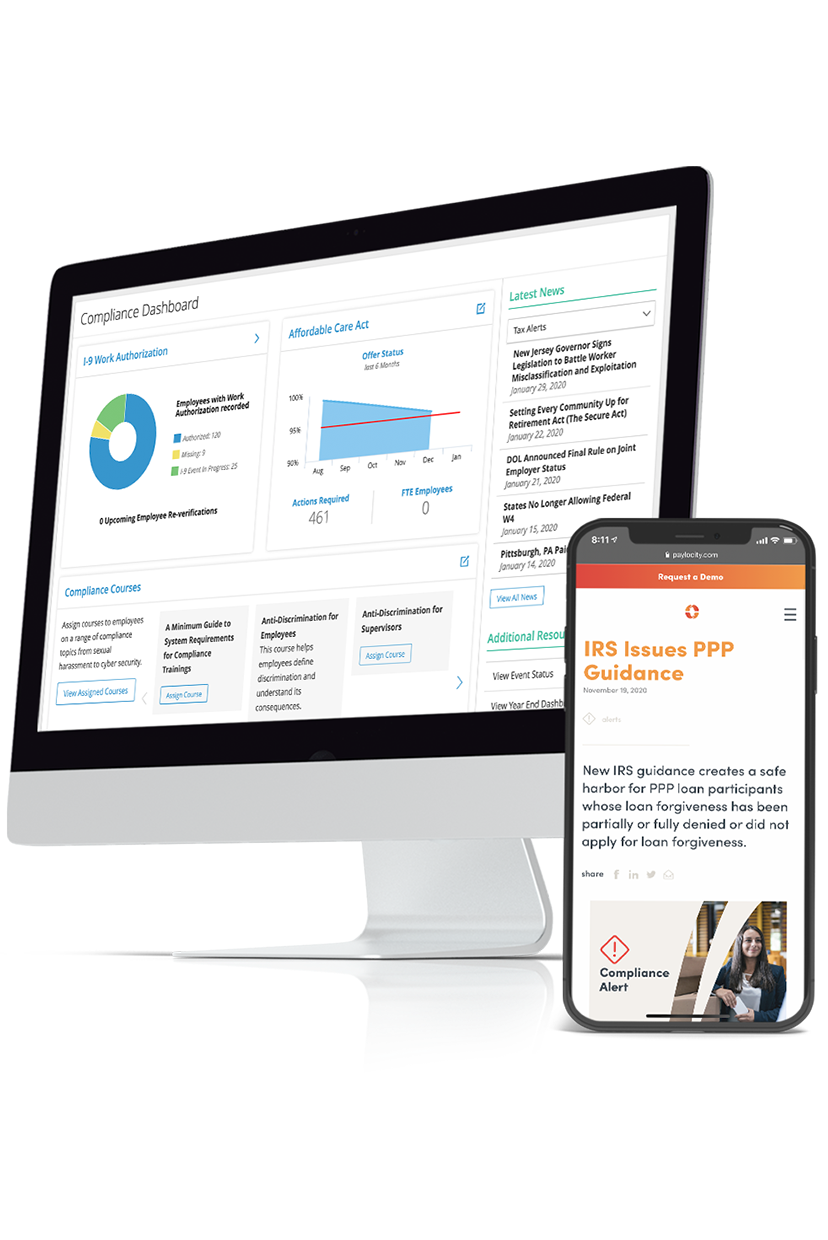
Keep up with compliance
Between constantly changing employment laws and updates to the Affordable Care Act (ACA), keeping your workplace compliant can be a time-consuming and costly challenge. Eliminate the stress and stay up to date with our Compliance Dashboard. View compliance alerts and get a bird’s eye view of what you need to do to avoid fines and penalties.