Struggling to keep up with payroll and HR in Ohio? From local ordinances to statewide labor laws, we’ll help you save time and focus on growing your business.
Payroll services in Ohio


How Paylocity helps Ohio employers
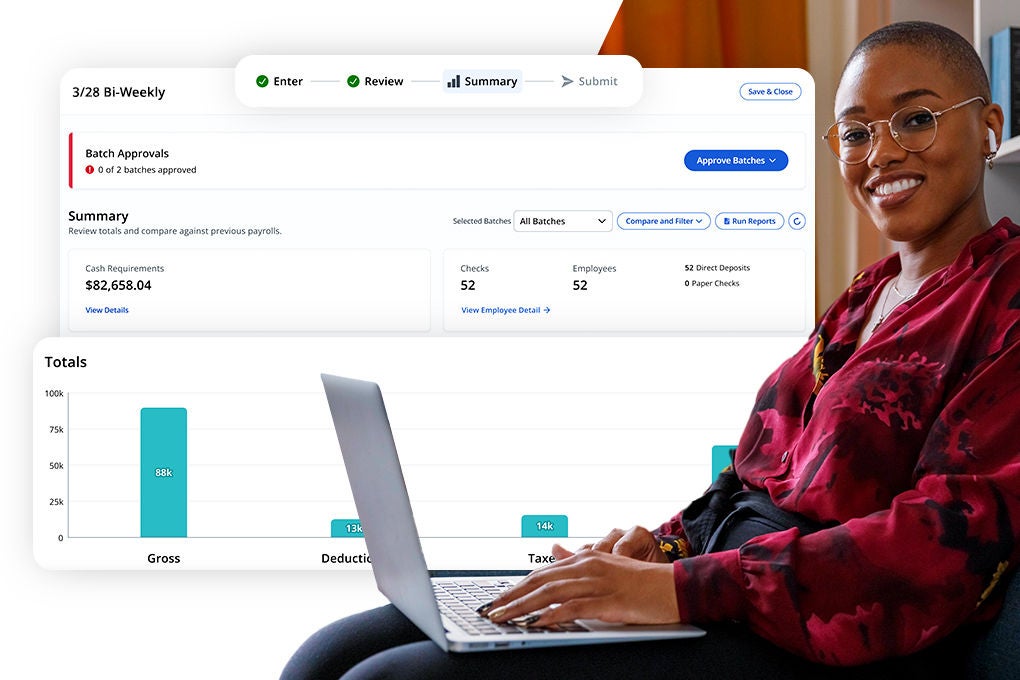
Payroll that gets it done
- Seamless automation: Eliminate repetitive tasks with automated workflows that boost accuracy and save time.
- Smart safeguards: Built-in audits and integrations flag issues before they become errors.
- Transparent calculations: Easily manage overtime, bonuses, and local tax changes, even across overlapping jurisdictions.

Your extra HR team member
- Automated workflows: Use ready-made templates for common tasks or build custom processes that fit your business.
- One employee record: A single source of truth for employee data keeps everything organized and compliant.
- Effortless Time & Labor: Schedule quickly, track clock-ins and meal breaks, and standardize time-off requests.
Compliance made simple
- Compliance dashboard: Get a clear view of requirements with updated forms and expert HR support.
- Built-in data access: Quickly find work authorizations, EEO/FLSA data, pay records, certifications, and industry updates.
- Always up-to-date forms: Access the latest state and federal forms right from the platform.

Challenges facing employers in Ohio
Ohio maintains a complex compliance landscape that requires a careful balance between federal standards and state mandates.

As an employer, you must grapple with:
- Stricter employment regulations ranging from pay equity to final paycheck requirements.
- Higher state minimum wage rate (i.e., $11.00) for companies with annual gross sales over $385,000.
- Additional tax laws for employees living in a state with a reciprocal agreement.
Ohio payroll fast facts
Minimum wage
$11.00
State income tax rate
1.775% - 3.640%
Right to work laws
None
State unemployment tax rate
- 2.85% (new employers)
- 0.40% - 10.10% (experienced employers)
Last updated: January 26, 2026
Ohio tax and compliance resources


FAQs about paying employees in Ohio
Does Ohio have a state income tax?
Yes, Ohio state income tax is progressive, ranging from 1.775% - 3.640% based on the taxpayer's level of income.
Is Ohio a right to work state?
No, Ohio is not a right to work state, but it can pass right to work laws in the future if it wishes to do so.
What are the Ohio final pay laws?
In Ohio, employees who voluntarily resign or are involuntarily terminated from a job must receive their final paycheck by the first day of the following month for wages earned in the first half of a month. Wages earned in the last half of a month must be paid by the 15th of the following month.
Are there Ohio work break laws?
No, Ohio currently has no laws regarding work breaks.
More than just payroll


Why employers in Ohio choose Paylocity

Communication and culture put manufacturer a cut above
Ohio-based TruCut Incorporated connects employees to company culture while streamlining operations.

