Bereavement leave
Summary Definition: Time off granted to an employee following the death of a family member or loved one.
What is bereavement leave?
Bereavement leave, also known as funeral leave, compassionate leave, or grief leave, gives employees time away from work after the death of a family member or someone close to them.
Unlike other forms of employee leave tied to an employee's own health, bereavement leave responds to loss and the practical and emotional demands that follow it.
Key takeaways
- Bereavement leave, also called funeral leave, compassionate leave, or grief leave, responds to loss instead of an employee's own health.
- Most policies scale time off by relationship, with immediate family such as a spouse, child, parent, or sibling typically qualifying for the most days, while extended family or close friends may be covered at the employer's discretion.
- A clear bereavement leave policy sets the baseline, but flexibility and genuine support from managers matter just as much as the number of days on the books.
What qualifies for bereavement leave?
Most bereavement leave policies define which relationships qualify, with the amount of time granted often varying by relationship:
- Immediate family: Spouse, child, parent, or sibling, typically covered under most policies and eligible for the most days.
- Extended family: Grandparents and in-laws, often included but sometimes with fewer days than immediate family.
- Other relationships: Close friends or other individuals, covered at the employer's discretion rather than as a standard policy inclusion.
Is bereavement leave paid?
There's no federal requirement that bereavement leave be paid. Whether it's paid comes down to employer policy, or in a handful of states such as California, Illinois, and Oregon, local law.
Paid bereavement leave is increasingly common as a competitive benefit. Where it isn't offered, employees may need to use paid time off (PTO) or take unpaid leave to cover the time.
Are employers required to offer bereavement leave?
In most of the U.S., no federal law requires employers to offer bereavement leave at all — paid or unpaid.
A small number of states and localities have enacted their own bereavement leave requirements. Employers should check state and local law instead of assuming the lack of a federal statute means no obligation exists anywhere they operate.
What is a bereavement leave policy?
A bereavement leave policy details how many days employees can take, which relationships qualify, whether the leave is paid, and what documentation, if any, is needed. They help reduce uncertainty during an already difficult time and help employees understand what to expect without having to negotiate details while grieving.
A typical bereavement leave policy includes:
- Days granted: How much time off is provided, often varying by relationship to the deceased.
- Qualifying relationships: Which family members or other individuals count, such as immediate family, extended family, or close friends at the employer's discretion.
- Pay status: Whether the leave is paid, unpaid, or paid up to a capped number of days before switching to PTO or unpaid time.
- Documentation requirements: What proof, if any, is needed, such as an obituary, death certificate, or funeral arrangement/program.
- Notice expectations: How and when employees should notify their employer, given that bereavement leave is often unplanned.
- Additional flexibility: Whether employees can request extra time, such as unpaid leave or PTO, if the standard allotment isn't enough.
How to support grieving employees
A bereavement leave policy sets the baseline, but managers play a bigger role in whether an feels supported.
- Offer flexibility beyond the policy minimum: Grief doesn't follow a fixed timeline, so consider remote work, a phased return, or additional unpaid time when an employee needs more than the standard allotment.
- Check in without pressure: A brief, genuine check-in shows support without asking the employee to return to their normal routine before they're ready.
- Redistribute workload proactively: Cover urgent responsibilities before the employee returns, so they aren't met with a backlog immediately upon return.
- Direct employees to available resources: Make sure employees know about any employee assistance program (EAP) or counseling benefits available to them.
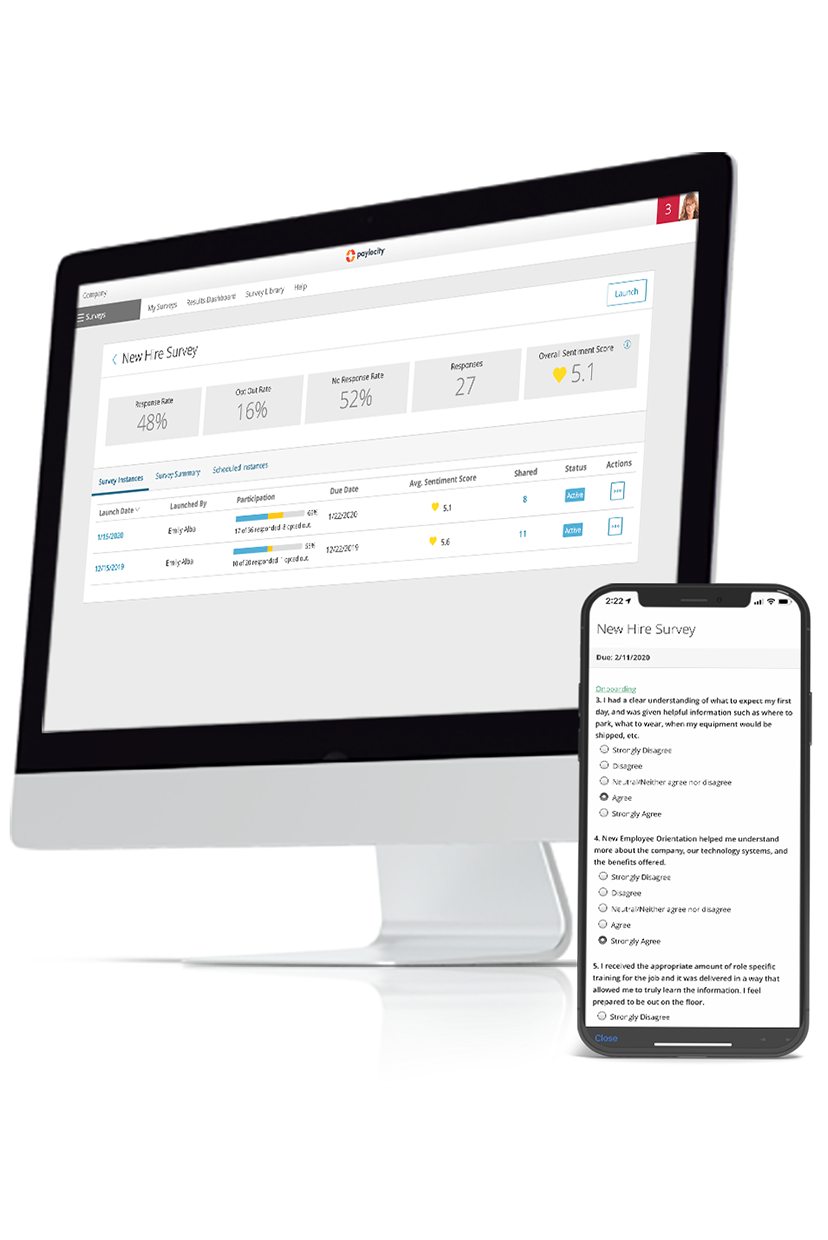
Capture your employees' voices
Your employees want to be a part of creating your company's culture. Make sure they're heard through engaging surveys. Using our questionnaire tool, you can gather invaluable feedback from your entire workforce — remote, hybrid, in-office, contractors, and more. Get the insights you need to make improvements, anticipate any problems, drive strategic decisions, and keep your employees engaged.