Human Resources Payroll

Global Year-End Payroll and HR Checklist

Year-end can feel overwhelming for HR and payroll teams, especially when managing a global workforce. This checklist can help employers prepare for country-specific payroll requirements, meet critical deadlines, and keep employees informed.

The close of the calendar year brings both celebration and complexity for HR and payroll teams. While employees may be planning time off or looking forward to year-end bonuses, your team is focused on compliance, reporting, and ensuring a smooth transition into the new year.

For U.S.-based employers with an international workforce, year-end preparation can be especially nuanced. Payroll calendars, tax-year periods, reporting obligations, and employee document requirements vary by country. Early preparation is critical.

The checklist below highlights important steps that can help your organization streamline year-end activities, reduce compliance risk, and prepare employees and payroll teams for a successful start to the new year.

1. Note important dates and deadlines

Although many employees associate year-end with holidays and remaining time off, it is often one of the busiest periods for HR and payroll teams.

Deadlines vary by country, and not every country follows a January-through-December tax year. Review the applicable payroll and tax calendars for each location and confirm:

  • Final regular payroll submission and approval dates
  • Payroll funding deadlines
  • Cutoff dates for payroll changes and adjustments
  • Deadlines for bonuses, commissions, annual leave payouts, and other supplemental payments
  • Employer reporting and employee tax-document deadlines
  • Holiday-related banking or payroll-processing closures

Work with your International Service Team or in-country payroll provider to confirm the requirements that apply to each payroll.

2. Validate employee personal and contact information

An employee’s circumstances may have changed during the year because of a move, marriage, divorce, birth, death, or another life event.

To support accurate payroll reporting and delivery of employee tax documents, ask employees to review and update their personal and contact information before the final payroll cutoff.

Key items to review include:

  • Verify that employee legal names and national identification numbers are complete and formatted correctly.
  • Confirm that mailing addresses, personal email addresses, and other contact information are current.
  • Update the employment status of any deceased employees, where applicable.
  • Reconcile leave balances and report outstanding time off or leave adjustments.
  • Notify your International Service Team or in-country payroll provider of changes to benefits, allowances, insurance premiums, or other recurring payments for the upcoming year.
  • Verify that required tax withholdings and employee deductions were processed correctly.
  • Review employee tax elections, exemptions, and other payroll-related declarations for continued validity, where required.

Take control of year-end

Take your year-end season from surviving to thriving.  Explore our Year-End Guide for expert tips to ensure 2025 wraps up seamlessly.

3. Communicate tax-document expectations

Clearly communicate when and how employees should expect to receive their year-end tax or wage statements.

Provide country-specific guidance when document names, delivery methods, deadlines, or employee responsibilities differ. Employees should understand:

  • Which document they will receive
  • When the document is expected to become available
  • Whether it will be delivered electronically or by mail
  • How to access the document
  • Who to contact if information is missing or incorrect
  • How former employees will receive their documents

If you are a Paylocity user, consider sending an announcement through Community. Make sure employees without regular access to a company computer or company email address also receive the necessary information.

4. Review taxable benefits and year-end adjustments

Review the benefits, allowances, reimbursements, awards, and other noncash items provided during the year to determine whether any amounts must be reported through payroll.

Examples may include:

  • Company vehicles
  • Housing or relocation assistance
  • Employer-paid insurance
  • Meal or travel allowances
  • Equity compensation
  • Gifts and employee awards
  • Educational assistance
  • Personal use of company property
  • Other country-specific benefits in kind

Confirm that taxable benefits have been valued correctly and reported during the appropriate payroll or tax year.

5. Review country-specific compliance requirements

Tax elections, withholding exemptions, reporting obligations, and employee-document requirements vary by country.

Before completing year-end processing:

  • Review changes in payroll tax rates, thresholds, contribution limits, and reporting rules.
  • Confirm whether employee tax elections or exemption certificates must be renewed.
  • Identify new reporting obligations that may apply based on employee headcount, work location, compensation, or benefits.
  • Review requirements affecting remote workers, internationally mobile employees, or employees working in more than one jurisdiction.
  • Confirm whether special year-end reporting applies to terminated, deceased, or expatriate employees.
  • Verify that required registrations, identification numbers, passwords, digital certificates, or portal access remain active.

Paylocity clients should direct country-specific questions to their International Service Team.

6. Prepare and reconcile the final payroll

Begin preparing for the final payroll well before the submission deadline for each country.

Confirm that the final payroll includes all required year-end payments and adjustments, such as:

  • Regular wages
  • Bonuses and commissions
  • Overtime
  • Annual leave or vacation payouts
  • Taxable benefits
  • Expense adjustments
  • Retroactive payments
  • Termination payments
  • Employee or employer contribution corrections
  • Other payments that must be recorded in the applicable tax year

Before approving the payroll, reconcile payroll totals to funding records, general ledger information, tax reports, and year-to-date employee balances.

7. Validate and retain payroll reports

After the final applicable payroll has been completed, review and retain the payroll records needed to support year-end reporting and future audits.

Reports may include:

  • Final payroll registers
  • Year-to-date employee earnings and deduction reports
  • Employer tax and social contribution reports
  • Taxable-benefit reports
  • General ledger reports
  • Payment and funding confirmations
  • Employee pay statements
  • Employer filings
  • Employee tax or wage statements

Employers should follow applicable country-specific record-retention and data-protection requirements. Paylocity recommends downloading and securely retaining important reports, pay statements, and tax documents regularly rather than relying solely on long-term system availability.

8. Confirm year-end employee tax documents and deadlines

Year-end employee documents, filing deadlines, and delivery requirements vary by country. Some countries follow the calendar year, while others use a different financial or tax year.

The table below identifies the primary year-end document employees receive or access in each country. Employers should confirm current requirements and deadlines with their International Service Team or in-country payroll provider.

Country

Year-End Employee Document

Deadline

Australia

Income Statement

Finalized by July 14

Canada

T4; Québec: RL-1

Last day of February

China

Annual Individual Income and Tax Withholding Information

By the end of February

France

No separate annual form; final Bulletin de paie

Provided with the final payroll payment

Germany

Lohnsteuerbescheinigung

Generally by the end of February

India

Form 16

June 15

Mexico

CFDI de Nómina

Issued with each payroll payment

Netherlands

Jaaropgaaf

Usually January or February

Spain

Certificado de Retenciones e Ingresos a Cuenta del IRPF

Must be provided before the annual income-tax filing period begins.

Ring in the New Year with Paylocity

As a leading cloud-based HR and payroll provider, Paylocity is here to help your HR team tackle the year-end rush.

From benefits and payroll to talent and workforce management, we empower you to build a modern, engaged workplace. With our all-in-one platform and client-first service approach, we’re more than just a software provider — we’re your partner in success every step of the way, all year long.

Want to learn more? Request a demo today!

About the Author

Paylocity Editorial Team Paylocity Editorial Team Paylocity

The Paylocity Editorial Team consists of HR, finance, and workforce experts dedicated to helping organizations navigate today’s rapidly evolving workplace. Our contributors translate real client results and industry trends into clear, actionable guidance across HCM, finance, and workforce strategy.

Meet the Authors

011002000114a-compliancedashboard-fullwidth

Keep up with compliance

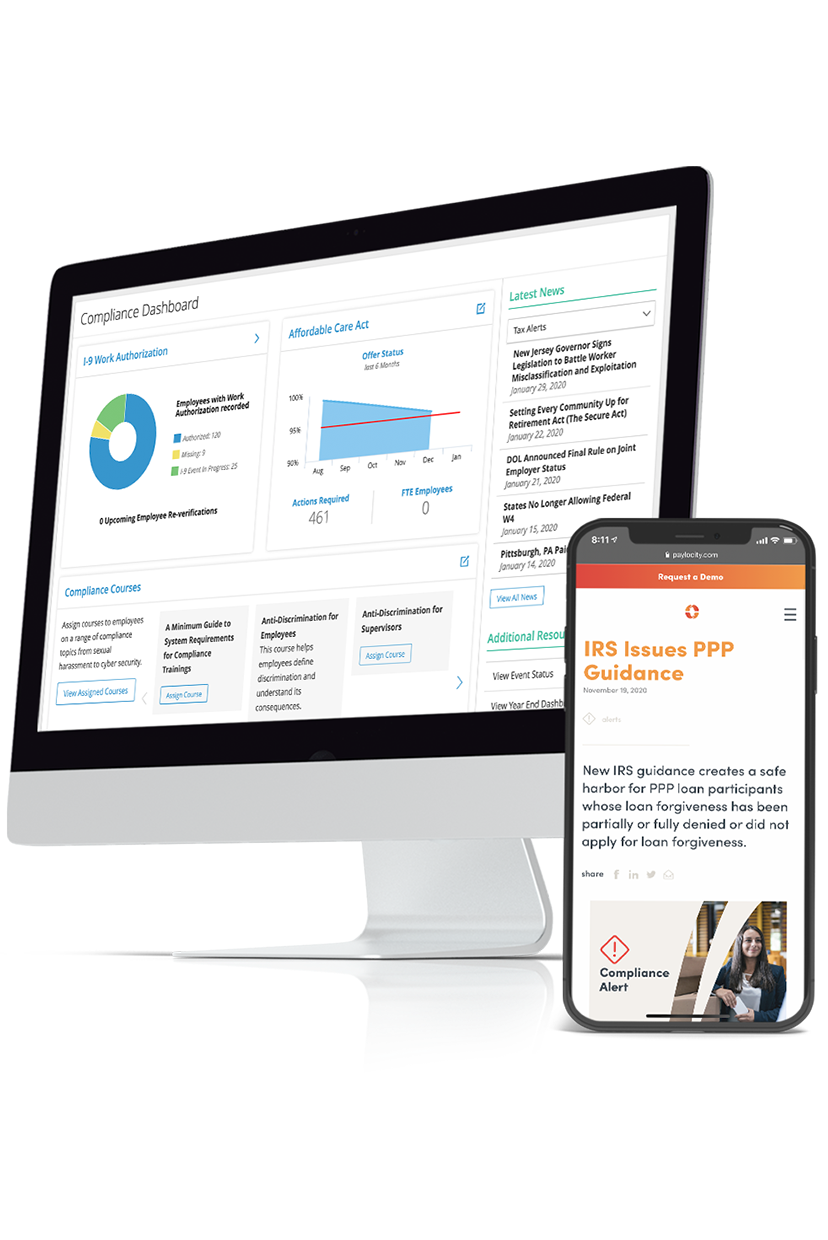
Between constantly changing employment laws and updates to the Affordable Care Act (ACA), keeping your workplace compliant can be a time-consuming and costly challenge. Eliminate the stress and stay up to date with our Compliance Dashboard. View compliance alerts and get a bird’s eye view of what you need to do to avoid fines and penalties.

Manage HR compliance