Allegheny County, PA Paid Sick Leave Amendments & Paid Parental Leave
October 29, 2026

At A Glance
- Effective April 20, 2027:
- Employers must provide paid sick leave at an accrual rate of one hour for every 30 hours worked and allow higher annual accrual and usage limits.
- Employers with 15 or more employees must provide paid parental leave.
- Employer implementation deadline: October 17, 2027.
Introduction
On October 22, 2026, the Allegheny County Council enacted the Paid Parental Leave act Paid Parental Leave bill and approved amendments to the county's paid sick leave requirements. The requirements will become effective April 20, 2027, with an employer implementation deadline of October 17, 2027.
Paid Sick Leave Amendments
Allegheny County has required employers to provide paid sick leave since 2021. Recent amendments to the ordinance modify the accrual rate, annual accrual cap, usage limits, and carryover requirements.
Key changes include:
- Employees of employers with 15 or more employees will accrue a minimum of one hour of paid sick time for every 30 hours worked within the geographical boundaries of Allegheny County, an increase from the current accrual rate of one hour for every 35 hours worked.
- Employees may accrue no more than 72 hours of paid sick leave in a calendar year.
- Employees may use no more than 72 hours of paid sick leave in a calendar year.
- Employees of employers with fewer than 15 employees will accrue a minimum of one hour of paid sick time for every 30 hours worked within the geographical boundaries of Allegheny County.
- Employees may accrue no more than 48 hours of paid sick leave in a calendar year.
- Employees may use no more than 48 hours of paid sick leave in a calendar year.
- All accrued, unused hours will carry over into the new benefit period unless an employer elects to frontload the hours at the beginning of a 12-month benefit period (subject to maximum accrual amount).
Paid Parental Leave
Allegheny County enacted Paid Parental Leave amendments requiring employers with 15 or more employees to provide up to 12 weeks of paid parental leave following the birth, stillbirth (fetal death), adoption, or legal permanent placement of a child. To qualify, an employee must be caring for the child during the first year after birth, adoption, or legal permanent placement. In the event of a stillbirth, leave may be used for childbirth recovery, when applicable, as well as to address the employee’s physical and behavioral health needs related to the loss.
Employee Eligibility
Full-time employees become eligible for leave after completing 180 continuous days of employment with their employer. For part-time employees, eligibility requires both 180 continuous days of employment and at least 625 hours worked during that time. Temporary and seasonal employees are not eligible.
Claim Eligibility Determination
- Within 10 business days of receipt of a claim (and all supporting documents) for paid parental leave, the employer will determine whether the employee has met all of the eligibility requirements.
- If the employer determines that the eligibility requirements have been met, the employer will approve benefits for the requested amount of leave up to 12 weeks.
- The employer must also notify the employee in writing of their eligibility and indicate the amount of benefits the employee will receive.
- If an employer fails to meet the above requirements or rejects a claim, employees may file a complaint with the Agency.
Benefits
Eligible employees with approved claims may receive up to 12 weeks of paid parental leave benefits at their regular rate of pay, not to exceed $4,200 per week. The initial benefit payment must be issued no later than the first payroll cycle following the scheduled start date of leave and is subject to the maximum weekly paid parental benefit amount. Thereafter, benefit payments must be made on the same schedule and in the same manner as the employee’s regular compensation before the leave began.
During an approved leave, the employer must maintain any benefits the employee was enrolled in prior to the leave as though the employee had remained continuously employed throughout the leave period. Employees are required to continue paying their share of benefit costs during the leave.
Note: Paid parental leave is an employer-funded benefit. Employers may elect to self-insure or satisfy the obligation through a private insurance plan that meets all of the requirements of this act, including the maximum weekly paid parental benefit of $4,200.
Private Plan
An employer may meet the employer's obligations under this act through the use of a private plan. A lawful private plan under this act shall comply with the requirements of this act if:
- A private plan provides at least all of the same rights, protections and benefits required under the Act, including the maximum weekly Paid Parental Benefit of $4,200.
Notice Requirement
Upon an employee’s hire and annually thereafter, employers must provide a written notice of the parental leave rights, benefits, and terms of use. Employers must also provide written acknowledgement to an employee who requests leave. The acknowledgement must include the following:
- An explanation of the employee's right to benefits and the terms for the use of the benefits.
- The approved duration of leave and the amount of benefits payable, including application of the maximum weekly Paid Parental Benefit, where applicable.
- Provisions on job protection and benefits continuation.
- The prohibition on employer discrimination and retaliatory personnel action against a person for requesting or using leave as provided.
- The employee's ability to file a claim with the Agency or file a civil action alleging a violation of this Act.
Next Steps
Paylocity will continue to monitor these requirements and implement any necessary product updates before the effective date. Employers should review their paid sick leave and paid parental leave policies to ensure compliance with the upcoming changes.
Thank you for choosing Paylocity as your valued service partner. This information is provided as a courtesy, may change, and is not intended as legal or tax guidance. Employers with questions or concerns outside the scope of a Payroll Service Provider are encouraged to seek the advice of a qualified CPA, Tax Attorney, or Advisor.
About the Author

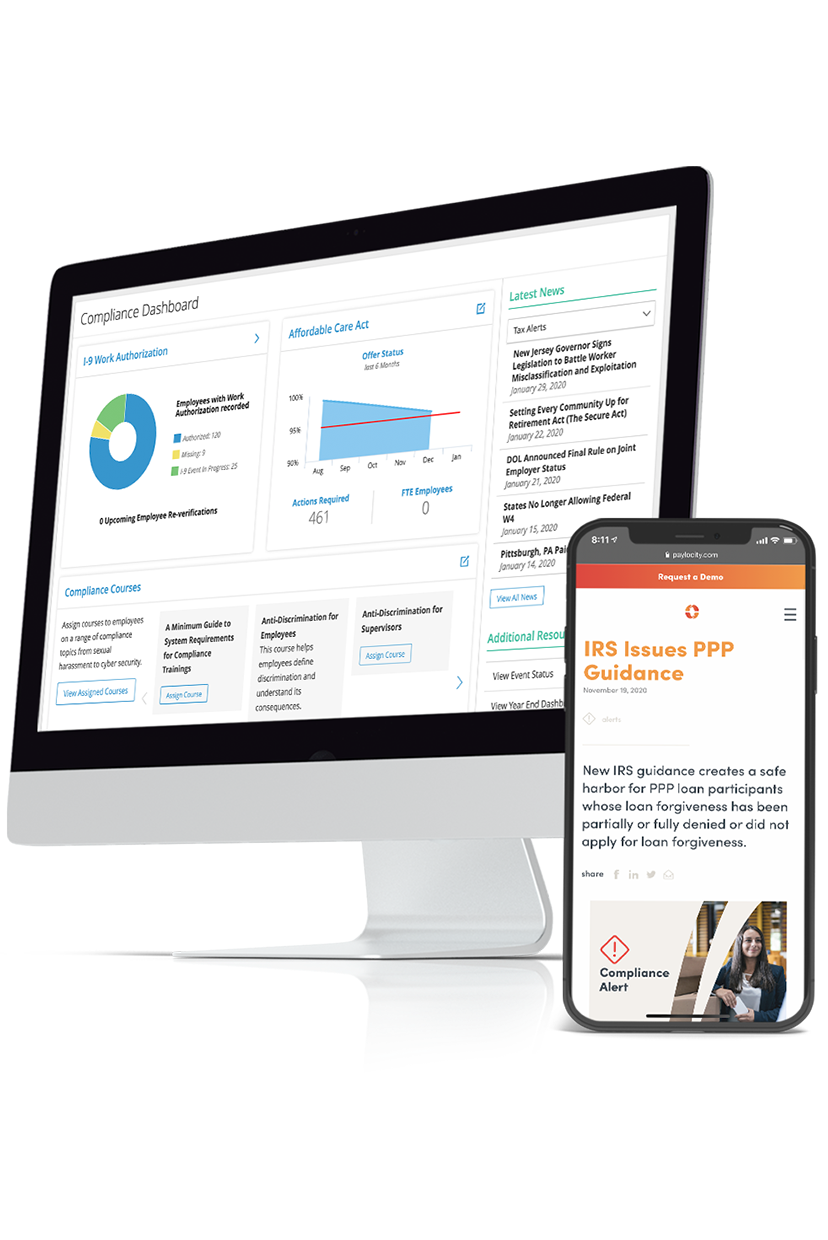
Keep up with compliance
Between constantly changing employment laws and updates to the Affordable Care Act (ACA), keeping your workplace compliant can be a time-consuming and costly challenge. Eliminate the stress and stay up to date with our Compliance Dashboard. View compliance alerts and get a bird’s eye view of what you need to do to avoid fines and penalties.