DOL Issues Opinion Letters on Travel Time
August 10, 2026

At A Glance
- New guidance issued by the U.S. Department of Labor (DOL) provides additional clarity on when employers must compensate employee travel time under the Fair Labor Standards Act (FLSA).
- The opinion letters address compensation requirements for mid-day commuting and how work-related communications during a commute may require compensation.
- While the DOL concluded that the specific midday commuting scenarios reviewed do not qualify as compensable work time, its analysis of work-related communications during commuting highlights the complexity of wage and hour compliance.
Summary
The U.S. Department of Labor (DOL) issued new guidance clarifying when employers must compensate employees for travel time. On July 22, 2026, the DOL issued two opinion letters addressing:
- Travel between the employee’s residence and their principal workplace after the workday has begun (Opinion Letter FLSA 2026-9).
- Work-related communications made or received by field service engineers while traveling to their first job site of the day (Opinion Letter FLSA 2026-10).
Applying wage and hour laws, regulations, and DOL guidance requires a careful, fact- specific review. Differences between the facts reviewed in the opinion letter and an employer’s actual policies and practices may affect whether the conclusions of these opinion letters apply.
These opinion letters provide valuable insights for HR and payroll professionals to assess wage and hour risks in similar circumstances. For employers with non-exempt employees operating under similar circumstances, reviewing the laws cited and the specific facts reviewed by the DOL in these opinion letters can help determine whether existing policies and practices align with wage and hour compliance requirements.
Is travel time compensable for partial day remote work?
Opinion Letter FLSA 2026-9 addresses whether non-exempt employees must be compensated for mid-day travel time between their home and work office during the workday. The employer that requested this guidance has a generally non-exempt workforce whose job duties do not require travel during the workday, other than traveling to the office.
The employer recently allowed some employees to work from home under certain circumstances. The work-from-home policy did not allow workers to start the workday at one location and finish the workday at another because of concerns that midday travel might be compensable under the FLSA.
Seeking clarification, the employer asked the DOL to provide guidance on three scenarios. For purposes of its analysis, the DOL assumed the employees are completely relieved of work-related tasks during the travel time and that the employer has the appropriate tools to maintain accurate timekeeping records regardless of the work location. Here is a summary of each scenario reviewed in the opinion letter:
- An employee seeks to avoid rush-hour traffic by working from home early in the day, commuting to the office later in the morning and finishing the workday from home before the evening rush.
- An employee is willing to work additional hours for a special project if the work can be done from home in the early hours of the morning before commuting to the office for the standard workday.
- An employee who uses public transportation to commute to and from the office is unable to complete their tasks before the last bus leaves for the day. The employee wants to be able to complete their work from home.
The DOL concluded that the travel times in these scenarios are ordinary commutes that do not constitute compensable time under the FLSA. The agency reasoned that the travel time is incidental to employment and for the primary benefit of the employee, comparing it to other non-working times that can occur during the workday, such as meal breaks or off- duty time.
When is commuting compensable work time?
Opinion Letter FLSA 2026-10 addresses a common wage and hour challenge for employers with mobile workforces. When do work-related communications turn an otherwise non- compensable commute into compensable work time? Specifically, the DOL examined whether field service engineers must be paid for time spent receiving pages and contacting customers or coworkers during their first commute of the day and whether this activity is considered the start of the workday.
In the scenario presented, the field service engineer does not have an office to report to and works exclusively at client locations. The employee starts each day by driving to the first job site and continues to visit different job sites until the workday concludes. During the first commute of the day and before the workday begins, the employee describes a few work-related activities that may take place, including:
- The employer sends client service requests through an internal messaging system. Each message is typically three to five pages long .
- It takes approximately 15 seconds on average to access a message.
- After receiving a message, the employee calls each client to set appointments. These calls may last 5 to 10 minutes and may require additional calls to schedule other field service if needed.
The DOL concluded that the time spent receiving and accessing pages is not considered compensable time worked because it is incidental to the employee’s use of an employer- provided vehicle.
However, the DOL reached a different conclusion regarding customer scheduling and the coordination of calls. Since the employee is required to engage in substantial work by engaging in phone calls and scheduling before the travel begins and during the travel time, the DOL concluded that this travel is not an ordinary commute but compensable travel, stating “this bears few, if any, of the hallmarks of an ordinary commute between an employee’s home and worksite. Indeed, under the circumstances described, you lack virtually any of the types of freedom and flexibility that typically accompany an ordinary home-to-work commute time.”
Since these activities are not incidental to the employee’s commute and are “integral and indispensable” to the employee’s primary job activity, the employee’s workday begins when they perform such activities.
Next Steps
A key takeaway the agency highlighted is the importance of evaluating whether the travel is truly voluntary, the significance of any work-related activities, and whether the travel time is primarily for the employee’s benefit. Since the factors can vary from one workplace to another, HR and payroll professionals should carefully consider their unique circumstances when applying this guidance to their own policies and procedures.
Employers may want to conduct an examination of the practices of their workforce to determine whether they are consistent with these DOL opinion letters and all applicable wage and hour laws. Documentation of an employee’s request for midday commuting may be useful in the event the practice is ever challenged. Paylocity will continue to monitor new compliance developments.
Thank you for choosing Paylocity as your valued service partner. This information is provided as a courtesy, may change, and is not intended as legal or tax guidance. Employers with questions or concerns outside the scope of a Payroll Service Provider are encouraged to seek the advice of a qualified CPA, Tax Attorney, or Advisor.
About the Author

Keep up with compliance
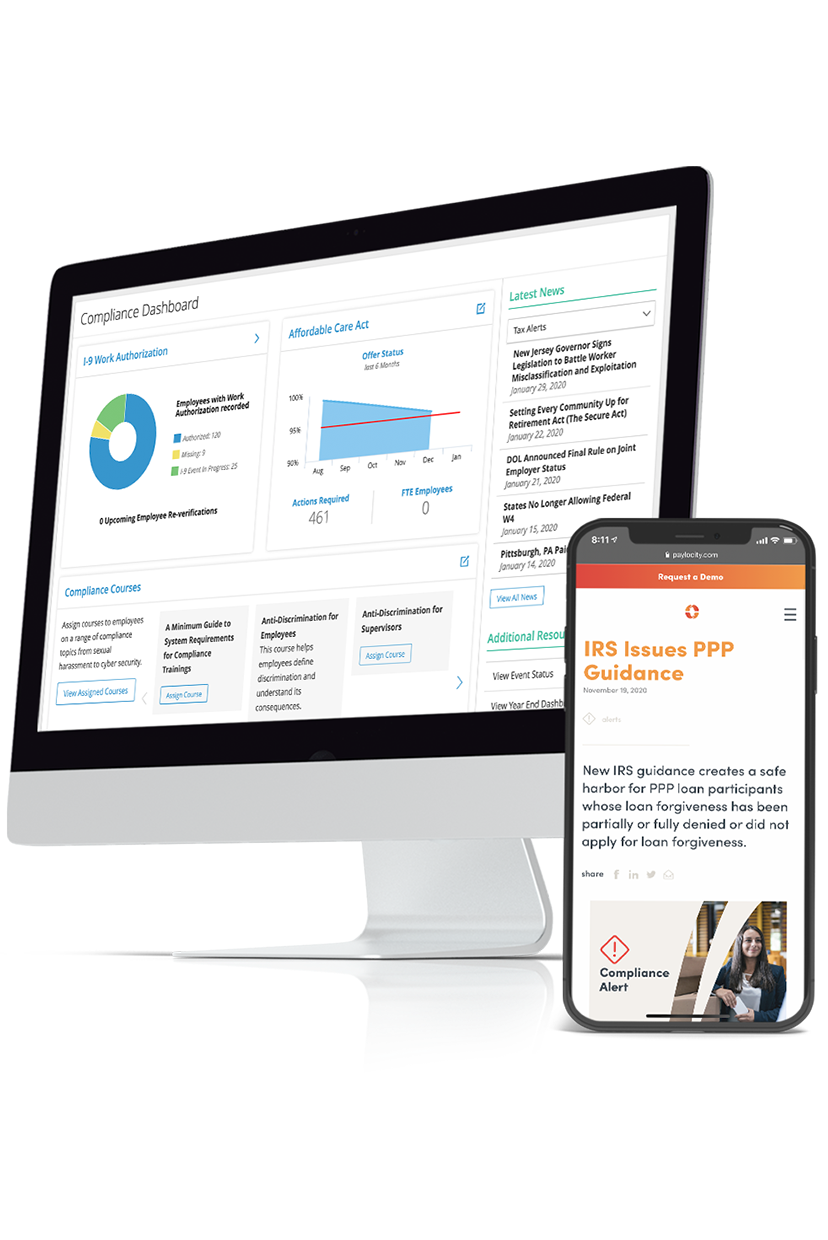
Between constantly changing employment laws and updates to the Affordable Care Act (ACA), keeping your workplace compliant can be a time-consuming and costly challenge. Eliminate the stress and stay up to date with our Compliance Dashboard. View compliance alerts and get a bird’s eye view of what you need to do to avoid fines and penalties.