Presenteeism
Summary definition: When an employee continues to show up to work, even when it’s unsuitable and could be harmful to themselves or others.
What is presenteeism?
Presenteeism occurs when employees are consistently physically present at their jobs but are functioning at a reduced capacity due to illness, injury, or mental health conditions.
The implications and meaning of presenteeism, however, go far beyond simply showing up to a desk or job site. This practice highlights a hidden work-life imbalance for employees and hinders productivity because staff members are physically unable to perform or fully engage in their duties.
Understanding the deeper meaning of presenteeism and its effects is therefore essential for human resources professionals seeking to maintain a healthy, efficient organization.
Key takeaways
- Presenteeism occurs when employees are physically present at work but unable to perform at full capacity due to illness, mental health struggles, or external distractions, leading to hidden productivity losses.
- Strict attendance policies, workplace culture, and understaffing can fuel presenteeism, which results in reduced productivity, increases the potential for errors, and risks long-term health problems.
- Addressing presenteeism requires proactive and concerted effort from leadership, such as building a supportive workplace culture and expanding or clarifying sick leave policies.
Types of presenteeism in the workplace
Presenteeism can take several forms in the workplace, the most common and visible being employees working while sick. Whether an employee is battling a contagious illness like the flu or managing a chronic physical condition, going to work while sick significantly impairs both cognitive and physical performance.
Another noteworthy form of presenteeism involves working despite enduring substantial mental health struggles. Employees dealing with severe stress, anxiety issues, depression, or burnout may clock in daily, but their ability to focus and work is also severely diminished.
Finally, some employees experience a similar diminished capacity due to external personal distractions, such as intense caregiving responsibilities or severe financial stress. Regardless of the source, such distractions prevent workers from fully engaging with their peers and tasks.
What’s the difference between absenteeism and presenteeism?
Absenteeism is when an employee consistently misses work and fails to show up daily. As such, it’s far easier to track and identify than presenteeism, which can easily go unnoticed when the employee is physically present and working.
This, in turn, risks draining the organization of additional resources over a longer period. Studies estimate that presenteeism costs 10 times as much as absenteeism, totaling $150 billion in lost productivity per year. In other words, for every $1 lost due to absenteeism, employers can lose up to $10 due to presenteeism.
Despite their contrasting natures, absenteeism and presenteeism are two sides of the same coin because the outcomes are often the same (e.g., decreased productivity, strained workplace environment, disengaged workforce). Therefore, successfully addressing presenteeism and absenteeism should be a priority for any HR team.
What causes presenteeism?
Several factors can create a workplace of sick employees who should be resting instead of working, such as strict attendance policies, limited paid time off (PTO), or punitive measures for lengthy absences.
Employees in such environments may fear for their job security, assume using sick time risks termination, or believe they’ll be overlooked for promotions due to less-than-perfect attendance.
Understaffing also heavily contributes to the problem. When departments run lean, workers may feel a profound sense of guilt or obligation to cover shifts so their peers don’t fall behind.
What's the cost of presenteeism?
The true cost of presenteeism often exceeds the expenses associated with direct medical care and standard absences.
When unwell employees continue working, they operate at a fraction of their normal productivity levels. This leads to lower-quality output, additional human errors requiring extra time or resources to fix, and an increased risk of workplace accidents or burnout.
Furthermore, employees working while sick with contagious infections can spread those illnesses to healthy coworkers, multiplying the productivity loss across the entire department. For individuals with chronic physical conditions, failing to rest prolongs their recovery time, leading to more severe health crises and absences down the line.
How to address presenteeism
Identifying and resolving presenteeism in the workplace requires a proactive, strategic approach from human resources and company leadership.
- Evaluate and expand paid leave policies: Ensure employees have the financial security and peace of mind to stay home when necessary. Leadership must also encourage managers to model healthy behaviors by taking time off when they are unwell.
- Foster a supportive culture: Organize employee assistance programs (EAPs), leverage employee experience tools (e.g., peer recognition, surveys, or internal social media platforms), and promote wellness education to prioritize employee health.
- Streamline employee benefits: Partnering with an advanced HR and payroll provider can greatly simplify time-off requests and benefits administration, alleviating such burdens on HR teams and allowing employees to easily take the time they need when they need it.
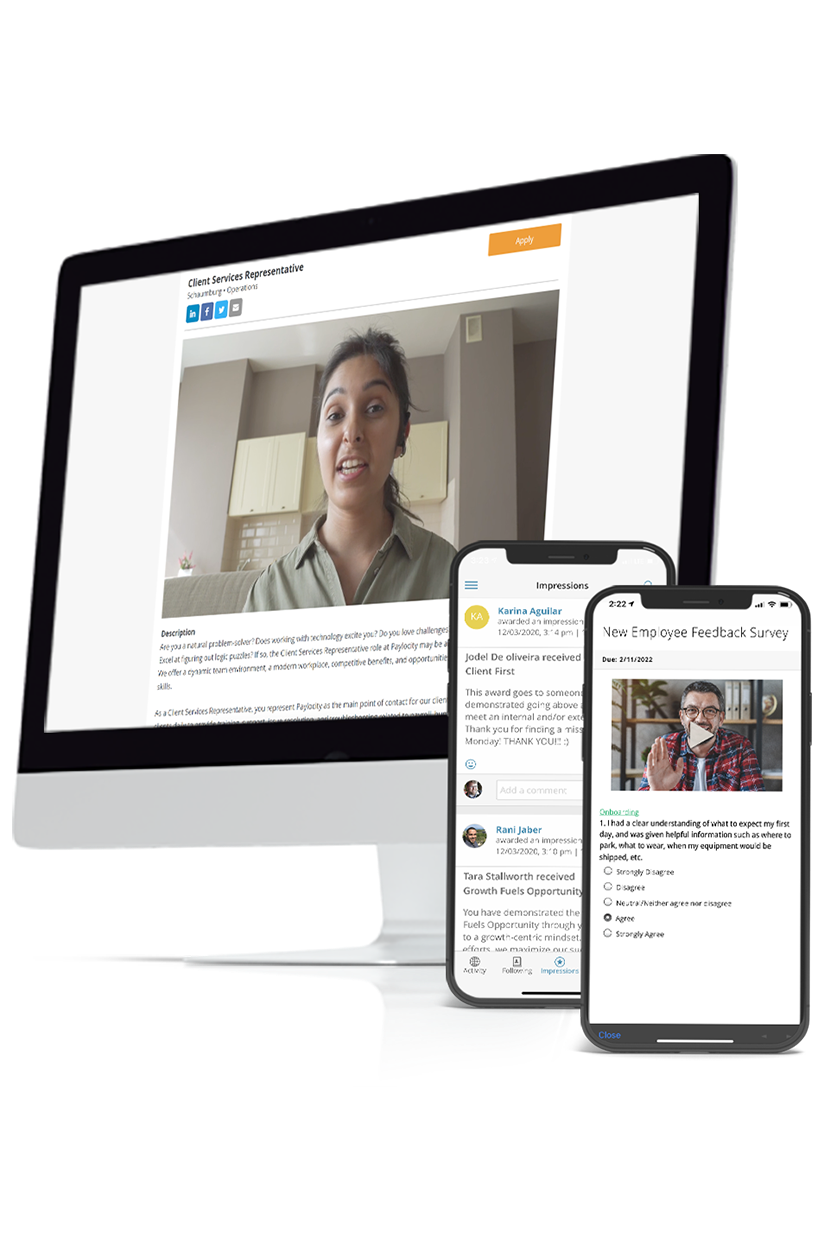
Engage, empower, and elevate your workforce
Drive meaningful communication, collaboration, and connection across your organization with our all-in-one employee experience platform. Designed to be more than just an HR tool, it’s a platform your employees will use daily to engage with their work, their peers, and your company’s culture.