
Best talent management software: top 10 tools for HR and recruiting
- For mid-market organizations, Paylocity offers the strongest all-in-one platform.
- BambooHR and Lattice are strong options for smaller teams focused on simplicity.
- Workday and SAP SuccessFactors serve large global enterprises with complex needs.
From sourcing candidates to developing and retaining high performers, managing talent across the full employee lifecycle gets complicated without the right talent management software.
Recruiting, onboarding, performance, learning, and compensation often live in separate tools, forcing HR teams to stitch together spreadsheets and chase down data that should already be connected.
Modern talent management platforms bring all of that into one place — and the best ones go further, using built-in AI to automate the repetitive work, like screening candidates and surfacing compensation outliers before they become retention problems.
Below, we break down the top platforms and what to look for when choosing one for your organization.
Best talent management software of 2026
This table compares the top talent management platforms by best-fit use case, key features, and pricing, so you can quickly narrow your options before diving into the details.
| Platform | Best for | Key features | Pricing |
|---|---|---|---|
| Paylocity | Teams needing an end-to-end talent suite within a unified platform |
|
Custom |
| BambooHR | Small to mid-sized businesses wanting easy-to-use HR and talent tools |
|
Plans start at $10/employee/mo. |
| Workday HCM | Large enterprises with complex global talent and workforce needs |
|
Custom |
| SAP SuccessFactors |
Global enterprise organizations needing end-to-end talent management |
|
Custom |
| Cornerstone OnDemand | Learning-first organizations with large training and development needs |
|
Custom |
| UKG Pro | Large organizations with complex shift scheduling |
|
Custom |
| Lattice | Performance and engagement-focused teams at growing companies |
|
Plans start at $13/employee/mo. |
| ClearCompany | Talent acquisition and performance management alignment |
|
Custom |
| ADP Workforce Now | Mid-to-large organizations needing compliance-first HR and talent tools |
|
TBD |
| Dayforce | Continuous payroll processing with integrated talent management |
|
TBD |
1. Paylocity
-1?ts=1787675395150&$ProductTIleImage$&dpr=off)
Best for: Teams needing an end-to-end talent suite within a unified platform
Paylocity keeps talent data tied to the same employee record as payroll, so a new hire's recruiting profile carries straight into onboarding, performance, and training without re-entry.
HR teams manage the full employee lifecycle from a single system instead of switching between several tools. Because compensation, headcount, and performance data all live in the same place, workforce decisions are backed by real numbers rather than spreadsheet estimates.
Paylocity is best for HR and finance leaders at mid-size and enterprise companies who want talent management built into their payroll platform, not bolted on through an integration.
On G2, where Paylocity holds a 4.5 out of 5 rating from over 5,200 reviews, users consistently praise its recruiting reach, fast performance review setup, and easy workforce reporting. It's one of the highest-rated platforms in this category for teams that want depth without the complexity of an enterprise suite.
Key features:
- AI-powered recruiting and onboarding: Paylocity's AI agents handle the repetitive side of recruiting, like candidate engagement, screening, scheduling, and rediscovery, so teams can scale hiring without adding headcount. When an offer is accepted, the candidate's application and offer details carry straight into onboarding and payroll automatically, with no re-entry required.
- Performance management and continuous feedback: Managers can build custom review cycles, set goals, record journals, and log feedback between formal reviews, all tied to the same profile that drives compensation decisions.
- Learning management system (LMS): Courses, completions, and skill-building plans live in one place, giving managers a direct line between training and career growth.
- Compensation management: Paylocity pulls market pay data directly into employee records, so managers can benchmark pay and spot outliers without leaving the platform. Compensation plans run through automated approval workflows that tie increases back to performance history and budget guardrails.
- Workforce analytics and reporting: Real-time dashboards surface headcount, turnover, and hiring trends, cutting out the manual work of pulling reports for leadership.
Pricing: Custom

2. BambooHR

Best for: Small to mid-sized businesses wanting simple HR and talent tools
BambooHR is a cloud-based HR platform built for small and mid-sized businesses that want core people-management tools without an enterprise-level system.
It combines applicant tracking and onboarding, time-off tracking, and performance reviews with an employee self-service portal. Payroll, benefits administration, and time tracking are available as separate paid add-ons rather than included in the base plan.
Reviewers on G2 consistently praise BambooHR's clean, intuitive interface and give it high marks for ease of use and onboarding workflows. That said, multiple reviewers note that the performance management and applicant tracking features feel basic next to more specialized tools, and that custom reporting and PTO visibility can be limiting once a company's HR needs get more complex.
Key features:
- Applicant tracking and onboarding workflows: New hires move from application to first day through built-in checklists, e-signatures, and preboarding packets, all inside the same system used for the rest of the employee record.
- Performance reviews and goal tracking: Managers can run custom review cycles, collect peer and 360 feedback, and track goals directly in BambooHR, though reviewers describe the toolset as lighter than dedicated performance platforms.
- Employee self-service and engagement surveys: Employees handle their own PTO requests, document updates, and directory lookups, while eNPS and wellbeing surveys give HR a read on engagement without a separate tool.
Pricing: Plans start at $10/employee/monthBambooHR.com - Pricing
3. Workday HCM

Best for: Large enterprises with complex global talent and workforce needs
Large, multi-country enterprises often reach for Workday HCM when a single HR system needs to handle finance, payroll, and workforce planning at scale.
The platform centralizes employee data, performance, and reporting into one configurable system with AI-driven tools built in for workforce planning. Talent insights across thousands of employees and multiple business units are available without ever leaving the platform.
On G2, reviewers value the depth of Workday's reporting, analytics, and AI-driven workforce insights, but they repeatedly mention the steep learning curve and complex configuration, which may pose a problem for administrators handling day-to-day setup.
Cost is a recurring theme too, with several reviewers noting that implementation and licensing get expensive fast for anything short of a large enterprise.
Key features:
- AI-driven talent mobility and skills matching: Workday's Skills Cloud maps employee skills against open roles company-wide, surfacing internal candidates for lateral moves or promotions before a role gets posted externally.
- Advanced succession planning and career pathing: Talent review and succession tools let leadership flag high-potential employees, model multiple successors per role, and give employees visibility into potential career paths within the org chart.
- Global workforce analytics and reporting: Configurable dashboards pull real-time data across countries, business units, and currencies, so HR and finance leaders can build custom reports without exporting to a separate BI tool.
Pricing: CustomWorkday.com - Pricing
4. SAP SuccessFactors

Best for: Global enterprise organizations needing end-to-end talent management
SAP SuccessFactors is the HR suite built for organizations already running on SAP, or those large enough to need core HR, payroll, talent, and analytics under one global umbrella.
It's a good choice for multinational enterprises managing recruiting, performance, learning, and succession across dozens of legal entities and currencies at once, particularly where HR already sits alongside SAP's finance and ERP systems.
Reviewers on G2 give SAP SuccessFactors a 4.1 out of 5, praising how it centralizes HR, payroll, talent, and analytics into one system built to scale globally.
That scale has a cost, though. Complex configuration, rigid custom reporting, and a steep learning curve are recurring complaints, and several reviewers flag implementation and licensing as too expensive for smaller organizations.
Key features:
- End-to-end talent suite (recruit to retire): Recruiting, onboarding, performance, learning, compensation, and succession all run on the same platform, so a single employee record follows someone from their first interview through retirement.
- Skills management and career development: A built-in skills taxonomy tags employees against roles and competencies, which the platform uses to recommend internal moves, training, and development plans tailored to each person's profile.
- Multi-country HR compliance: With localized support for 100+ countries, the platform handles country-specific labor rules, statutory reporting, and payroll requirements without needing a separate system per region.Sap.com - HR Software Platform: Core HR, Payroll & Compliance Management
Pricing: CustomSAP.com - Pricing
5. Cornerstone OnDemand

Best for: Learning-first organizations with large training and development needs
Cornerstone OnDemand is a dedicated learning and talent platform built around a large, curated content library rather than a payroll-first HR system.
Large organizations with heavy compliance training, certification tracking, or global learning programs use it to manage content, career development, and succession planning at scale, often alongside a separate core HR or payroll system.
Cornerstone Learning holds a 4.1 out of 5 on G2 from more than 500 reviews. Reviewers praise its scalability, content library, and reporting depth for large organizations. However, some find that same reporting clunky to customize and call out the learning curve around permissions and evaluations.
Key features:
- Scalable LMS and curated content library: Cornerstone's content marketplace bundles courses from providers like LinkedIn Learning and Skillsoft directly into the LMS, so admins assign and track training without managing separate vendor logins.
- Personalized skills development paths: A built-in skills graph matches employees to recommended courses and internal opportunities based on their current role and career goals, updating as new skills are added.
- Performance and succession integration: Learning data feeds directly into performance reviews and succession plans, so a completed certification or skill gap shows up automatically in an employee's broader talent profile.
Pricing: Custom
6. UKG Pro

Best for: Single database for comprehensive time management
UKG Pro is built for organizations with complicated, shift-based workforces that need scheduling, time tracking, and payroll to work together without manual reconciliation.
It combines core HR, payroll, and industry-specific workforce management into a single platform, making it a common fit for large, multi-location employers juggling everything from union rules to 24/7 shift coverage.
At 4.3 out of 5 stars across more than 2,200 G2 reviews, UKG Pro earns consistent praise for bringing HR, payroll, and workforce management into one connected system, with strong reporting and responsive support.
However, some users note trade-offs like implementation timelines that can run longer than expected, reporting that takes heavy setup to configure, and configuration changes that often require a support ticket rather than a quick self-service fix.
Key features:
- Full HR and payroll integration: Employee records, payroll processing, and tax compliance run on a single database, so a pay rate change or new hire updates payroll automatically instead of syncing between separate systems.
- Workforce management and scheduling: Built for complex shift environments, UKG Pro handles scheduling, time and attendance, and labor forecasting across multiple locations, shifts, and union rules in the same system used for payroll.
- Compensation and benefits administration: Managers can plan merit increases and bonuses alongside open enrollment and life-event changes, with compensation data flowing directly into the same employee record used for payroll and reporting.
Pricing: Custom
7. Lattice

Best for: Performance and engagement-focused teams at growing companies
Unlike the HCM suites covered above, Lattice doesn't try to run payroll or core HR at all. It's a dedicated performance and engagement platform that growing companies layer on top of whatever HRIS they already use. The platform is built around continuous feedback, OKRs, and manager coaching rather than transactional HR work.
G2 reviewers note that survey customization is limited, and reporting tends to feel clunky once a company scales past its early stages. For teams that can work within those constraints, though, the payoff is real: users consistently call out strong 1:1 tools, goal tracking, and customer support as standout strengths.
Key features:
- OKR and goal tracking: Teams set company, team, and individual OKRs directly in the platform, with progress rolling up automatically so managers can see alignment without chasing spreadsheet updates.
- Continuous feedback and structured performance reviews: Lightweight feedback and praise can be shared any time, while structured review cycles pull peer, manager, and self-assessments into a single process at set intervals.
- Engagement surveys and manager coaching tools: Pulse and eNPS surveys surface how people are feeling in real time, and Lattice's built-in AI agent coaches managers through 1:1s and reviews with suggested talking points based on each employee's history.
Pricing: Plans start at $13/employee/monthLattice.com - Pricing
8. ClearCompany

Best for: Talent acquisition and performance management alignment
ClearCompany connects applicant tracking, onboarding, and performance management in a single platform, with every feature tied back to whether the right people are in the right roles.
Mid-market companies use it to run structured hiring workflows, automate onboarding, and carry goal setting straight into performance reviews, all from candidates sourced through the same platform they'll use as employees.
ClearCompany reviewers on G2 repeatedly point to how intuitive the recruiting and onboarding workflows are and how smooth implementation tends to go. The complaints cluster in a different area, mainly about reporting that's hard to customize, some missing features like advanced resume sorting, and a learning curve for admins during initial setup.
Key features:
- Applicant tracking and structured hiring workflows: ClearCompany's ATS moves candidates through defined stages with automated approvals, so recruiters and hiring managers always know who owns the next step.
- Performance management with goal alignment: The platform links individual goals to team and company priorities, weaving goal tracking, check-ins, and reviews into one continuous process instead of an annual event.
- Onboarding automation: Onboarding auto-triggers digital forms, tax documents, and e-signatures the moment an offer is accepted, so new hires get a fully loaded onboarding packet within minutes.
Pricing: Custom
9. ADP Workforce Now

Best for: Mid-to-large organizations needing compliance-first HR and talent tools
ADP has been processing payroll for longer than most of its competitors have existed, and Workforce Now is built on that foundation.
Mid-to-large companies with employees across multiple states use it to centralize payroll, compliance, benefits, and hiring in one system backed by ADP's tax and regulatory expertise, particularly when multi-state compliance is the biggest risk on the table.
Not every review is glowing, though. A meaningful share of the 4,155 reviews on G2 point to a dated interface, slow customer support, and reporting that feels rigid once you need something custom.G2.com - ADP User Review
But the same reviews keep coming back to why people stick with it — reliable payroll processing, easy day-to-day access to pay and benefits information, and a platform broad enough to cover most HR needs under one roof.
Key features:
- Multi-state compliance and payroll management: Users can run payroll and tax filing across every state at once, using AI-powered anomaly detection to flag issues before they become compliance problems.
- Benefits administration integration: ADP Workforce Now connects plan setup, eligibility rules, and enrollment to more than 300 carriers, so benefits data updates automatically.
- Workforce hiring and onboarding tools: Pair AI-assisted candidate sourcing with onboarding workflows tailored to each new hire's role and location.
Pricing: Custom
10. Dayforce

Best for: Organizations that need continuous payroll processing with integrated talent management
Dayforce runs payroll, time, and HR from a single database that updates continuously as schedules and time records change throughout the pay period.
Large, often multinational employers use it to manage people and pay in one system, particularly organizations juggling shift-based hourly workforces alongside salaried staff across many countries.
The software sits at 4.2 out of 5 on G2, with users praising how easy it is to manage payroll, time, and benefits in one place, as well as responsive support during rollout.
Where it falls short mirrors that of most enterprise HCM platforms on this list. Implementation timelines that tend to run long, reporting that requires customization to get right, and a smaller but vocal group frustrated by slower support once they're past onboarding.
Key features:
- Single-database HR, payroll, and talent platform: Every module in Dayforce reads and writes to the same employee record, so a schedule change, time punch, or new hire updates payroll and talent data at once instead of syncing between systems overnight.
- Real-time continuous payroll processing: Dayforce recalculates pay continuously as shifts, time edits, and rule changes happen, rather than running one big calculation at the end of a pay period, so errors surface and get fixed before payday.
- Global compliance support across 200+ countries: Compliance covers payroll and labor law monitoring in more than 200 countries and territories under a single contract, backed by in-region compliance experts.Dayforce.com - Compliance with less complexity
Pricing: Custom
Features to look for in talent management software
Talent management software isn't one-size-fits-all. A fast-growing startup might prioritize applicant tracking and onboarding, while a global enterprise needs succession planning and multi-country compliance built in.
Before comparing platforms, it helps to know which features actually match your organization's size, industry, and stage of growth.
AI-powered recruiting and connected onboarding
Built-in applicant tracking system and AI-powered recruiting tools let HR teams manage the full hiring process without a separate tool. AI handles the repetitive work by surfacing strong candidates and automating outreach, so recruiters spend less time on logistics and more time making confident hiring decisions.
When an offer is accepted, candidate data flows directly into onboarding without re-entry. That connection reduces the manual errors that create compliance risk and gives new hires a smoother experience from day one.
Performance management and continuous feedback
Strong performance management combines structured reviews with ongoing 1:1 check-ins, 360-degree feedback, and goal tracking through OKRs or SMART goals.
The best platforms tie individual goals to broader team and company objectives, so managers can see how someone's work ladders up to bigger priorities. Performance issues or wins surface throughout the year instead of only showing up at an annual review.
Learning and development (L&D)
Look for a built-in LMS with a course library, personalized learning paths, and compliance training that can be automatically assigned and tracked.
When learning data connects to performance reviews and career goals, managers can spot a skills gap and assign the right training without leaving the platform. Completion tracking and certification records also make it easy to prove compliance training actually happened.
Succession planning and career pathing
Succession planning tools help identify high-potential employees, map out leadership pipelines, and reduce the risk of a critical role sitting empty when someone leaves.
Career pathing features give employees visibility into where their role could lead, which tends to support retention on its own. Look for platforms that go a step further with successor readiness scores and gap analyses, not just a list of names next to each role.
Compensation management
Compensation management covers salary planning, merit increase workflows, and bonus decisions tied directly to performance data.
When pay decisions, performance history, and market benchmarks all live in the same system, managers can make more consistent and equitable calls without exporting anything to a spreadsheet.
Workforce analytics and reporting
Analytics dashboards should surface practical insights like turnover risk, skills gaps, pipeline health, and headcount trends, not just raw numbers.
The best platforms make it easy to act on that data. Pre-built reports should cover most needs out of the box, with custom reporting available for anyone who wants to dig deeper without needing a dedicated data analyst.
Benefits of talent management software
The right talent management system software pays off well beyond faster hiring.
Here's where teams tend to see the biggest impact once everything lives in one system:
- Reduces time-to-hire by centralizing job postings, applicant tracking, and offer letters in one place.
- Improves retention with structured onboarding, goal-setting, and continuous performance feedback.
- Keeps compensation competitive with benchmarking tools that surface market rate data.
- Connects performance to pay, so merit increases and reviews aren't managed in separate systems.
- Gives managers visibility into team goals, development progress, and flight risk — without digging through spreadsheets.
- Supports compliance by documenting performance conversations, PIPs, and role changes in an auditable system of record.
How to choose the right talent management tool
Choosing the right talent management tool comes down to your employee count and growth trajectory, plus whether a standalone tool or an all-in-one platform makes more sense for your team.
The right fit usually stems from those answers pretty quickly, and it tends to break down by company size:
- Small businesses (under 200 employees): Teams this size usually want something they can set up without a dedicated HR ops person. BambooHR and Paylocity both work well as accessible all-in-one platforms, while Lattice is worth a look if performance and engagement are the only gaps you're trying to close.
- Mid-sized organizations (200–2,000 employees): This is where the trade-offs between point solutions and one platform start to matter more. Paylocity covers the most ground here, combining HR, payroll, and talent management in a single system, while ClearCompany is a strong alternative if talent acquisition and performance alignment are the priority.
- Large enterprises (2,000+): Organizations operating across many countries or business units tend to need Workday HCM or SAP SuccessFactors for that level of global complexity, while UKG Pro and Dayforce stand out for organizations with heavy shift-based workforce management needs. Paylocity also fits enterprises that want a modern, unified platform without the complexity of a legacy system.
- Learning-first organizations: If training and development are the main drivers, Cornerstone OnDemand offers the most robust LMS of the group.
Manage your workforce from hire to growth with Paylocity
Managing talent well means connecting every stage of the employee lifecycle, from the first job posting to the performance review before a promotion. If disconnected systems and manual processes are slowing your HR team down, it's worth seeing what a unified platform looks like in practice.
Paylocity's talent management tools bring recruiting, performance, and learning into the same system as payroll, so your team spends less time on data entry and more time developing people.
Request a free demo to see what’s possible with Paylocity’s attendance software!
Frequently asked questions
What is talent management software?
Talent management software helps HR teams manage the full employee lifecycle, from recruiting and onboarding to performance reviews, learning, and succession planning.
Instead of relying on separate tools and manual processes for each stage, teams get one connected system with a shared employee record. That makes it easier to spot high performers, flag skills gaps, and plan for future roles before they become urgent.
What's the difference between talent management software and an HRIS?
An HRIS is the system of record for core employee data, like personal information, payroll, benefits, and time off. Talent management software focuses on developing and engaging people once they're hired, covering recruiting, performance, learning, and succession planning.
Many modern platforms like Paylocity combine both in one system, so employee data and talent decisions live in the same place.
What's the best talent management software solution for small businesses?
For most small businesses, Paylocity or BambooHR are the strongest picks for talent management software, since both combine core HR with recruiting, onboarding, and performance tools without the setup complexity of an enterprise system.
If your HR and payroll infrastructure is already in place and you're only shopping for performance and engagement tools, Lattice is also worth a look. The right choice usually comes down to whether you need an all-in-one platform or just a focused performance tool layered on top of what you already have.
How much does talent management software cost?
Pricing varies widely, and most vendors don't publish exact rates. Pricing typically ranges from $5 to $15 per employee per month for small-business tools, and climbs to $20 to $45 per employee per month for mid-size and enterprise platforms once payroll, benefits, or global compliance are added.
Beyond the base rate, expect the final cost to depend on company size, which modules you need, and whether implementation and support are bundled in or billed separately.
About the Author
Sources
More time, less labor = a better experience
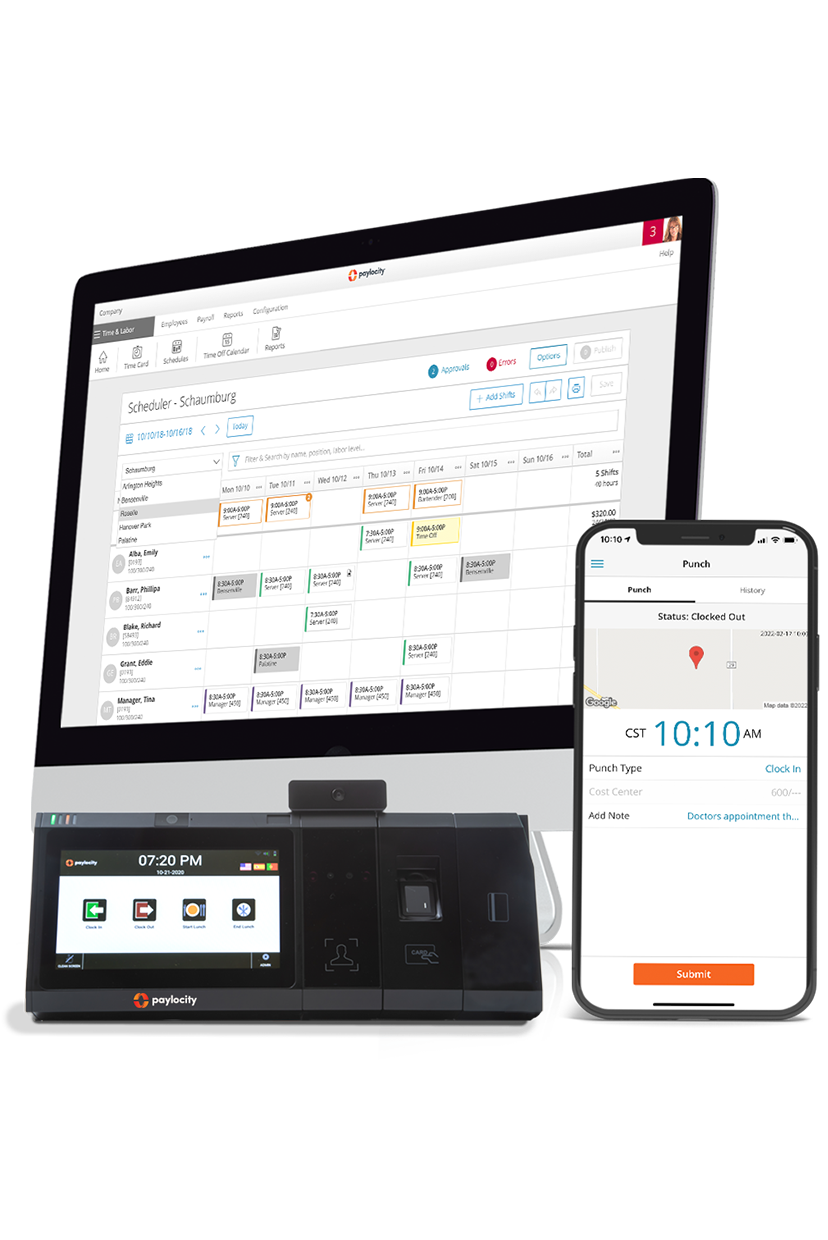
Say goodbye to manual tasks and hello to efficiency. Empower your employees with intuitive tools to manage their time—view balances, request time off, and get real-time notifications, all from one platform. Supervisors can access 100+ reports, track attendance, and approve requests in seconds. With instant insights at your fingertips, optimizing time and attendance has never been easier.
Related
![The 9 Best Payroll Software for Small Businesses [2026]](https://s7d9.scene7.com/is/image/paylocity/best-payroll-software-hero?$Hero-Card$)
The 9 Best Payroll Software for Small Businesses [2026]
